Getting an offer accepted feels like the finish line.
It is not.
Once the deal becomes firm, the transaction moves into the legal and financial stage that actually transfers ownership from the seller to the buyer.
This is where the lender, lawyers, insurance company, real estate professionals and Alberta Land Titles all have roles to play.
For buyers, the closing process becomes much easier when you understand one basic idea:
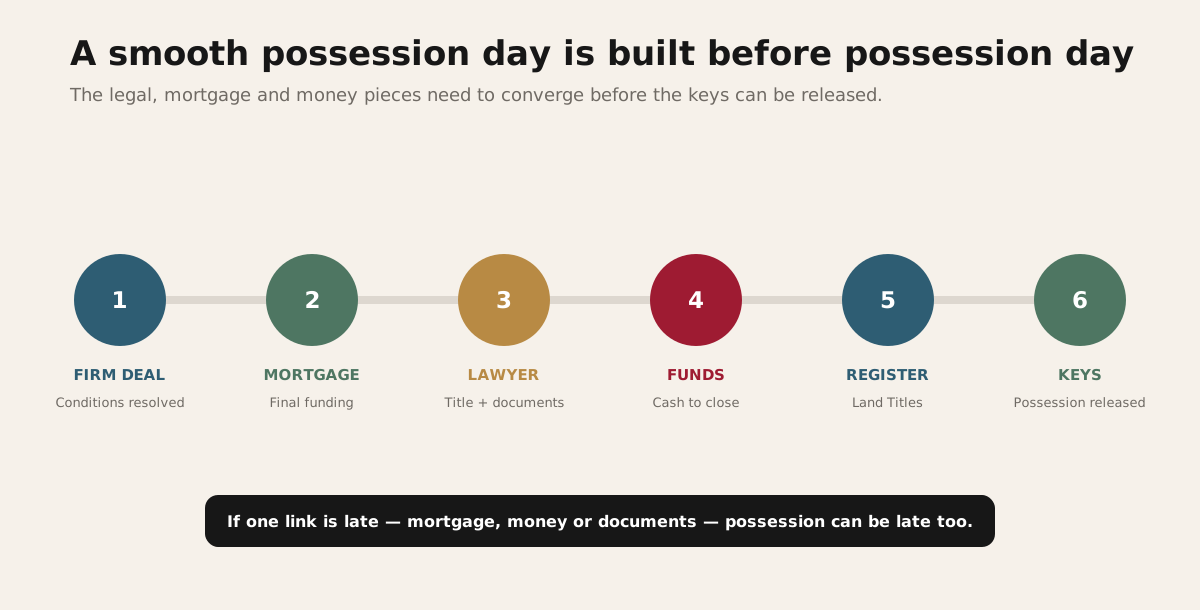
Possession day only works because most of the important work happens before possession day.
The mortgage must be finalized.
The buyer's money has to be ready.
The legal documents must be signed.
Insurance has to be in place.
The transfer and mortgage documents have to be prepared for registration.
And the seller must receive the required funds before keys are released.
When Does the Closing Process Begin?
For practical purposes, the closing stage begins once the purchase contract is firm.
That usually means the buyer has either:
- Satisfied and waived the conditions in the purchase contract, or
- Written an unconditional purchase contract
At that point, the transaction is no longer mainly about deciding whether to buy the home.
It becomes about completing the legal and financial steps required to take ownership on the agreed possession date.
The Main People Involved
A typical Alberta purchase can involve several professionals.
Your real estate agent
Your agent helps coordinate the transaction, monitors important dates, helps arrange the final walk-through where applicable, communicates with the seller's representative and helps keep the moving pieces organized.
Your mortgage lender or broker
The mortgage side needs to move from approval to funding.
That can involve:
- Updated income documents
- Down-payment verification
- Property information
- Appraisal where required
- Insurance confirmation
- Mortgage instructions sent to the lawyer
Your real estate lawyer
The buyer's lawyer handles the legal closing work.
This can include:
- Reviewing the purchase contract
- Reviewing title
- Preparing and reviewing legal documents
- Receiving mortgage instructions
- Calculating the funds required from the buyer
- Completing the statement of adjustments
- Receiving and transferring money through trust
- Registering the transfer of land and mortgage documents
- Reporting to the buyer and lender after closing
Alberta Land Titles specifically recommends legal help for land-transfer transactions because of the legal requirements involved.
The seller's lawyer
The seller's lawyer receives the sale proceeds, deals with the seller's existing mortgage or other registered obligations as required, and coordinates the seller side of the transfer.
Step 1: Send the Purchase Contract to Your Lawyer and Lender
Do this as early as possible once the deal is firm.
Your lawyer needs enough time to prepare the closing.
Your lender also needs enough time to issue final mortgage instructions.
Do not assume that because you were pre-approved, the mortgage side is finished.
The lender is financing this specific property and transaction.
Respond quickly to requests for:
- Updated pay information
- Bank statements
- Proof of down payment
- Gift letters where applicable
- Identification
- Property documents
- Insurance information
Delays in buyer documentation can create closing-day problems.
Step 2: Keep Your Financial Position Stable
Between mortgage approval and possession, avoid making major financial changes without discussing them with your mortgage professional.
Examples include:
- Financing a vehicle
- Opening new credit accounts
- Increasing debt balances
- Changing employment
- Moving large unexplained amounts of money between accounts
A lender may update parts of the application before funding.
The safest approach is to keep the financial picture that supported the approval as stable and well documented as possible.
Step 3: Arrange Home Insurance
For a financed purchase, the lender will generally require appropriate home insurance before mortgage funds are advanced.
Do not wait until the day before possession.
Your insurance company may ask for information such as:
- Property address
- Age of home
- Roof
- Electrical
- Plumbing
- Heating
- Claims history where available
- Coverage amount
- Mortgage lender information
If the property has unusual features, an older system or a condition that could affect insurability, deal with that early.
Insurance is not just a post-closing detail.
It can be part of getting the mortgage funded.
Step 4: Your Lawyer Reviews Title and Closing Documents
Alberta uses a land-title registration system.
A Transfer of Land is used to change registered ownership, and the buyer's mortgage is also registered against title where applicable.

Your lawyer may review or deal with matters such as:
- Current registered ownership
- Existing mortgages
- Caveats
- Easements
- Restrictive covenants
- Utility rights of way
- Other registered interests
- Transfer documents
- Mortgage documents
- Dower requirements where applicable
Not every item registered on title is a problem.
The important question is whether the buyer will receive the title contemplated by the purchase contract and whether any required issues are properly addressed.
Step 5: Your Lawyer Calculates the Cash You Need to Close
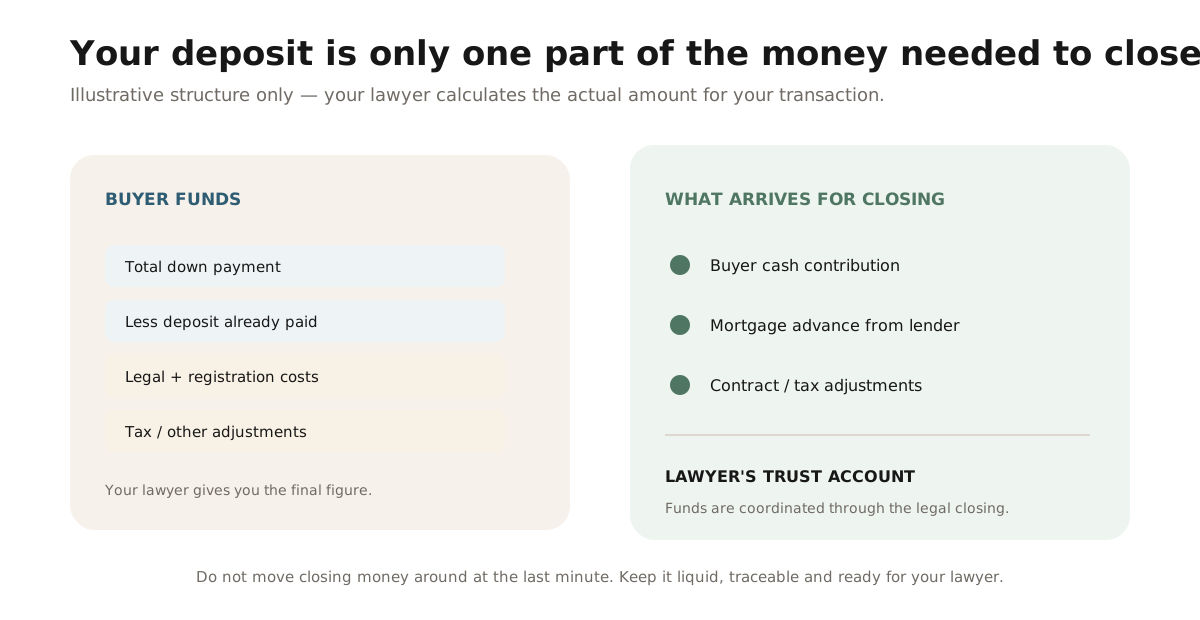
Your down payment is not the only money involved.
The lawyer calculates the buyer's final cash requirement after taking into account the transaction details.
That can include:
- Remaining down payment
- Legal fees and disbursements
- Land Titles registration charges
- Property-tax adjustment
- Condo-related adjustments where applicable
- Other agreed adjustments
- Lender credits or amounts already paid
The amount is often shown through a closing statement or statement of adjustments.
What Is a Statement of Adjustments?
A statement of adjustments is used to allocate certain property expenses between the buyer and seller based on the possession date and the terms of the contract.
Property taxes are a common example.
If the seller has already paid property taxes covering time when the buyer will own the property, the buyer may reimburse the seller for the buyer's portion through the closing adjustment.
If taxes remain unpaid, the direction of the adjustment may be different.
The goal is not to charge the buyer twice.
It is to make sure each party bears the appropriate share of the expense based on the transaction.
Step 6: Bring Closing Funds to the Lawyer
Your lawyer will tell you:
- The exact amount required
- When it must be delivered
- Which payment methods are acceptable
Do not rely on an estimate from several weeks earlier.
Use the lawyer's final instruction.
Large closing funds commonly need to be provided through a secure form such as a bank draft or other lawyer-approved transfer method.
Give yourself enough banking time.
A transfer limit or bank hold on the day before possession can create a completely avoidable problem.
Alberta Land Titles Registration Costs
Alberta does not have the same provincial land-transfer-tax system used in some other Canadian provinces.
However, registering ownership and a mortgage is not free.
Since October 20, 2024, the Alberta Land Titles Registration Levy uses a sliding registration amount.
For a Transfer of Land, the common fee structure is:
$50 + $5 for every $5,000 of property value
Mortgage registration also uses a base fee plus the applicable levy based on mortgage principal.
Your lawyer calculates the actual registration charges for the transaction.
Step 7: Sign the Legal and Mortgage Documents
The lawyer's appointment is usually where the transaction becomes very real.
You may sign documents dealing with:
- Transfer
- Mortgage
- Borrowing
- Title
- Insurance
- Direction of funds
- Identification
- Tax adjustments
- Ownership structure
Read the documents.
Ask questions when something is unclear.
The lawyer is there to explain the legal effect of what you are signing.
How Will You Hold Title?
If more than one person is buying the property, ownership structure matters.
Common Alberta ownership forms include:
- Joint tenancy
- Tenancy in common
They have different legal consequences, including what happens to an owner's interest after death.
Do not choose an ownership structure casually.
Discuss the appropriate form with your lawyer.
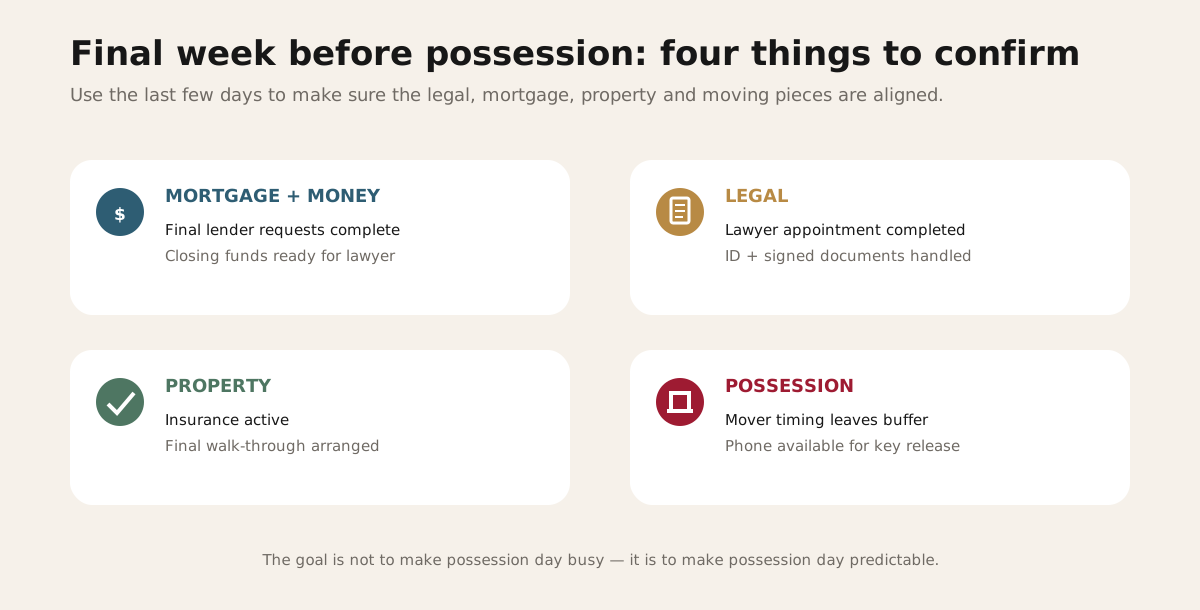
Step 8: Complete the Final Walk-Through
A final walk-through is not another full home inspection.
It is a final check that the property is generally in the condition required by the purchase contract.
RECA's buyer guidance notes that a negotiated pre-possession inspection is commonly used to confirm the property is in substantially the same condition and that agreed inclusions remain.
Look for:
- Agreed appliances and inclusions are present
- Attached goods remain
- Major new damage has not occurred
- Agreed repairs appear complete where applicable
- The property has not materially changed
If you discover a serious issue, contact your agent and lawyer immediately.
Do not wait until after possession if the concern is already visible before keys are released.
Step 9: The Mortgage Funds Reach the Lawyer
On the financial side, the lender advances the mortgage funds in accordance with its instructions.
The buyer has already provided the remaining required cash.
The buyer's lawyer then has the funds needed to complete the transaction, subject to the closing requirements.
This is why last-minute mortgage problems are serious.
The seller is expecting the purchase money in exchange for the property.
Step 10: The Lawyers Complete the Closing
The exact legal mechanics can vary, but the practical outcome is straightforward.
The lawyers coordinate:
- Purchase funds
- Transfer documents
- Mortgage registration
- Existing title obligations
- Closing adjustments
- Release of possession
The buyer's money moves toward the seller side of the transaction.
The required title documents are submitted for registration.
Once the contractual and legal requirements for possession are satisfied, the key release can occur.
What Happens at Alberta Land Titles?
The transfer of ownership is registered through Alberta's Land Titles system.
The Land Titles Act provides the framework for registering documents that create and terminate legal rights in land.
A Transfer of Land identifies details such as:
- Current owner
- New owner
- Legal land description
- Consideration
- Ownership structure
Where the purchase is financed, the lender's mortgage is also registered against the property.
The legal title process is one reason buyers use real estate lawyers rather than treating possession as a simple exchange of keys.
Step 11: Keys Are Released
For the buyer, this is the part everyone remembers.

But the keys are the result of everything that happened before them.
RECA's Home Buyer's Guide notes that possession often occurs around noon, although the actual timing depends on the contract and the transaction.
Do not schedule your moving truck assuming you will have keys first thing in the morning unless your transaction specifically provides for that timing.
Possession can be delayed if closing funds or required legal steps are delayed.
Do Not Schedule Moving Too Aggressively
A common planning mistake is booking movers for the exact minute you expect the keys.
Leave breathing room.
Consider:
- Key-release timing
- Lawyer processing
- Seller move-out
- Elevator bookings
- Travel time
- Cleaning
- Unexpected delays
A few hours of buffer is far cheaper than paying movers to sit outside a home you cannot access yet.
What Should You Do Immediately After Getting the Keys?
Before unloading everything:
- Walk through the property
- Confirm no obvious new damage
- Locate the main water shut-off
- Locate electrical panel
- Check thermostat
- Confirm smoke / CO alarms
- Check included appliances
- Collect garage remotes and other access devices
- Photograph anything concerning
Then start moving.
What if Something Is Wrong After Possession?
Once keys have been released and the transaction has closed, a problem with the property can become a legal issue rather than a simple condition discussion.
RECA advises buyers who discover that the property is not in substantially the same condition, or that an agreed inclusion has been removed, to contact their lawyer.
Your real estate professional can still help communicate.
But legal rights and remedies after closing are ultimately matters for legal advice.
What Happens After Closing?
Your lawyer typically finishes post-closing work and provides a reporting package.
That can include copies of important transaction documents and confirmation relating to title and mortgage registration.
Keep your closing documents permanently.
A homeowner file should include:
- Purchase contract
- Lawyer's closing report
- Title information
- Mortgage documents
- Inspection report
- Insurance
- Property-tax information
- Condo documents where applicable
- Renovation records
You may need those records years later when refinancing or selling.
Buyer Closing Checklist
As soon as the deal is firm
- Send contract to lawyer
- Send contract to lender / broker
- Complete outstanding lender requests
- Arrange insurance
- Confirm possession date
1–2 weeks before possession
- Confirm closing appointment
- Confirm mortgage instructions are progressing
- Arrange utilities
- Confirm mover schedule
- Review final-walk-through timing
Several days before possession
- Attend lawyer appointment
- Deliver required closing funds
- Confirm insurance
- Keep identification available
- Avoid major financial changes
Day before / morning of possession
- Complete final walk-through if provided for
- Confirm moving logistics
- Keep phone available
- Do not assume keys will be released early
After key release
- Walk the property
- Record concerns
- Secure the home
- Locate mechanical / utility controls
- Move in
Common Closing Mistakes
Waiting too long to hire a lawyer
The lawyer needs time to receive lender instructions, review documents and prepare the closing.
Assuming pre-approval means funding is guaranteed
The lender still needs the final transaction to satisfy its requirements.
Spending the closing money
Keep the down payment and closing cash liquid and traceable.
Financing something before possession
A new vehicle loan or other debt can change the mortgage application.
Leaving insurance too late
If the lender needs evidence of insurance, a delay can affect funding.
Booking movers too early in the day
Possession timing depends on the actual closing, not your preferred moving schedule.
Skipping the final walk-through
If the contract provides a pre-possession inspection, use it.
Frequently Asked Questions
What does a real estate lawyer do when I buy a home in Alberta?
The buyer's lawyer handles the legal closing work, including receiving mortgage instructions and buyer funds, reviewing title, preparing and signing legal documents, transferring funds and registering the buyer's ownership and mortgage documents.
Is my deposit the same as my down payment?
No. The deposit is money paid under the purchase contract and is generally credited toward the funds required to complete the purchase. The down payment is the buyer's total equity contribution toward the purchase price.
When do I get the keys in Alberta?
Keys are released once the transaction has satisfied the requirements for possession. RECA notes that possession commonly occurs around noon, but the contract and actual closing circumstances control the timing.
Do I need home insurance before possession?
For a mortgage-financed purchase, the lender will generally require appropriate property insurance before funding. Arrange it early.
What are closing costs in Alberta?
Closing costs are expenses separate from the deposit and down payment. RECA lists items such as legal fees, property-tax adjustments and title-transfer fees among typical buyer closing costs.
Does Alberta have land transfer tax?
Alberta does not use the same provincial land-transfer-tax model found in some provinces, but Land Titles charges registration fees and a levy for transfer and mortgage registrations.
The Bottom Line
Closing day should feel uneventful.
That is a good thing.
A smooth closing means the lender, lawyers, buyer, seller, insurer and Land Titles process have all been coordinated before possession.
For the buyer, the priorities are simple:
Keep your financing stable.
Get insurance in place.
Respond to your lawyer and lender quickly.
Have the closing funds ready.
Complete the final walk-through.
And give the possession process enough time to actually happen before the moving truck arrives.
The keys are the final step.
The real closing work happens before you receive them.
Sources & Methodology
Alberta-specific closing, possession, buyer-cost and land-registration information was cross-checked against the Real Estate Council of Alberta and Government of Alberta Land Titles resources available by the October 18, 2025 publication date.
This article is for general informational purposes and is not legal, mortgage or financial advice. Real estate contracts, title issues, lender instructions and closing requirements are transaction-specific. Buyers should follow the advice and instructions of their own lawyer and mortgage professional.