A 55+ community can offer exactly what some buyers want:
A quieter environment.
Less exterior maintenance.
Neighbours at a similar stage of life.
Amenities designed around the people who actually live there.
A property that is easier to lock up and leave.
But age-restricted housing is not simply a normal condo with an age number in the listing remarks.
The occupancy rules matter.
The condominium documents matter.
The monthly costs matter.
The reserve fund matters.
And the restrictions that make the community attractive to one buyer can reduce flexibility for another.
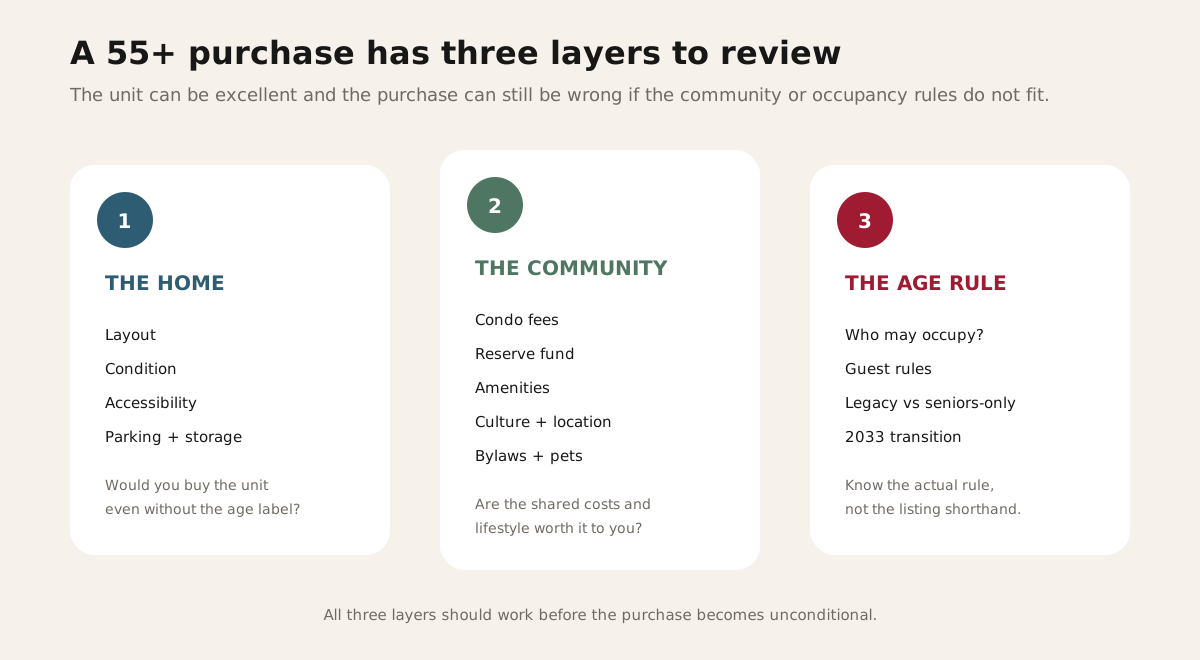
Before buying, evaluate the property in three layers:
The home itself.
The community and condominium corporation.
The age-occupancy rules that apply to the property.
What Does “55+ Community” Mean in Alberta?
Age is a protected ground under the Alberta Human Rights Act for adults 18 and older.
Housing has specific exceptions.
Alberta permits seniors-only housing, with 55 as the minimum age threshold recognized by the legislation.
A community may use an age threshold higher than 55.
The Alberta Human Rights Commission explains that seniors-only housing includes housing where at least one person in the unit is 55 or older.
The exact wording of the community's occupancy rules still matters.
Do not rely on the listing description alone.
Review the applicable:
- Bylaws
- Rules
- Condominium plan
- Purchase documents
- Management information
before removing conditions.
55+ Is Different From the Old “Adults-Only” Model
This distinction matters in Alberta.
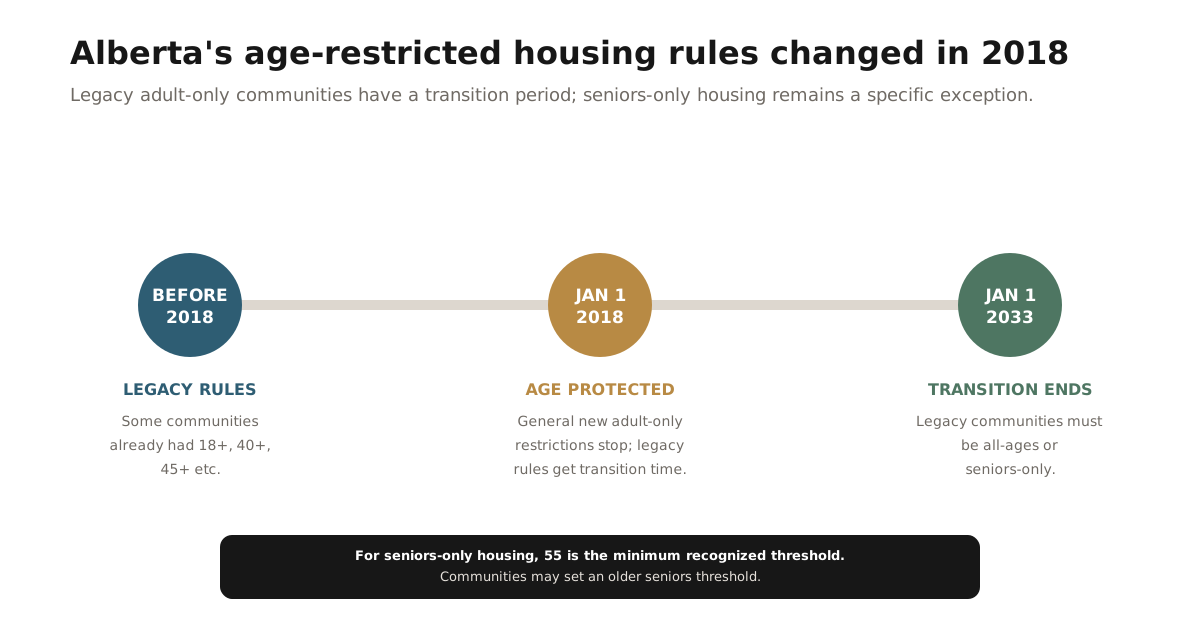
Before January 1, 2018, some condominiums, co-operative housing units and mobile-home sites had age restrictions such as:
- 18+
- 21+
- 40+
- 45+
Alberta changed its human-rights rules so that age became protected in housing.
Existing age restrictions that were already in place before January 1, 2018 were given a transition period.
By January 1, 2033, those legacy age-restricted properties must transition to either:
- All-ages housing, or
- Seniors-only housing
A new condominium cannot simply create a general “adults-only” rule.
Seniors-only housing is the specific age-based exception.
Why This Matters When You Are Buying
A listing may say:
Adult living
40+
45+
or another legacy restriction.
That does not tell you what the community will look like indefinitely.
If the restriction predates 2018, the property may be operating under the transition rules.
Before buying, ask:
- What is the current registered / adopted age restriction?
- When was it put in place?
- Is the community already seniors-only?
- Is the corporation planning to become all-ages?
- Is the corporation planning to become 55+ or another seniors-only threshold?
- Has the board discussed the 2033 deadline?
- Do recent meeting minutes address the transition?
This can affect your lifestyle expectations and future resale market.
Who Has to Meet the Age Requirement?
Do not assume every 55+ property uses identical occupancy wording.
Alberta's seniors-only housing rules permit housing where at least one person in the unit is 55 or older, and communities can set a higher age threshold.
The applicable bylaws and rules should tell you how the specific community applies its restriction.
You should confirm how the rules apply to:
- Spouses or partners
- Adult children
- Roommates
- Live-in caregivers
- Long-term guests
- Future occupants
- Tenants, if rentals are permitted
The Human Rights (Minimum Age for Occupancy) Regulation also provides certain exceptions for situations such as some caregivers, surviving spouses or adult interdependent partners, and specific family circumstances.
These rules can be fact-specific.
If an occupancy issue is important to the purchase, obtain legal advice rather than relying on a verbal answer from a listing agent or resident.
Can Your Children or Grandchildren Visit?
A 55+ occupancy restriction is not automatically the same thing as a ban on younger visitors.
But individual communities may have rules about:
- Guest duration
- Overnight stays
- Use of amenities
- Children using recreational facilities
- Parking
- Guest suites
If family visits are important to you, check the actual guest rules.
Do not assume either extreme:
“Kids can never visit.”
or
“Guests can stay as long as they want.”
The community documents should answer it.
Is the Community a Condominium?
Many 55+ communities are condominiums, but not every seniors-oriented property has the same ownership structure.
You may encounter:
- Apartment condominiums
- Townhouse condominiums
- Villa-style condominiums
- Bare-land condominiums
- Rental communities
- Co-operative housing
- Manufactured-home communities
The ownership structure determines which documents and financial risks you need to review.
For a condominium, the corporation is a major part of the purchase.
You are not only buying the unit.
You are buying into the corporation's:
- Budget
- Reserve planning
- Insurance
- Maintenance obligations
- Bylaws
- Existing contracts
- Future capital projects
Monthly Fees Need Context
A monthly condominium contribution can look high or low without telling you whether it is good value.
Ask what the fee includes.
It may contribute toward:
- Common-area maintenance
- Building insurance
- Landscaping
- Snow removal
- Property management
- Utilities
- Amenities
- Reserve-fund contributions
- Exterior maintenance
A $600 monthly fee that includes heat, water, exterior work and strong reserve funding can be financially different from a $400 fee that excludes most utilities and underfunds future repairs.
Compare total ownership cost, not the fee by itself.
The Reserve Fund Matters More Than the Lobby
A clean lobby is easy to notice.
A reserve-fund plan is easier to ignore.
Do not make that mistake.
For a condominium, review:
- Current reserve-fund balance
- Reserve-fund study
- Reserve-fund plan
- Upcoming major work
- Funding recommendations
- Special levies
- Recent capital projects
Large future costs can include:
- Roof
- Elevators
- Parkade
- Windows
- Exterior envelope
- Mechanical systems
- Paving
- Common plumbing
The correct question is not:
“How much money is in the reserve fund?”
It is:
“Is the reserve funding appropriate for the work this property is expected to need?”
Special Levies Can Change the Cost of Ownership
If the corporation needs additional money beyond normal contributions, it may levy owners for qualifying expenses.
Before buying, review whether:
- A special levy has been approved
- A levy is being discussed
- Major projects are being investigated
- Engineering reports identify future work
- The reserve study recommends large increases
A lower purchase price can be less attractive if a substantial capital contribution is coming immediately after possession.
Amenities Are Only Valuable If They Fit You
55+ communities may offer amenities such as:
- Fitness rooms
- Social rooms
- Guest suites
- Workshops
- Libraries
- Gardens
- Games rooms
- Pools
- Organized activities
These can be excellent lifestyle features.
But every amenity has an operating and replacement cost.
Ask:
Would I actually use this?
If you have no interest in a pool, large social room or workshop, you are still helping fund it through the corporation.
A simpler development may offer a better fit and lower operating burden.
Social Environment Can Be a Major Benefit
One reason buyers choose seniors-oriented housing is community.
Shared spaces and organized activities can make it easier to meet neighbours.
That can be valuable for someone moving from a detached home where:
- The children have moved out
- Neighbours have changed
- The yard is no longer a priority
- Travel is becoming more common
- Daily routines have shifted
But do not assume every 55+ development has the same culture.
Some are highly social.
Others function like a normal condominium where people mostly keep to themselves.
Visit more than once if possible.
Accessibility Is About the Whole Route Through the Property
A smaller home is not automatically easier to live in.
Evaluate:
- Steps from parking
- Elevator access
- Entry threshold
- Hallway width
- Bathroom layout
- Bedroom location
- Laundry location
- Balcony threshold
- Distance from stall to unit
- Snow / ice exposure
- Door hardware
- Storage access
Think through a normal day:
Car → entrance → unit → kitchen → bedroom → laundry → garbage → mail
If that daily route is awkward now, it may become more frustrating later.
Location Can Matter More Than the Amenity Package
A beautiful 55+ building can still be inconvenient if it is far from the places you use.
Consider proximity to:
- Grocery stores
- Pharmacy
- Restaurants
- Family
- Friends
- Recreation
- Transit
- Medical services
- Pathways
- Community facilities
A smaller amenity package in the right location can be more useful than a large amenity package in the wrong one.
Parking Deserves More Attention Than Buyers Give It
If you are leaving a detached home with a garage, confirm exactly what comes with the new property.
Check:
- Titled vs assigned parking
- Underground vs surface
- Stall width
- Height restrictions
- Visitor parking
- EV charging
- Second-stall availability
- Bike storage
- Tire storage
- Car-wash facilities
Do not assume “underground parking” means the stall fits your vehicle or meets your storage needs.
Storage Can Be the Biggest Lifestyle Adjustment
A large home absorbs belongings.
A condo does not.
Measure the storage before buying.
Think about:
- Seasonal decorations
- Luggage
- Golf clubs
- Bicycles
- Tires
- Tools
- Keepsakes
- Patio furniture
- Hobby equipment
A beautiful two-bedroom condo can feel very small if the storage locker does not solve the practical needs you are bringing with you.
Pets Can Narrow the Options
A seniors-oriented community may still have strict pet bylaws.
Restrictions can address:
- Number
- Type
- Size
- Approval
- Registration
- Common areas
If your pet is part of the household, check the pet rule before you get attached to the property.
A community can be an excellent fit in every other respect and still be the wrong property if the bylaws conflict with your pet.
Rentals and Resale Need to Be Part of the Purchase Decision
Age restrictions reduce the pool of potential occupants.
That can be part of the appeal.
But it can also affect flexibility later.
Before buying, ask:
- Can the unit be rented?
- Who may occupy a rented unit?
- Do the age rules apply to tenants?
- Are there rental-management requirements?
- How many comparable 55+ units sell each year?
- How long have recent listings taken to sell?
- Is the community already seniors-only or still under a legacy age restriction?
- What happens to the buyer pool after the 2033 transition?
A smaller buyer pool does not mean a property cannot sell well.
It means the resale strategy is different.
Compare 55+ Housing With the Alternatives
Do not compare one 55+ condo only against your current home.
Also compare it with:
- All-ages condo
- Villa
- Bungalow
- Townhouse
- Smaller detached home
- Rental apartment
Your real choice may be between:
55+ condo with $650 fees
and
all-ages bungalow condo with $450 fees
or:
55+ apartment close to family
and
smaller detached home farther away
The age rule is one variable.
The overall property still has to win.
A Practical 55+ Buyer Scorecard
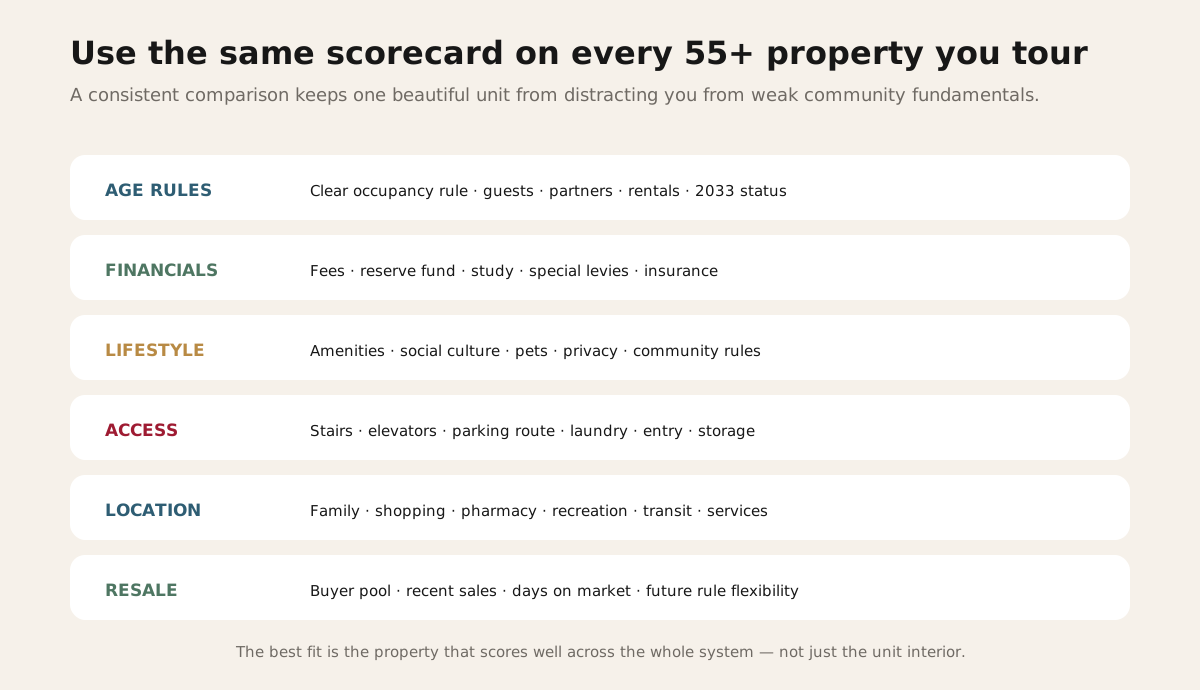
Before writing an offer, score the property across these areas:
Occupancy rules
Do you fully understand who can live there now and later?
Financial health
Are the budget, reserve fund and capital plans reasonable?
Monthly cost
Does the full ownership cost fit your budget?
Lifestyle
Do you like the community culture and amenities?
Accessibility
Will the property remain practical over time?
Location
Is it close to the places and people that matter?
Storage and parking
Can the home handle your real belongings and vehicles?
Resale flexibility
Do you understand the future buyer pool and age-rule transition?
Documents to Review Before Buying
For a condominium, the review should typically include items such as:
- Bylaws
- Rules
- Budget
- Financial statements
- Reserve-fund study
- Reserve-fund plan
- Board minutes
- AGM minutes
- Insurance information
- Special-levy information
- Management information
- Parking information
- Storage information
- Age-occupancy provisions
Do not treat the age rule as one checkbox.
It belongs inside the broader condominium due-diligence process.
Frequently Asked Questions
Are 55+ communities legal in Alberta?
Yes. Alberta's human-rights framework permits seniors-only housing. The minimum seniors threshold is 55, and a community may set an older threshold.
Can a new Alberta condo be 40+ or 45+?
General adult-only age restrictions are no longer permitted for new condominiums. Legacy age restrictions that existed before January 1, 2018 have a transition period ending at the start of 2033. Seniors-only housing is the age-based housing exception going forward.
What happens to existing adult-only condos in 2033?
Legacy age-restricted condominiums, co-operatives and mobile-home sites must transition to all-ages housing or seniors-only housing by January 1, 2033.
Can someone under 55 live in a 55+ community?
Alberta's seniors-only housing framework includes housing where at least one person in the unit is 55 or older, and the regulations contain certain exceptions. The specific community's occupancy wording still needs to be reviewed.
Are 55+ condos harder to resell?
They have a more defined buyer pool because occupancy is restricted. Resale performance depends on the specific community, location, price, condition, financial health and local demand.
Should I review condo documents before buying in a 55+ community?
Yes. Review the age rules alongside the corporation's budget, reserve fund, reserve study, bylaws, insurance, minutes, parking, storage and any special levies.
The Bottom Line
A 55+ community can be an excellent choice when the lifestyle and ownership structure genuinely fit.
The age restriction is only one part of the decision.
A strong purchase should make sense across:
Occupancy rules.
Monthly cost.
Condominium finances.
Accessibility.
Location.
Storage and parking.
Community culture.
Future resale.
Do not buy a property because the listing says it is “adult living.”
Understand what the rule actually means, how the community will operate after the 2033 transition period, and whether the home works for the way you want to live.
Considering a 55+ Move in Calgary?
If a move into a 55+ community also involves selling your current property, start with the value of the home you already own.
Use the website's existing home evaluation form to request a property-specific market analysis.
That gives you a stronger starting point for estimating equity, setting the next-home budget and deciding whether the move improves your overall housing costs.
Sources & Methodology
Alberta-specific age-restriction rules were cross-checked against Alberta Human Rights Commission guidance and Government of Alberta condominium information available by the July 12, 2025 publication date. The key legal distinction preserved in this guide is between seniors-only housing and legacy adult-only age restrictions that were already in place before January 1, 2018.
This article is for general informational purposes and is not legal advice. Age restrictions, condominium bylaws and occupancy questions can be fact-specific. Review the documents for the property you are considering and obtain legal advice where the occupancy rules are material to your purchase.