A fixer-upper can be one of the best ways to buy into a neighbourhood you otherwise could not afford.
It can also be one of the easiest ways to underestimate the real cost of a home.
The mistake is looking only at the discount.
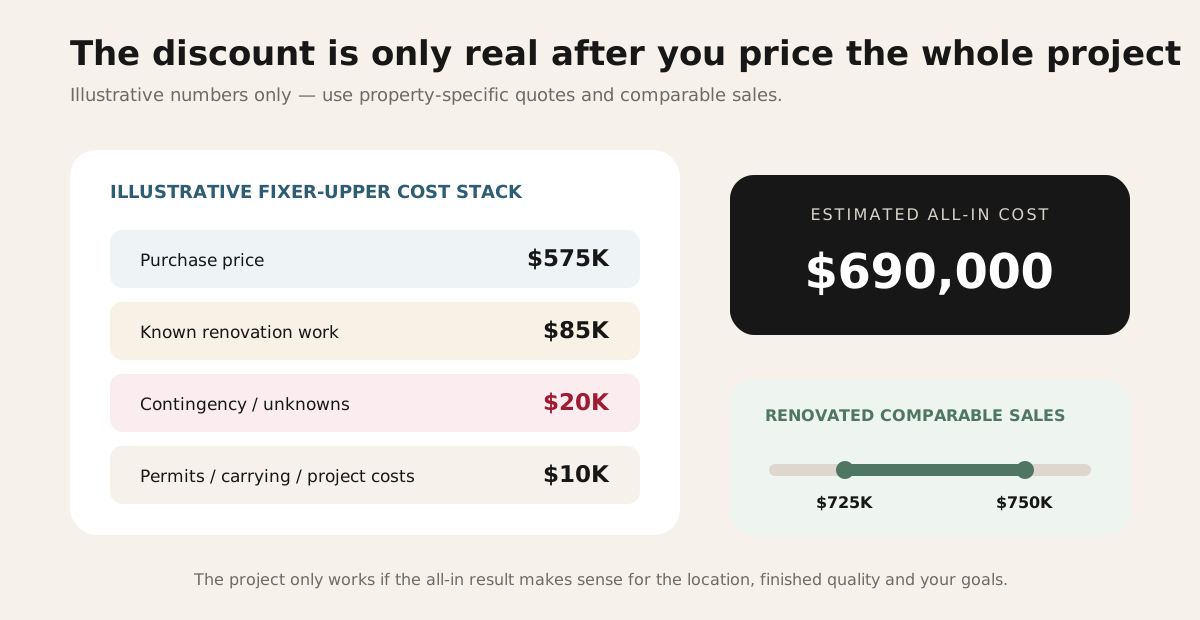
A property that is $80,000 cheaper than the renovated homes nearby is not automatically a deal if it needs $120,000 of work, months of carrying costs, permits, temporary housing and a contingency for whatever gets uncovered once the walls open up.
The better question is:
What will this property cost me when the renovation is actually finished — and how does that compare with simply buying the renovated version now?
That calculation should happen before you fall in love with the project.
Start With the End Value
Before estimating renovation costs, understand what a properly renovated version of the property is actually worth.
Look for recent comparable sales that match:
- The same community
- Similar property type
- Similar lot
- Similar above-grade square footage
- Similar bedroom and bathroom count
- Similar garage
- Similar finished condition after renovation
If renovated homes similar to the property are selling around a certain range, that gives you a ceiling to work backward from.
The purchase price should leave enough room for the renovation, transaction costs, carrying costs and uncertainty.
Do not assume every dollar spent on renovations automatically creates a dollar of resale value.
Some improvements are necessary just to bring the property up to market expectations.
A Fixer-Upper Has Four Different Costs
Buyers tend to focus on two numbers:
Purchase price + renovation quote
The real budget is broader.
1. Purchase price
What you pay for the property.
2. Known renovation work
The repairs and improvements you can identify before possession.
3. Unknowns and contingency
Problems that only become clear after demolition or specialist review.
4. Carrying and project costs
Potential items include:
- Permit fees
- Design or engineering
- Temporary accommodation
- Storage
- Waste removal
- Utility costs
- Financing costs
- Material delivery
- Extra insurance requirements
- Delays
The lower purchase price only matters if the all-in result still makes sense.
Not All Fixer-Uppers Are the Same
A dated home and a distressed home are completely different projects.
The easiest way to think about fixer-uppers is by renovation depth.
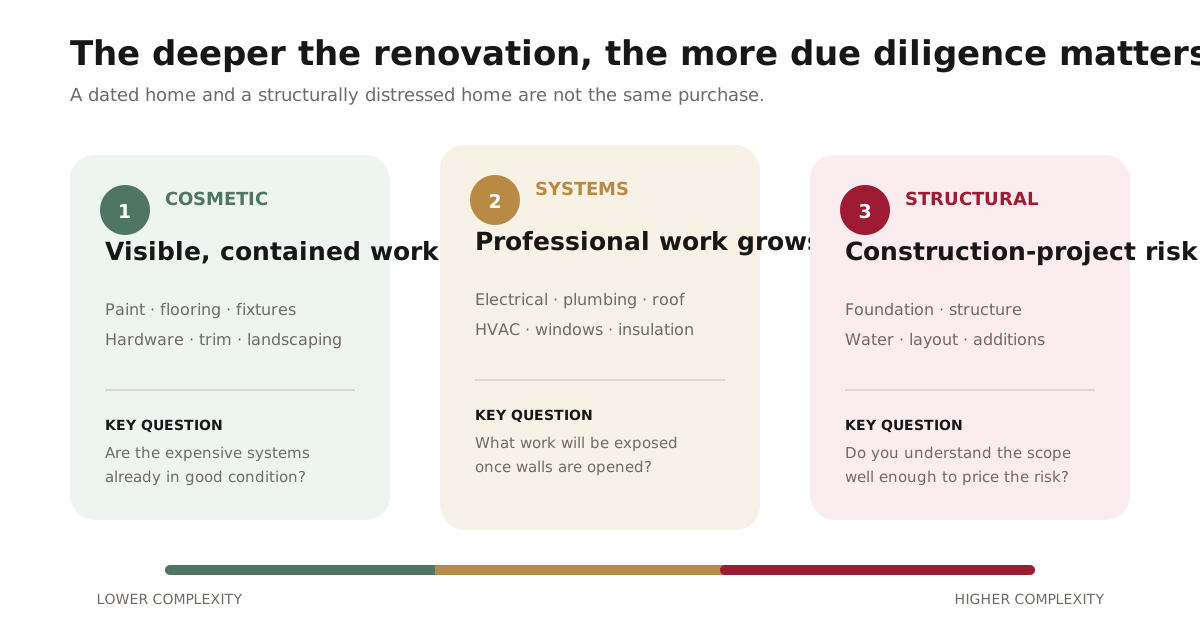
Level 1: Cosmetic Fixer-Upper
These are usually the easiest projects to evaluate.
Typical work might include:
- Paint
- Flooring
- Light fixtures
- Cabinet hardware
- Interior doors
- Trim
- Cosmetic bathroom updates
- Landscaping cleanup
The important distinction is that the home’s main systems, structure and layout already work.
For many first-time renovation buyers, this is the most manageable type of fixer-upper.
You get the ability to improve the property without rebuilding it.
Level 2: Systems and Functional Updates
This is where the project becomes more serious.
Potential work can include:
- Electrical upgrades
- Plumbing work
- Furnace or HVAC replacement
- Hot water system
- Windows
- Roofing
- Insulation
- Drainage improvements
- Kitchen or bathroom reconfiguration
These projects require more professional involvement and can create knock-on costs.
For example, changing plumbing may require opening walls.
Updating electrical work may affect drywall and finishes.
Replacing windows can expose water damage.
The work is no longer isolated to what you can see.
Level 3: Structural or Major Redevelopment
These properties deserve the most caution.
Major work may involve:
- Foundation repair
- Structural movement
- Load-bearing wall changes
- Additions
- Significant water intrusion
- Major floor-plan reconfiguration
- Extensive unpermitted work
- Full gut renovation
At this point, you are not simply buying a house that needs updating.
You are buying a construction project with a house attached to it.
That can still work.
But the offer price, financing, inspection strategy and contractor involvement should reflect the level of risk.
Red Flags That Deserve More Investigation
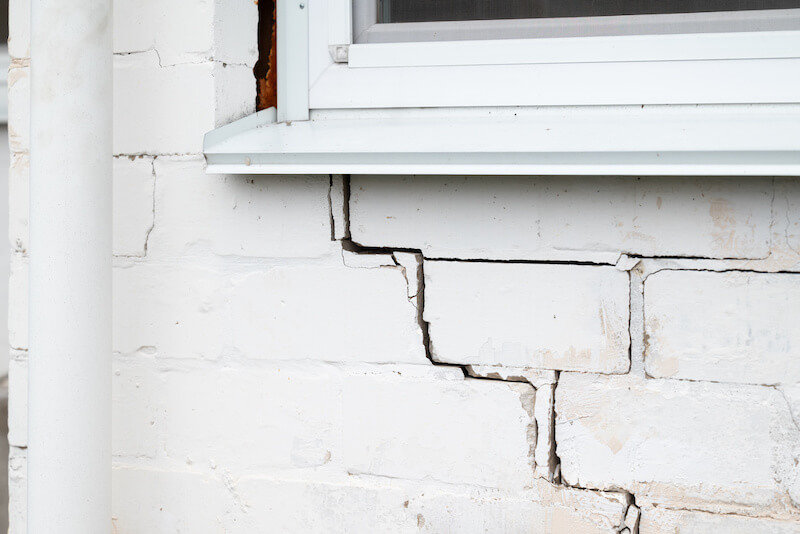
Not every crack means a foundation problem.
Not every stain means an active leak.
But certain conditions deserve proper investigation rather than a quick visual guess.
Pay attention to:
- Large or widening cracks
- Stair-step cracking in masonry
- Doors or windows that no longer sit square
- Sloping floors
- Persistent basement moisture
- Efflorescence or water staining
- Rot around windows or exterior openings
- Roof sagging
- Improvised structural supports
- Fresh finishes covering areas with a history of moisture
- Electrical or plumbing work that appears improvised
The goal is not to diagnose the property yourself.
The goal is to recognize when the general home inspection should be supplemented by a specialist such as a structural engineer, electrician, plumber, roofer or foundation contractor.
Inspect the Expensive Things Before the Pretty Things
A dated kitchen is obvious.
A failing sewer line is not.
When evaluating a fixer-upper, prioritize the expensive systems before deciding what colour you want the cabinets.
Important areas include:
Foundation and drainage
Look for movement, moisture, grading and drainage concerns.
Roof and exterior envelope
Understand the age and condition of roofing, flashing, siding, windows and exterior penetrations.
Electrical
Older homes may have systems that need modernization, particularly if the renovation plan adds substantial electrical load or changes circuits.
Plumbing
Supply lines, drainage, sewer condition and previous alterations can materially change the renovation budget.
Heating and ventilation
Know the age and condition of the furnace and other major mechanical equipment.
Structure
Any plan that involves removing walls, changing openings or significantly altering the layout should be understood before purchase.
A beautiful renovation does not compensate for ignoring the expensive systems underneath it.
Calgary Permits Can Change the Scope
Permit requirements should be considered before you assume a renovation plan is possible.
The City of Calgary notes that interior renovations generally require a building permit when structural changes are involved, such as moving or removing walls or creating new wall openings.
Electrical permits are generally required when new wiring is installed or existing branch-circuit wiring is extended or altered.
Plumbing permits are generally required when plumbing systems are constructed, extended or altered.
Cosmetic work such as paint and finishes typically does not require the same building-permit process.
The practical lesson is simple:
Check the permit path before you buy based on a renovation plan.
A wall that looks easy to remove may be structural.
A basement you assume can become a suite may require substantial work to meet current requirements.
The property should still make sense after the legal and technical requirements are understood.
Pay Attention to Existing Unpermitted Work
A fixer-upper is often older, and older homes may have gone through several rounds of renovations.
Do not assume every finished basement, added bathroom, altered wall or electrical change was completed with the required permits.
Ask questions.
Review available records.
If important work appears to have been completed without permits, understand what may be required to correct or verify it.
This matters because concealed work can be expensive to inspect after the fact.
Secondary-Suite Plans Need Their Own Due Diligence
A basement that “looks perfect for a suite” is not the same as a legal secondary suite.
Before assigning rental value to the property, verify what is actually permitted and what work is required.
Calgary secondary-suite requirements can involve:
- Building permits
- Electrical permits
- Plumbing permits
- Egress requirements
- Fire and life-safety requirements
- Separate cooking and bathroom facilities
- Appropriate access
- Other land-use or development requirements depending on the property
If the investment case depends on future suite income, do not treat that income as guaranteed until the legal path is understood.
The Renovation Budget Should Be Built Before the Offer
You do not need a final construction contract before writing an offer.
But you should have more than a rough guess.
For meaningful renovation projects, try to understand:
- Major work categories
- Approximate contractor pricing
- Permit requirements
- Engineering or design needs
- Material lead times
- What can be completed before move-in
- What can wait
- Which work could uncover additional problems
For larger projects, getting contractor input before your condition period expires can be extremely valuable.
Financing a Fixer-Upper Is Different From Financing a Finished Home
Do not assume your mortgage automatically covers the renovation.
The financing structure depends on the lender, the property and the work being completed.
Some buyers may have access to mortgage products or lending structures that account for planned improvements, while others may need separate funds for renovation work.
The important part is to solve this before making the purchase dependent on money you do not yet have access to.
Ask your mortgage professional:
- How much cash is required at closing?
- How are renovation funds advanced?
- Is work required to be completed before funds are released?
- Are appraisals or inspections required?
- Which renovations qualify?
- How does the post-renovation value affect approval?
- What happens if the project costs more than expected?
A project can make perfect sense on paper and still fail if the financing does not match the construction timeline.
Avoid Building the Deal Around Optimistic DIY Savings
Doing some work yourself can reduce costs.
But your budget should distinguish between work you can do and work you realistically will do.
Consider:
- Skill level
- Tool cost
- Time
- Work schedule
- Permit restrictions
- Safety
- Quality of finish
- Whether DIY delays other trades
If the deal only works because you assume hundreds of hours of free labour, the margin may be thinner than it looks.
Renovation Order Matters
One of the easiest ways to waste money is doing finishes before systems.
A sensible sequence usually looks something like:
- Stop water and weather problems
- Address safety and structural issues
- Complete major plumbing, electrical and mechanical work
- Complete framing and insulation
- Close walls
- Install cabinets and built-ins
- Install flooring and finish carpentry
- Paint and complete final cosmetic work
You do not want to install new flooring and then tear it up to repair a plumbing problem underneath.
The Location Still Matters More Than the Renovation
A fixer-upper can change dramatically.
The lot and location cannot.
This is one of the strongest reasons to consider a project property.
You may be able to buy:
- A better street
- A larger lot
- A more established community
- Better school access
- Better transit
- Better redevelopment potential
at a lower initial purchase price because the house itself needs work.
That can be a worthwhile trade.
But do not let renovation potential convince you to compromise on a location you would not otherwise choose.
You can replace a kitchen.
You cannot move the lot.
How to Compare a Fixer-Upper With a Move-In-Ready Home
Do not compare the list prices.
Compare the expected total outcomes.
For the fixer-upper, estimate:
Purchase price + Renovation work + Contingency + Permits / professional costs + Carrying or temporary housing costs = Estimated all-in cost
Then compare that with:
- Move-in-ready alternatives available now
- Recent renovated comparable sales
- The quality and location of each option
- Your tolerance for time and disruption
The fixer-upper does not need to be dramatically cheaper to be worthwhile.
You may value the ability to customize it.
But you should know what premium you are effectively paying for that customization.
A Pre-Offer Fixer-Upper Checklist
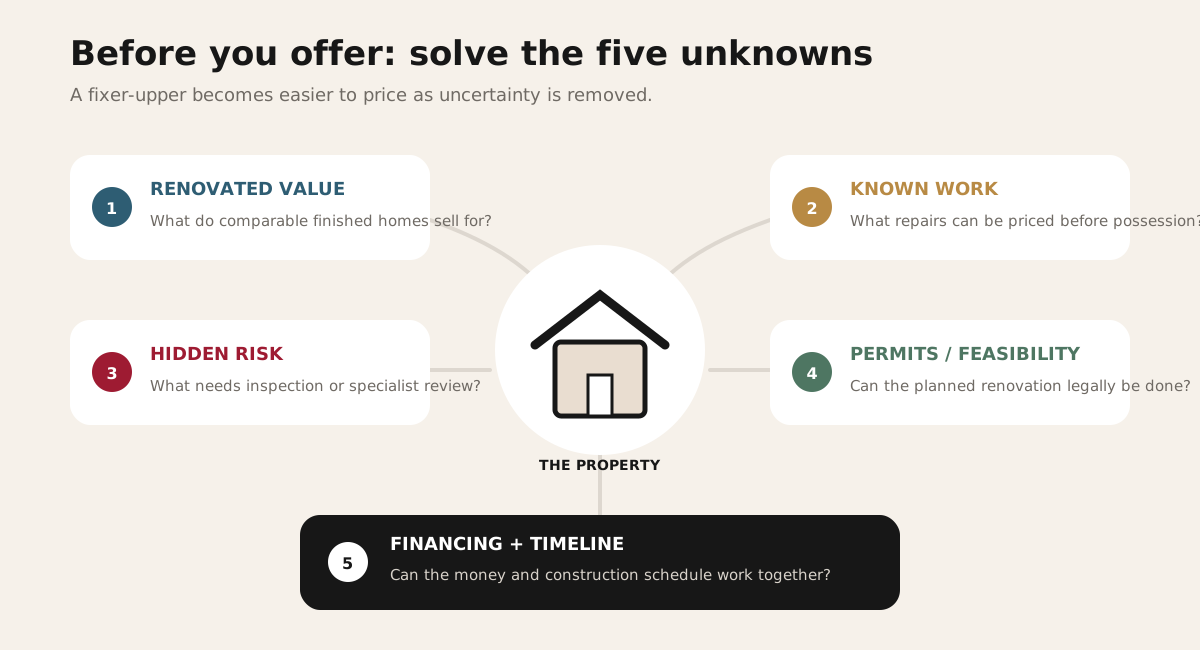
Before committing to a serious fixer-upper, try to answer:
What is the renovated value?
Use comparable sales, not renovation-show optimism.
What work is definitely required?
Separate known work from optional upgrades.
What could be hiding?
Build room for the things that cannot be fully evaluated before demolition.
What permits are needed?
Confirm the legal path for major changes.
How will the work be financed?
Purchase financing and renovation financing need to function together.
Can you live with the timeline?
A project that makes financial sense can still be the wrong purchase for your life.
Who Is a Good Fit for a Fixer-Upper?
A fixer-upper tends to suit buyers who:
- Have financial room beyond the purchase itself
- Can tolerate uncertainty
- Are willing to make many decisions
- Have a flexible timeline
- Can manage contractors or renovation work
- Value location enough to accept a project
- Plan to own the home long enough to enjoy the improvements
Who Should Be More Cautious?
A move-in-ready property may be a better fit if:
- The down payment already uses most of your available cash
- You need a predictable possession and move-in date
- You have no room for unexpected costs
- You do not want to manage a renovation
- You would be financially strained by delays
- You are counting on an aggressive resale-value assumption to make the deal work
Buying the cheaper house does not automatically mean taking less financial risk.
Frequently Asked Questions
Is buying a fixer-upper cheaper than buying a renovated home?
Sometimes. The purchase price is usually lower, but the relevant comparison is the total cost after renovation, permits, professional fees, carrying costs and contingency.
How much extra money should I keep for renovation surprises?
There is no percentage that works for every project. A cosmetic renovation and a structural renovation carry very different uncertainty. Build a contingency that reflects the age of the home, the quality of inspections and the depth of work.
Should I buy a fixer-upper as my first home?
A cosmetic fixer-upper can be manageable for a first-time buyer with sufficient cash reserves and realistic expectations. A major structural renovation requires substantially more experience, financing flexibility and risk tolerance.
What should I inspect most carefully in an older Calgary home?
Pay particular attention to foundation and drainage, roofing and exterior envelope, electrical, plumbing, heating systems, evidence of moisture, structural alterations and previous renovation work.
Do Calgary home renovations need permits?
Some do. The City of Calgary generally requires building permits for structural interior changes and trade permits for many electrical and plumbing alterations. Cosmetic work such as painting and finishes generally has fewer permit requirements.
The Bottom Line
A fixer-upper can be an excellent purchase when three things line up:
The location is worth owning.
The renovation is technically and financially manageable.
The all-in cost makes sense relative to the finished value.
If one of those pieces is missing, the discount can disappear quickly.
The best fixer-upper is not the home with the most dramatic before-and-after potential.
It is the property where the purchase price, scope of work, risk and finished value all make sense together.
If you are considering a fixer-upper in Calgary, compare the property against renovated sales before deciding how much room you truly have for the project.
Sources & Methodology
Calgary permit guidance was cross-checked against City of Calgary home-renovation, electrical, plumbing and secondary-suite resources. Renovation costs are deliberately presented as property-specific rather than fixed dollar ranges because labour, materials, property condition and project scope vary substantially.
This article is for general informational purposes and is not construction, engineering, legal, mortgage or financial advice. Use qualified inspectors, contractors and other professionals for property-specific decisions.