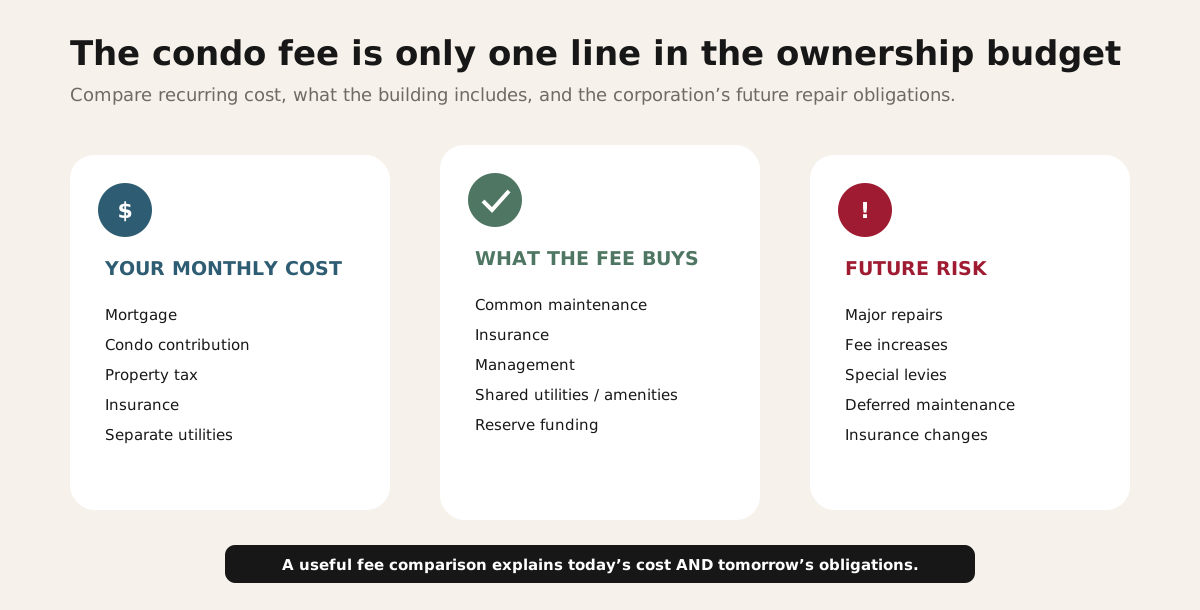
A low condo fee is not automatically good.
A high condo fee is not automatically bad.
What matters is what the fee pays for, how the condominium corporation is funded, what major repairs are coming, and whether the total ownership cost fits your budget.
Two Calgary condos can have the same purchase price and very different monthly costs.
One building may include heat and water, maintain elevators, fund a large reserve and provide several amenities.
Another may have fewer services, lower monthly contributions and a much smaller reserve requirement.
Looking only at the monthly fee tells you almost nothing by itself.
The better question is:
What am I receiving for the fee — and is the corporation financially prepared for the building it has to maintain?
What Are Condo Fees?
In Alberta, condo fees are generally referred to as condominium contributions.
Owners pay these contributions to the condominium corporation to fund the expenses of operating, maintaining and repairing the common property and carrying out the corporation’s obligations.
Depending on the building, monthly contributions may help pay for:
- Common-area cleaning
- Landscaping
- Snow removal
- Property management
- Building insurance
- Elevator maintenance
- Common utilities
- Garbage and recycling
- Security
- Amenities
- Routine repairs
- Reserve-fund contributions
What is included varies from one condominium to another.
Never assume two buildings are comparable just because their fees are similar.
Condo Fees Are Part of Your Housing Cost — Not an Extra Detail
A buyer sometimes qualifies for a mortgage and then treats the condo fee as a secondary expense.
It should be part of the affordability calculation from the beginning.
Your recurring ownership cost may include:
- Mortgage payment
- Condo fee
- Property taxes
- Personal condo-unit insurance
- Utilities not included in the fee
- Parking or storage charges where applicable
- Maintenance inside the unit
- Savings for future personal expenses
A $350,000 condo with a $750 monthly fee can create a very different cash-flow requirement than a $350,000 condo with a $400 fee.
The purchase price is only one part of affordability.
What Do Calgary Condo Fees Usually Cover?
There is no universal package.
A high-rise building may have elevators, underground parking, heated common areas, concierge or security, mechanical systems and amenities.
A townhouse condominium may have fewer shared systems but more exterior land, snow removal, roofing or landscaping responsibilities.
A bare-land condominium may work differently again.
When reviewing a listing, identify exactly what the monthly contribution includes.
Common items can include:
Building insurance
The corporation generally carries insurance for the common property and the corporation’s insurable interests.
That does not replace your own condo-unit insurance.
Reserve-fund contribution
Part of the corporation’s overall funding may be directed toward the reserve fund for major future repair and replacement needs.
Common-area maintenance
Hallways, lobbies, parkades, elevators, shared mechanical systems, landscaping and similar items need ongoing maintenance.
Utilities
Some buildings include certain utilities such as heat or water.
Others do not.
The inclusion matters when you compare total monthly cost.
Management
Many condominium corporations hire professional property-management companies.
Management expenses are typically part of the corporation’s operating budget.
What Condo Fees Usually Do Not Cover
Do not assume the monthly contribution replaces every other ownership cost.
Items commonly paid separately by the owner can include:
- Property taxes
- Personal condo-unit insurance
- Mortgage
- Utilities not included by the corporation
- Repairs inside the unit that are the owner’s responsibility
- Improvements or renovations inside the unit
- Special levies
- Certain parking or storage charges
The condominium bylaws and other documents help define who is responsible for what.
Why Comparing Fees Per Square Foot Can Mislead You
Buyers often divide the monthly fee by the unit’s square footage and compare buildings that way.
That can be useful as a quick reference.
But it should never be the final analysis.
A smaller unit in an amenity-heavy high-rise may have a higher fee per square foot than a larger townhouse.
That does not automatically make it poorly managed.
The building may be funding:
- Elevators
- Underground parking
- Heated common space
- Full-time building staff
- Major mechanical equipment
- Pool or fitness facilities
- More expensive insurance
- Larger reserve-fund requirements
Compare similar building types with similar services.
The Reserve Fund Is One of the Most Important Parts of the Purchase
Alberta condominium corporations are required to establish and maintain a reserve fund for major repairs and replacement of property and common property owned by the corporation.
The reserve fund is different from the operating account.
The operating budget handles recurring expenses.
The reserve fund is intended for major repair and replacement needs identified through the corporation’s reserve planning.
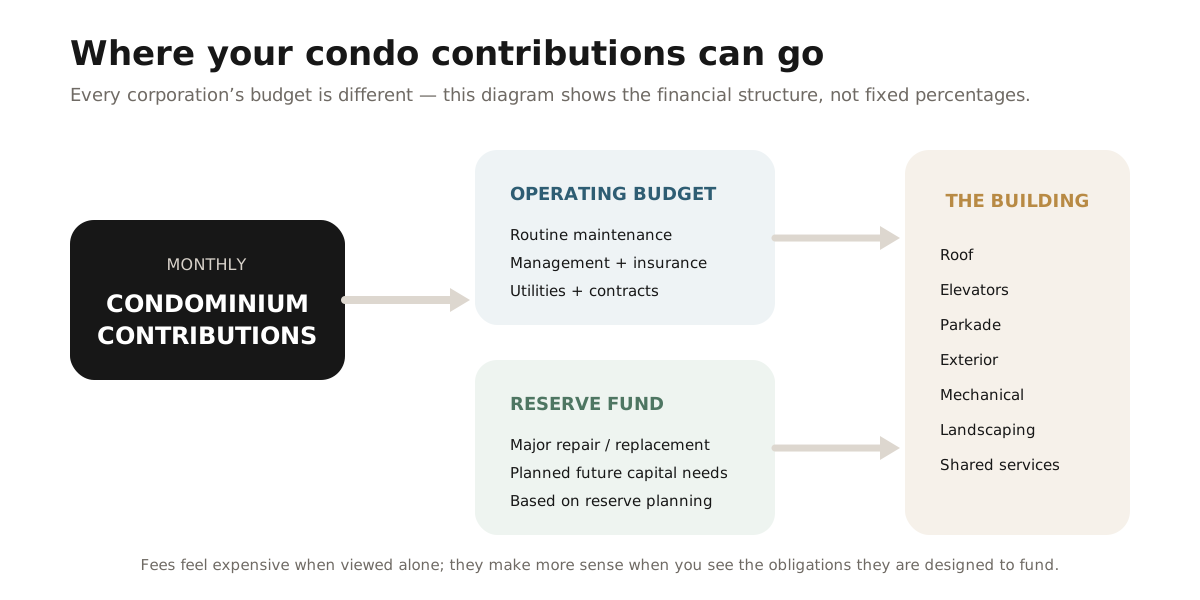
Examples of major reserve-related work can include:
- Roof replacement
- Exterior-envelope work
- Elevator replacement
- Parkade repairs
- Major mechanical equipment
- Windows where they are a corporation responsibility
- Common plumbing or electrical systems
- Paving and major exterior work
A building can look excellent today while still facing significant future capital work.
That is why the reserve-fund documents matter.
How Much Should Be in the Reserve Fund?
There is no universal dollar amount that makes a reserve fund “healthy.”
A 20-unit townhouse complex and a 250-unit high-rise do not have the same future repair obligations.
The relevant questions are:
- What major components does the corporation have to maintain?
- When are they expected to require replacement?
- What does the reserve-fund study identify?
- What funding plan has the board adopted?
- Are current contributions keeping pace with that plan?
- Has major work been deferred?
Alberta does not set one magic reserve balance for every condominium.
The corporation uses its reserve-fund study and plan to determine the funding required for its property.
What Is a Reserve Fund Study?
A reserve-fund study evaluates major common-property components and estimates:
- Remaining useful life
- Future repair or replacement timing
- Estimated future costs
- Funding requirements
The condominium board then uses the study when preparing and adopting its reserve-fund plan.
For buyers, this is one of the most useful documents in the condominium package.
It can show whether large expenses are expected in the coming years.
A Large Reserve Balance Can Still Be Misleading
Imagine a corporation has $1 million in reserve funds.
That sounds strong.
But if the reserve-fund study shows $3 million of major work approaching, the raw balance is not enough information.
Now imagine another corporation has $400,000 in reserve funds but has a smaller building with limited upcoming capital needs and a funding plan that keeps pace with future repairs.
The second corporation may be in a more comfortable position.
Always compare:
Reserve balance
against
Expected obligations
What Is a Special Levy?
A special levy is an additional amount owners are required to contribute beyond regular condominium fees.
In Alberta, a condominium board may approve a special levy for permitted purposes such as unexpected repairs, an operating shortfall, reserve-fund requirements, certain capital improvements or other qualifying corporation expenses.
The board resolution identifies the purpose, total amount and payment timing.
An owner’s share is generally allocated according to unit factor unless the bylaws provide another permitted basis.
A special levy can be due:
- As one payment
- In installments
- On a schedule established by the corporation
A buyer needs to understand both existing special levies and the risk of future ones.
Low Condo Fees Can Sometimes Be a Warning Sign
Buyers naturally like lower monthly costs.
But unusually low fees should create a question:
Why are they low?
There may be a perfectly good answer.
The building may simply have:
- Few amenities
- Low operating costs
- Newer components
- Strong historical budgeting
But low contributions can also mean:
- Reserve funding is being postponed
- Maintenance has been deferred
- The operating budget is too lean
- Fee increases are likely
- The corporation may need a special levy later
A low monthly contribution is valuable only when the corporation can actually meet its obligations.
High Condo Fees Need Context Too
A high fee does not automatically mean the building is badly managed.
Ask what is included.
A fee may be higher because the building includes:
- Heat
- Water
- Central mechanical systems
- Underground parking
- Extensive landscaping
- Security
- Elevators
- Recreation facilities
- More substantial reserve-fund contributions
If one building includes several expenses you would otherwise pay separately, the difference in total cost may be smaller than the headline fee suggests.
The Best Comparison Is Total Monthly Ownership Cost
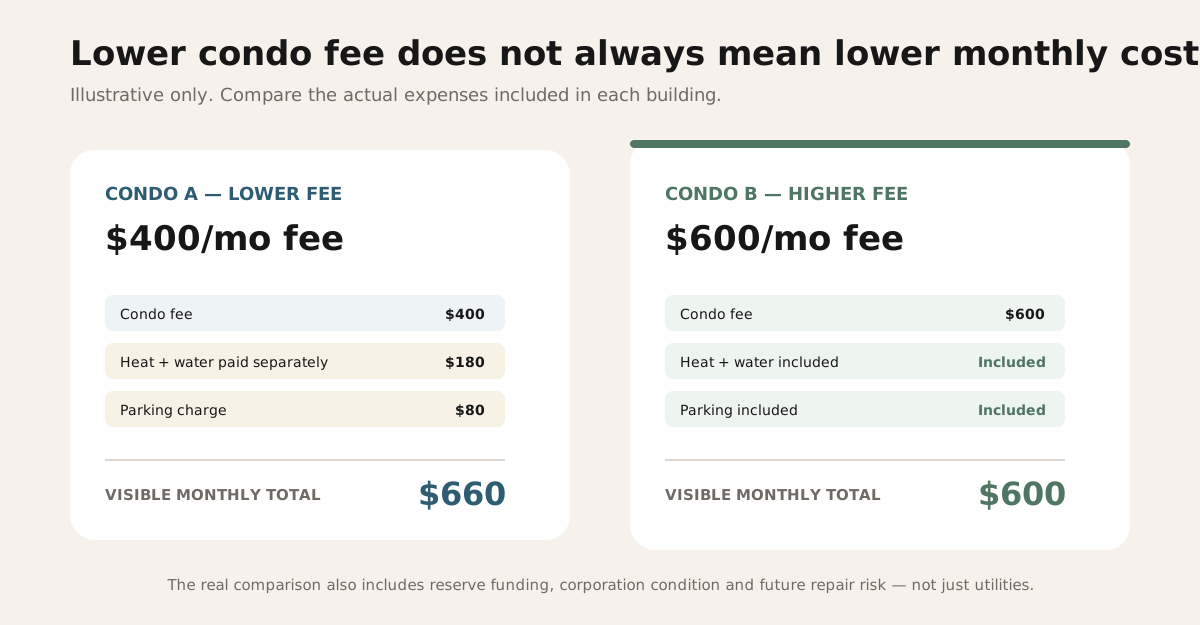
Instead of asking:
“Which condo has the lower fee?”
Ask:
“Which condo has the better total cost and financial position?”
For each property, compare:
- Mortgage payment
- Condo contribution
- Property tax
- Unit insurance
- Utilities you pay separately
- Parking / storage costs
- Expected near-term owner expenses
- Corporation financial risk
The lower-fee building does not always win.
What Documents Should a Calgary Condo Buyer Review?
The unit itself is only half of the purchase.
You are also buying an ownership interest in the condominium corporation.
Important documents can include:
- Current budget
- Annual financial statements
- Reserve-fund study
- Reserve-fund plan
- Annual reserve-fund report
- Bylaws
- Board meeting minutes
- AGM minutes
- Insurance information
- Management agreement
- Information about current special levies
- Professional reports
- Unit-factor information
- Parking or exclusive-use agreements
The exact available documents and transaction requirements vary.
Many buyers use a professional condominium-document reviewer to help interpret the package.
Read the Board Minutes
Board minutes can provide context that a financial statement cannot.
Look for repeated discussion of:
- Water leaks
- Building-envelope problems
- Elevator issues
- Insurance claims
- Parkade deterioration
- Plumbing failures
- Litigation
- Contractor quotes
- Proposed capital work
- Special levies
- Owner disputes affecting major decisions
One mention of a repair is not automatically a problem.
Repeated unresolved discussion can be more important.
Read the Financial Statements
Look beyond the year-end bank balance.
Try to understand:
- Operating surplus or deficit
- Reserve-fund balance
- Accounts receivable
- Major expenses
- Insurance cost changes
- Management cost
- Unusual legal or repair expenses
If a corporation repeatedly spends more than it collects, future contribution increases may be needed.
Check the Reserve-Fund Plan Against Reality
Compare what the documents say with what you can see.
If the reserve study assumes a component will last many more years but the building visibly shows deterioration, ask questions.
If major work was recently completed, determine:
- How it was funded
- Whether the reserve was depleted
- Whether financing remains outstanding
- Whether additional work is still planned
Condo-document review works best when financial information and physical condition are considered together.
New Condos Need Review Too
A brand-new condominium does not eliminate fee risk.
For purchasers buying from a developer, Alberta requires specific disclosure documents and information, including the proposed or current corporation budget and the amount or estimated amount of monthly condominium contributions.
Early budgets are still estimates.
As the corporation becomes fully operational, actual:
- Insurance
- Utilities
- Maintenance
- Staffing
- Management
- Reserve requirements
may differ from assumptions.
Do not assume the initial fee will remain unchanged indefinitely.
Condo Fees Can Increase
Condo corporations must collect enough money to meet their obligations.
Costs change over time.
Contributions can rise because of:
- Insurance premiums
- Utility costs
- Contract increases
- Inflation
- Building age
- Reserve-fund requirements
- Unexpected repairs
The right question is not whether fees can rise.
They can.
The better question is whether the increases appear consistent with the corporation’s actual financial and maintenance needs.
What Happens if an Owner Does Not Pay?
Condominium contributions are mandatory obligations.
The corporation has legal collection remedies under Alberta condominium legislation, and unpaid amounts can create serious consequences for the owner.
Do not treat condo fees like an optional service subscription.
They are part of the cost of owning the unit.
How to Decide if a Condo Fee Is Affordable
Use three tests.
Test 1: Can you afford it today?
Add the fee to the entire housing budget, not just the mortgage.
Test 2: Could you handle a reasonable increase?
A budget that only works if the fee never changes is fragile.
Test 3: Could you absorb an unexpected levy?
You do not need to assume a levy will occur.
But condo ownership is safer when you maintain emergency savings beyond the down payment and closing costs.
A Practical Condo Fee Review
Before removing a condominium-document condition, be able to answer:
What does the fee include?
Know what you receive and what you still pay separately.
Why is the fee this amount?
Understand the building’s operating costs and services.
What is going into the reserve?
Review the corporation’s funding approach.
What major repairs are coming?
Use the reserve study, professional reports and minutes.
Are there current or proposed special levies?
Know what has already been approved and what is being discussed.
Are the corporation’s finances stable?
Review budgets, financial statements and trends.
Can your own budget handle change?
Leave room for future increases and unexpected ownership costs.
Frequently Asked Questions
What do condo fees cover in Calgary?
It depends on the condominium. Fees may cover common-property maintenance, building insurance, management, landscaping, snow removal, shared utilities, amenities and reserve-fund contributions. Review the specific corporation budget and documents.
Are lower condo fees better?
Not necessarily. Low fees can reflect a simple, efficient building, but they can also indicate underfunding or deferred costs. Compare the fee with the building’s actual obligations.
Can Calgary condo fees increase?
Yes. Condominium contributions can change as operating expenses, insurance, maintenance and reserve-fund requirements change.
What is a special assessment or special levy?
It is an additional contribution beyond regular condo fees that the condominium corporation may require for permitted expenses. Alberta legislation refers to these as special levies.
Should I review condo documents before buying?
Yes. The corporation’s finances, bylaws, reserve planning, insurance, board minutes and upcoming work can materially affect the cost and risk of owning the unit.
Do condo fees include property taxes?
Generally no. Property taxes are paid separately by the unit owner.
The Bottom Line
A condo fee is not simply money that disappears every month.
It is your share of the cost of operating, maintaining and planning for the common property you partly own.
The number becomes meaningful only when you understand what sits behind it.
Before buying a Calgary condo, review:
What the contribution includes.
How the operating budget is performing.
Whether the reserve plan matches future work.
Whether special levies are outstanding or likely.
And whether the total monthly ownership cost fits your budget.
The cheapest condo fee is not necessarily the best value.
A well-funded, well-maintained building with a transparent financial plan can be worth paying more for.
Sources & Methodology
Alberta condominium reserve-fund, special-levy and purchaser-document requirements were cross-checked against Government of Alberta condominium resources available by the November 29, 2025 publication date.
This article is for general informational purposes and is not legal, financial or condominium-document-review advice. Buyers should review the documents for the specific condominium and use qualified professionals where appropriate.