A home appraisal answers a very specific question:
What is this property worth for this assignment, as of this point in time?
That sounds simple.
But the answer can affect:
- Mortgage financing
- Refinancing
- Home-equity decisions
- Estate planning
- Separation or litigation
- Relocation
- Private sales
- Other financial decisions involving real estate
For buyers and sellers, appraisals matter most when a lender wants an independent opinion of value before advancing mortgage funds.
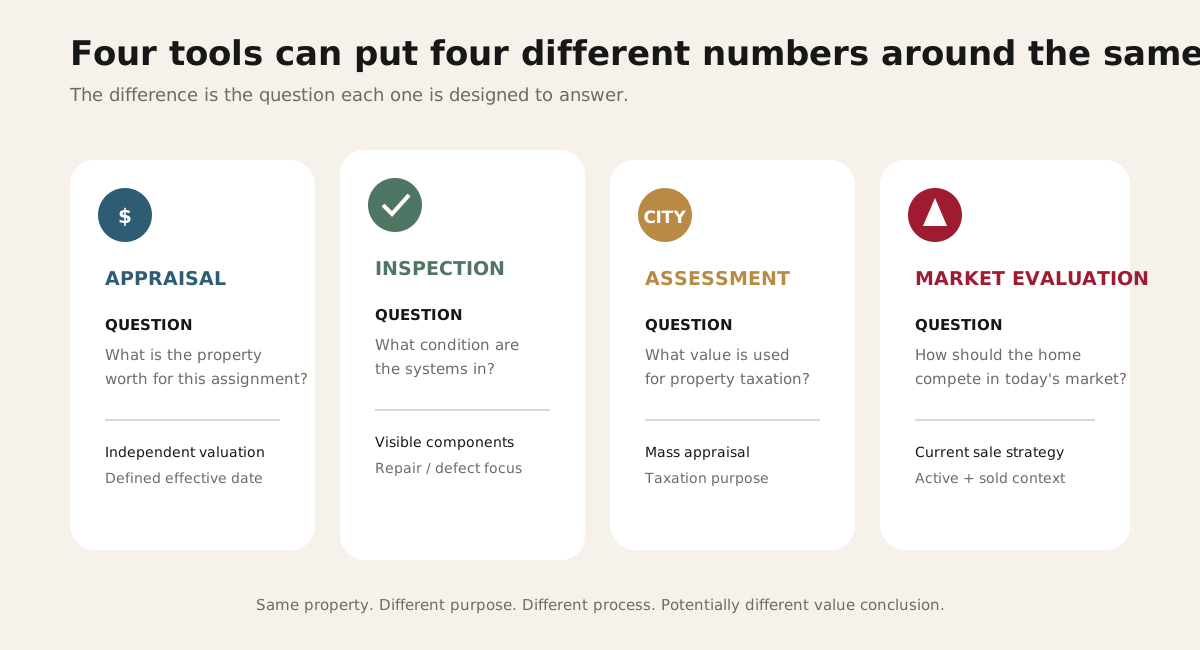
The appraisal is not the same thing as a home inspection.
It is not the same thing as a municipal property assessment.
And it is not the same thing as a Realtor's market evaluation.
Those tools can all involve the same house while answering completely different questions.
What Is a Home Appraisal?
A professional appraisal is an independent opinion of real-property value prepared for an identified purpose and effective date.
For a typical residential mortgage appraisal, the appraiser may consider:
- Property type
- Location
- Lot characteristics
- Building size
- Age
- Condition
- Quality of construction
- Layout
- Renovations
- Parking
- Basement development
- Site influences
- Recent comparable sales
- Current market conditions
CMHC describes a professional appraisal as an assessment that can include the property's physical and functional characteristics, a detailed comparison with recent nearby sales and current market conditions.
The result is not simply an average of nearby sale prices.
The appraiser has to determine which sales are genuinely comparable and how differences between those properties and the subject property affect value.
Who Is the Appraiser Working For?
This is important.
The person who pays for an appraisal is not always the same person who is the appraiser's client.
For mortgage financing, the lender or appraisal-management process may arrange the appraisal and define the intended use of the report.
That can affect:
- Who receives the full report
- Who can rely on it
- What the report can be used for
- Whether it can be reassigned or reused
If you need an appraisal for your own purpose — such as estate work, litigation, a private transaction or a second opinion — make sure the appraiser understands the intended use before the assignment begins.
Who Can Perform a Residential Appraisal?
The Appraisal Institute of Canada has two primary real-property valuation designations.
CRA — Canadian Residential Appraiser
CRA-designated members are qualified for residential valuation work within the scope of the designation, including individual residential dwellings, condominiums and certain small residential properties.
AACI — Accredited Appraiser Canadian Institute
AACI-designated members have a broader scope that can include residential, commercial, industrial, agricultural and other real-property assignments.
The appropriate appraiser depends on the property and the assignment.
Why Would a Lender Require an Appraisal?
The house is part of the lender's security for the mortgage.
The lender therefore needs to be comfortable with the value of the property it is financing.
An appraisal may be required when the lender wants a more detailed valuation of the property.
That can happen because of factors such as:
- Property type
- Purchase price
- Down payment
- Location
- Unique characteristics
- Renovations
- Limited comparable sales
- Refinance request
- Lender or insurer requirements
Not every mortgage application results in the same appraisal process.
Some valuations may be handled through automated or other lender-approved methods, while other properties require a full professional appraisal.
What Does the Appraiser Actually Do?
The exact scope depends on the assignment.
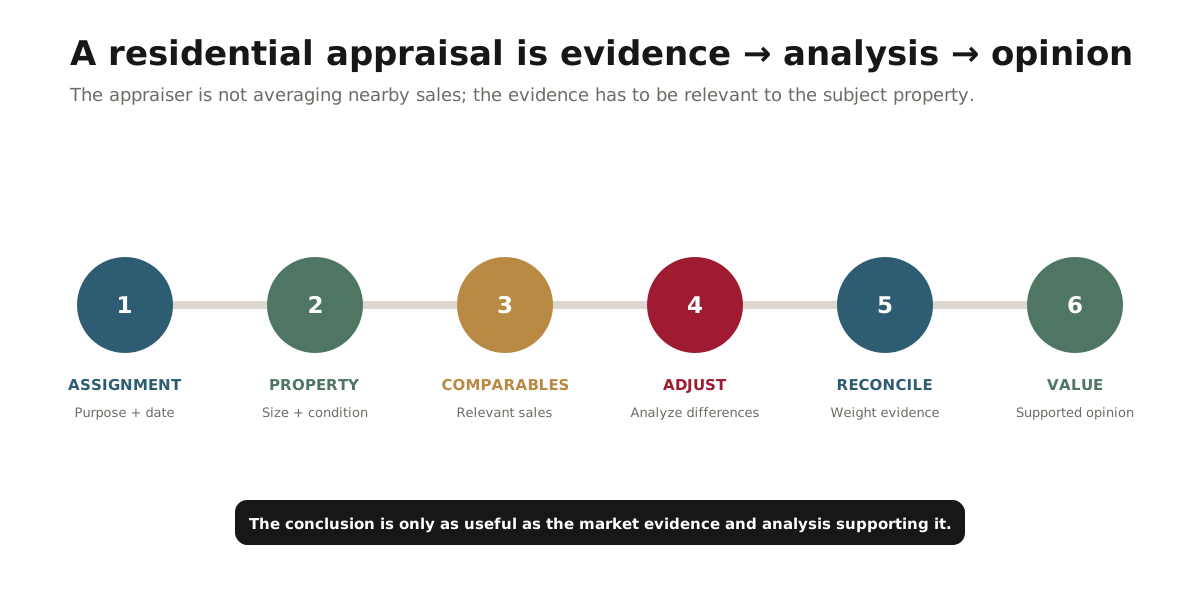
For a residential appraisal, the process often includes:
1. Define the assignment
The appraiser identifies:
- Property
- Client
- Intended users
- Intended use
- Effective date
- Type of value required
2. Collect property information
This can include:
- Site details
- Building characteristics
- Measurements or reported area
- Condition
- Renovations
- Quality
- Functional layout
- Neighbourhood influences
3. Analyze market evidence
The appraiser researches relevant market activity.
For a typical Calgary house or condo, that often means reviewing recent comparable sales.
4. Reconcile the evidence
The appraiser weighs the relevance of the available information and arrives at a supported opinion of value.
The Sales Comparison Approach
For many residential properties, comparable sales are central to the valuation.
The appraiser looks for properties that are reasonably similar in areas such as:
- Location
- Property type
- Size
- Age
- Condition
- Quality
- Garage
- Basement
- Lot
- Features
The comparable homes do not need to be identical.
They rarely are.
Instead, the appraiser analyzes the differences.
For example, one comparable may have:
- A larger garage
- A renovated kitchen
- A smaller lot
- No basement development
- A superior location
The appraisal process considers those differences rather than simply averaging the three nearest sales.
Other Approaches to Value
Depending on the property and assignment, appraisers may also use or consider other valuation approaches.
Cost approach
This considers the relationship between land value and the cost of constructing or replacing the improvements, with appropriate consideration of depreciation.
It can be relevant for certain newer or unusual properties.
Income approach
For income-producing real estate, value can be analyzed through the property's income-generating capacity.
This is more common in investment and commercial valuation than in a typical owner-occupied single-family purchase.
The appraisal method should fit the property and purpose.
Appraisal vs Home Inspection
These are commonly confused.
Appraisal
Primary question:
What is the property worth?
Focus:
- Market value
- Comparable sales
- Property characteristics
- Market conditions
Home inspection
Primary question:
What condition is the property in?
Focus can include:
- Roof
- Structure
- Electrical
- Plumbing
- Heating
- Exterior
- Interior
- Attic
- Visible defects
An appraisal does not replace an inspection.
An inspector may identify a failing furnace.
An appraiser may consider the property's overall condition and how it affects value.
Those are related but different jobs.
Appraisal vs Realtor Market Evaluation
A Realtor's comparative market analysis or market evaluation is generally focused on helping a buyer or seller understand current market positioning.
That may involve:
- Recent comparable sales
- Active competition
- Pending activity where available
- Current buyer behaviour
- Listing strategy
- Property-specific strengths and weaknesses
A professional appraisal is a formal independent valuation assignment prepared for a defined client, intended use and effective date.
A market evaluation can be extremely useful for deciding:
What should we list at?
or:
What might buyers pay in today's market?
An appraisal may instead be needed for:
What value can this lender rely on?
or another formal valuation purpose.
Neither replaces the other.
Appraisal vs City Assessment
Your City of Calgary property assessment is prepared for municipal taxation.
A mortgage appraisal is prepared for a different purpose.
The numbers can differ because they may use:
- Different valuation dates
- Different methodologies
- Different available data
- Different assignment purposes
- Different levels of property-specific analysis
Do not assume a $650,000 municipal assessment means a lender's appraisal should also be $650,000.
And do not assume the City's assessed value is the current listing price for the property.
What Can Increase Appraised Value?
There is no guaranteed renovation-to-value formula.
But value can be influenced by features buyers in the market recognize and pay for.
Depending on the property, those can include:
- Location
- Lot
- Functional floor plan
- Above-grade area
- Garage
- Overall condition
- Quality renovations
- Finished basement
- Additional bedrooms or bathrooms
- Views
- Property utility
- Market demand
An expensive renovation does not automatically add the same amount to the home's appraised value.
A $70,000 renovation does not guarantee a $70,000 increase.
The question is how the market responds to the improvement.
What Usually Has Less Impact Than Owners Expect?
Homeowners can overestimate the value of highly personal improvements.
Examples can include:
- Very specific luxury finishes
- Unusual room conversions
- Overbuilt landscaping
- Highly customized features
- Renovations well beyond neighbourhood expectations
Appraisers look at market evidence.
Cost and value are not the same thing.
How Sellers Can Prepare for an Appraisal
You do not need to stage the home as if the appraiser were a buyer at an open house.
But useful preparation can make the property easier to understand.
Have available:
- List of significant renovations
- Approximate renovation dates
- Permits where relevant
- Plans for major additions
- Information about recent improvements
- Details about unusual or valuable features
Provide access to:
- Basement
- Garage
- Mechanical room
- Yard
- Relevant interior areas
The goal is not to "sell" the appraiser.
It is to make sure important property information is available.
Do Cleanliness and Staging Affect an Appraisal?
Normal day-to-day clutter is not the same thing as property condition.
An appraiser is not deciding whether the decor is attractive.
However, condition does matter.
There is a difference between:
- A lived-in home with boxes on the floor
and:
- Significant deferred maintenance, damage or deterioration
Cleanliness may make access easier.
But appraised value is not created by fresh flowers on the kitchen island.
What Happens If the Appraisal Matches or Exceeds the Purchase Price?
In a mortgage transaction, the valuation hurdle may be satisfied if the lender is comfortable with the appraisal and the rest of the file meets its requirements.
That does not mean financing is automatically complete.
The borrower, property and mortgage still need to satisfy the lender's overall approval process.
What Happens If the Appraisal Comes In Low?
This is where buyers and sellers pay attention.
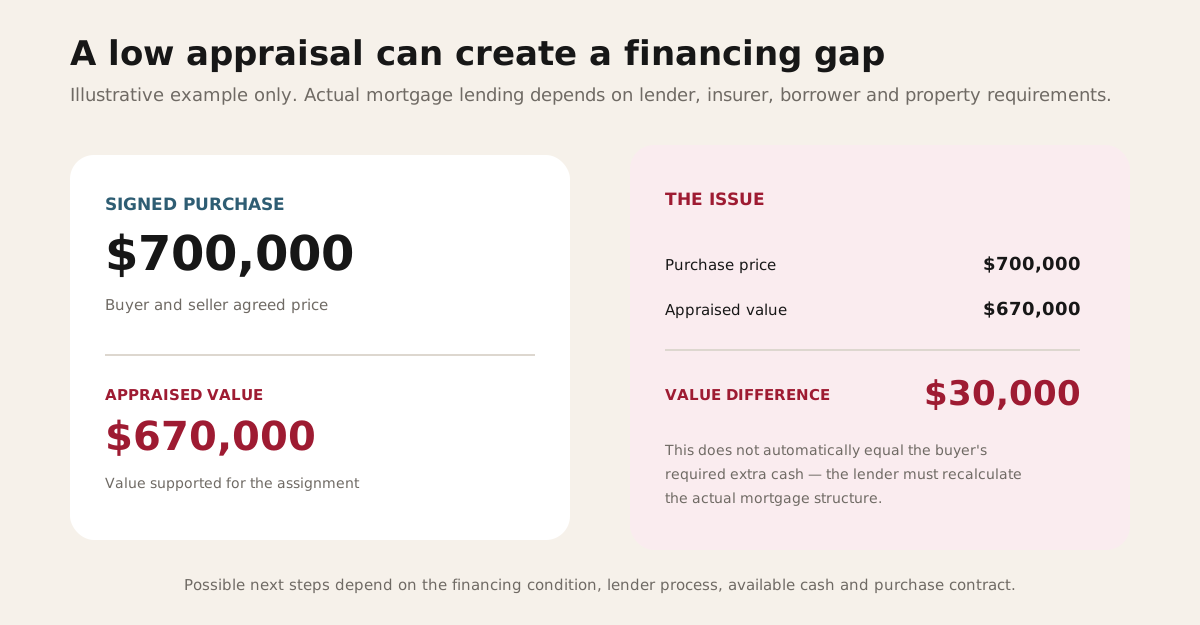
Imagine:
Purchase price: $700,000
Appraised value: $670,000
The lender may base its financing decision on the lower supported value rather than simply treating the signed purchase price as market value.
That can create a funding gap.
A Low Appraisal Does Not Automatically Mean the Appraiser Is Wrong
Purchase price and appraised value answer different questions.
The buyer and seller may have agreed to a price because of:
- Competition
- Emotional value
- Multiple offers
- Unique features
- Limited inventory
- Strategic terms
- Future expectations
The appraiser still has to support an opinion of value using the evidence available for the assignment.
Sometimes the purchase price is well supported.
Sometimes it is not.
What Can a Buyer Do After a Low Appraisal?
Options depend heavily on the contract, financing condition and lender.
Potential paths can include:
Review the appraisal information
If the lender permits a reconsideration process, the mortgage professional may be able to submit relevant information such as:
- Better comparable sales
- Factual property corrections
- Missing renovation details
- Incorrect measurements or characteristics
A reconsideration is not a request to "hit the purchase price."
It should identify legitimate information the appraiser may need to review.
Increase the buyer's cash contribution
If the lender will lend less than expected, the buyer may be able to contribute additional funds.
That only works if the buyer has the money and the lender accepts the revised structure.
Renegotiate the purchase price
If the contract and circumstances allow, buyer and seller may agree to a different price.
Whether that is possible depends on the transaction.
Explore another lender
A different lender may have a different underwriting process.
But there is no guarantee that another appraisal will support a different value.
And changing lenders can take time.
Rely on the contract conditions
If the buyer still has a financing condition, the legal effect of that condition depends on the actual contract and circumstances.
Do not assume a low appraisal automatically gives a buyer the right to walk away from a firm deal.
That is a contract and legal question.
Why Appraisal Risk Matters in Multiple Offers
In a competitive market, buyers sometimes offer above the recent comparable sales.
That may be rational.
But it creates a financing question:
What happens if the lender does not support the same value?
Before making an aggressive offer, buyers should understand:
- Available cash
- Financing condition
- Lender requirements
- Comparable sales
- Potential appraisal gap
The strongest offer is not the one that ignores risk.
It is the one where the buyer understands the risk being accepted.
Appraisals for Refinancing
Appraisals are also common when homeowners refinance or access equity.
The lender wants to know the current property value because that value affects the amount of financing the property can support under the lender's rules.
Renovations completed since purchase may matter.
So can:
- Market changes
- Property condition
- New comparable sales
- Additions
- Legal suites or other improvements where relevant
- Changes to the site or building
A purchase price from several years ago is not necessarily today's market value.
Appraisals for Private Sales
Private transactions can benefit from independent valuation because there may be no open-market listing process to test the price.
An appraisal can help provide an independent reference for:
- Family transactions
- Private sales
- Related-party transactions
- Estate matters
- Buyouts
The required type of report depends on the intended use.
Tell the appraiser why the valuation is needed before ordering it.
Appraisals for Estates and Legal Matters
A valuation may also be required for:
- Estate settlement
- Date-of-death valuation
- Separation
- Litigation
- Tax or accounting work
These assignments can require a specific effective date and specific report requirements.
A current mortgage appraisal may not be suitable for a retrospective legal or tax purpose.
Use an appraiser who understands the assignment.
How Long Does an Appraisal Stay Valid?
There is no universal expiry date for every appraisal assignment.
Markets change.
Properties change.
Lender policies differ.
An appraisal reflects value as of its effective date.
If the lender considers the report too old for the current transaction, it may require:
- An update
- Recertification
- New market evidence
- A new appraisal
Do not assume an appraisal from a previous refinance will automatically be accepted for a new lender or transaction.
What If the Property Is Unique?
Appraisals become more challenging when comparable sales are limited.
Examples can include:
- Luxury custom homes
- Acreages
- Unusual architecture
- Very large lots
- Properties with major outbuildings
- Unique views
- Mixed-use characteristics
- Highly renovated homes far above neighbourhood norms
The appraiser may need to expand the comparable search or use additional valuation methods.
A unique property does not mean it has no value.
It means the value may require more analysis.
The Appraiser Is Not Trying to Make the Deal Work
This is a useful mindset for buyers and sellers.
The appraiser's role is not to:
- Support the listing price
- Protect the buyer's deposit
- Make the lender happy
- Validate the seller's renovation budget
- Make the transaction close
The role is to provide an independent valuation opinion within the assignment.
That independence is what makes the appraisal useful to lenders and other intended users.
Frequently Asked Questions
What is a home appraisal?
A home appraisal is an independent professional opinion of real-property value prepared for a defined purpose, intended user and effective date.
Does every mortgage require a full appraisal?
No. The lender or mortgage insurer may use different valuation methods depending on the borrower, property and transaction. A full professional appraisal may be required when a more detailed assessment is needed.
Is an appraisal the same as a home inspection?
No. An appraisal focuses on value. A home inspection focuses on the visible and accessible condition of the property's systems and components.
Is an appraisal the same as a Calgary property assessment?
No. Municipal assessment is prepared for property-tax purposes. A mortgage appraisal is prepared for a specific valuation assignment and may use a different effective date and methodology.
What happens if the appraisal is lower than the purchase price?
The lender may base financing on the supported appraised value, which can create a funding gap. Options depend on the lender, buyer's available cash and purchase contract.
Can I challenge a low appraisal?
A lender may have a reconsideration process where legitimate factual corrections or better market evidence can be submitted. The process does not guarantee that the value will change.
The Bottom Line
An appraisal is not there to tell a buyer whether they should love the house.
It is there to answer a valuation question.
For a typical mortgage transaction, that means helping the lender understand the value of the property supporting the loan.
The most important things to remember are:
Appraisal is about value.
Inspection is about condition.
Municipal assessment is about taxation.
A Realtor market evaluation is about current market positioning.
And if the appraisal comes in below the purchase price, the problem is not solved by arguing that the buyer was willing to pay more.
The next step is to understand the appraisal, the financing structure and the purchase contract — then decide what options actually exist.
Sources & Methodology
Appraisal purpose, professional scope and residential valuation concepts were cross-checked against Appraisal Institute of Canada resources. Mortgage-related appraisal concepts were cross-checked against Canada Mortgage and Housing Corporation guidance available by the September 6, 2025 publication date.
This article is for general informational purposes and is not appraisal, mortgage, legal or financial advice. Appraisal requirements, lender policies and contract consequences vary by transaction.