
Buying a brand-new home can feel easier than buying resale.
You walk through a polished showhome, choose a floor plan, select finishes and wait for possession.
But choosing the builder is one of the most important parts of the entire purchase.
Two builders can offer similar-looking homes in the same community while differing substantially in:
- Base specifications
- Included upgrades
- Floor-plan flexibility
- Lot premiums
- Build process
- Communication
- Possession timing
- Warranty service
- Contract terms
That is why “Who is the best builder in Calgary?” is usually the wrong question.
The better question is:
Which builder, home model, lot and contract best fit what you actually need?
Calgary Has Several Different Types of Home Builders
Not every builder is competing for the same buyer.
Some focus heavily on large-volume suburban construction.
Others emphasize energy efficiency, customization, estate homes, townhomes or quick-possession inventory.
The first step is understanding what kind of builder you are comparing.
Production builders
These companies typically build multiple home models across master-planned communities.
Buyers usually choose from:
- Pre-designed floor plans
- Structural options
- Finish packages
- Available lots
- Upgrade menus
This can make the process more predictable.
Semi-custom builders
These builders often begin with established plans but allow more substantial modifications.
Depending on the builder, buyers may be able to change:
- Room layouts
- Kitchen configuration
- Window placement
- Ensuite design
- Basement layouts
- Exterior details
Custom builders
Custom construction gives buyers the greatest design flexibility.
It also usually requires more decisions, more professional input and a different budgeting process.
The right category depends on how much control you want and how much complexity you are comfortable managing.
Major Calgary Builders Worth Comparing
The following are established names Calgary buyers commonly encounter when shopping for new construction.
This is not a ranking.
A builder can be a strong fit for one buyer and the wrong fit for another.
Jayman BUILT
Jayman is one of Calgary’s longest-established large-volume builders and has built a strong identity around energy-efficient construction and sustainability.
The company has been active in Alberta for more than four decades and has promoted features such as solar power and higher-performance building systems in its new homes.
Worth comparing if you care about:
- Energy efficiency
- Solar and building-performance features
- New suburban communities
- Production-home convenience
- Multiple product types
The important comparison is still the exact model and specification sheet.
Do not assume every home or community includes identical features.
Shane Homes
Shane Homes has been building in Calgary and surrounding communities since 1979.
The company is particularly well known for allowing buyers to personalize established floor plans rather than treating every plan as completely fixed.
Worth comparing if you care about:
- Floor-plan flexibility
- Family-oriented layouts
- Laned and front-garage homes
- Established Calgary builder history
If customization is important, ask which changes are included, which are paid upgrades and when design changes become locked.
Morrison Homes
Morrison Homes was founded in Calgary in 1961 and is one of the city’s most established builders.
Its longevity means many Calgary buyers will encounter Morrison homes both in new communities and on the resale market.
Worth comparing if you care about:
- Long builder history
- Broad suburban presence
- Established construction process
- A builder with a large Calgary resale footprint
For any builder with a long history, remember that construction standards, trades and specifications can vary between communities and eras.
Judge the home you are actually buying.
Trico Homes
Trico Homes was founded in Calgary in 1992 and has built thousands of homes across Calgary and surrounding communities.
The company offers a broad range of housing products and has also emphasized corporate sustainability and community involvement.
Worth comparing if you care about:
- Multiple housing types
- Different price points
- Personalization options
- A large Calgary-area builder
When comparing Trico with another builder in the same community, compare the actual standard specification rather than only the base price.
Sterling Homes Calgary
Sterling has a long Western Canadian homebuilding history and offers a wide range of home styles.
Buyers may encounter Sterling in both new-community construction and quick-possession inventory.
Worth comparing if you care about:
- Established builder history
- Variety of floor plans
- Quick-possession options
- Family-oriented suburban homes
Cedarglen Homes
Cedarglen is a long-established Calgary builder with an emphasis on personalization and a structured design-selection process.
The company offers pre-designed floor-plan options with additional modules and modifications available on selected homes.
Worth comparing if you care about:
- Interior customization
- Floor-plan options
- Design-centre experience
- New suburban communities
Cardel Homes
Cardel has been building for more than five decades and operates in multiple North American markets, including Calgary.
Its Calgary offerings include several different forms of family housing.
Worth comparing if you care about:
- Multiple home styles
- Established builder history
- Design options
- Community choice
Excel Homes
Excel Homes began in Alberta in 1988 and has built thousands of homes across Calgary and other Alberta markets.
The company has historically emphasized a streamlined buying process and broad product selection.
Worth comparing if you care about:
- Straightforward buying process
- New suburban communities
- Multiple price points
- Online and design personalization
Homes by Avi
Homes by Avi has operated in Calgary since 1978 and has been involved in both homebuilding and community development.
Worth comparing if you care about:
- Long Calgary history
- Different housing types
- Established-community-development experience
- Design and personalization options
The Builder Name Is Only One Part of the Purchase
A buyer can spend too much time researching the corporate name and not enough time comparing the actual home.
The specific project matters enormously.
Ask:
- Who is the site superintendent?
- Which trades are working in this phase?
- How far along is the community?
- What is included in the base specification?
- What does the showhome include that your home will not?
- How are deficiencies handled?
- What is the warranty process after possession?
A builder’s reputation matters.
But execution happens one house and one construction site at a time.
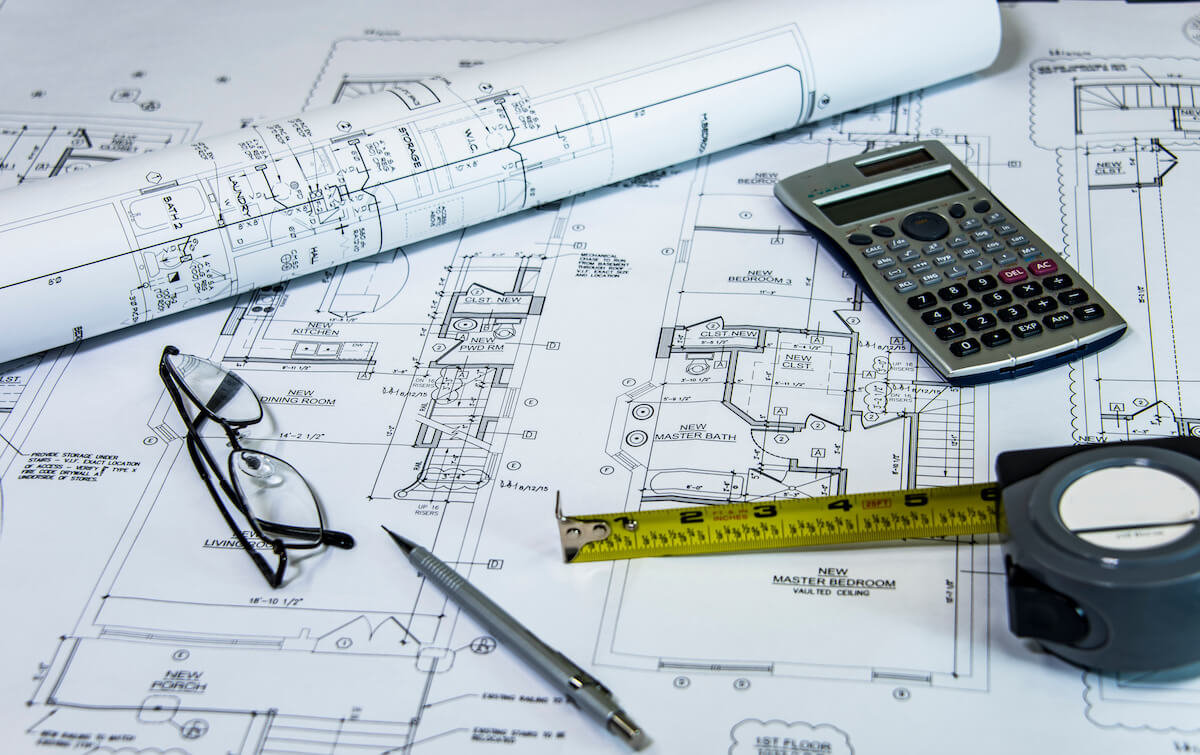
Compare the Standard Specification Before Comparing Price
This is one of the most important new-construction lessons.
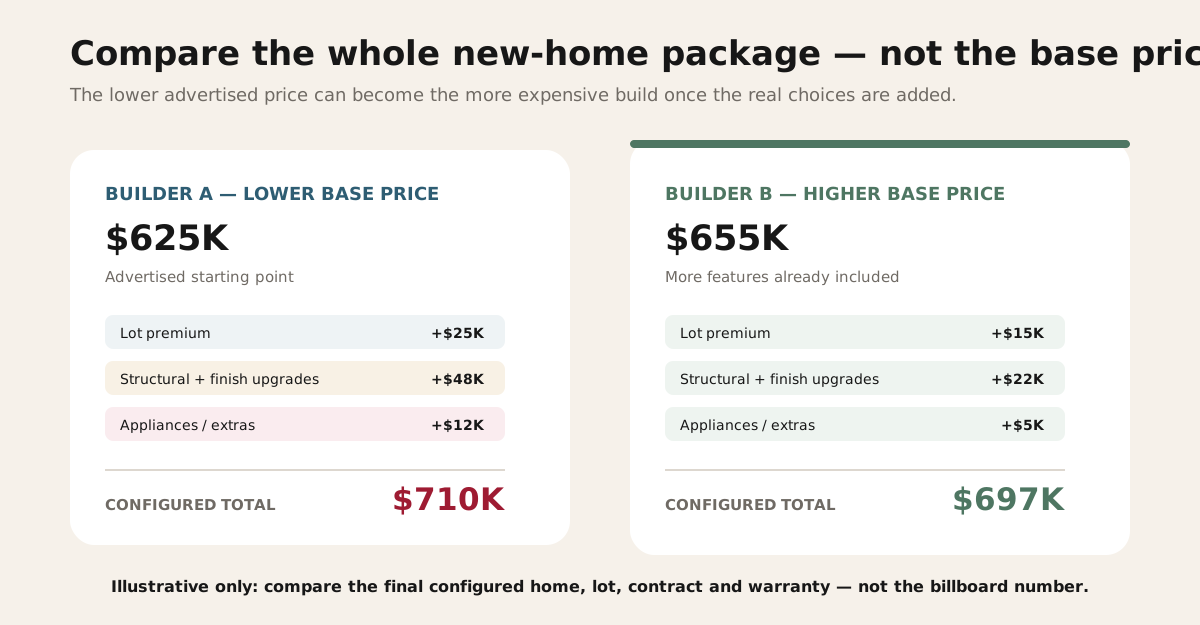
Builder A may advertise a lower base price than Builder B.
But Builder B may already include items that Builder A prices as upgrades.
Those differences can include:
- Ceiling height
- Cabinet height
- Countertop material
- Appliance allowance
- Flooring
- Lighting
- Railings
- Window sizes
- Exterior materials
- Garage dimensions
- Basement rough-ins
- Energy-efficiency features
The useful number is not the base price.
It is the price of the home you would actually choose to build.
Understand Lot Premiums
The same floor plan can cost very different amounts depending on the lot.
Premiums may apply for:
- Larger lots
- Corner lots
- Walkout lots
- Pie-shaped lots
- Park-facing lots
- Lots backing green space
- Lots with better views
The lot can also affect long-term resale.
Before paying a premium, ask whether buyers in the future are likely to value the same feature.
A $40,000 premium paid today does not guarantee a $40,000 resale premium later.
Showhomes Are Marketing Tools
Showhomes are designed to make the product look its best.
They may include:
- Upgraded cabinetry
- Premium flooring
- Designer lighting
- Custom wall treatments
- Built-ins
- Upgraded appliances
- Expanded windows
- Structural changes
- Landscaping
- Furniture and decor
When you tour a showhome, ask for a written breakdown of:
What is standard
and
What is upgraded
That one document can prevent a large amount of confusion later.
Floor Plans: Think Beyond Square Footage
Two 2,000-square-foot homes can function completely differently.
Look at:
- Hallway space
- Bedroom sizes
- Storage
- Stair placement
- Mudroom design
- Kitchen workflow
- Window placement
- Furniture walls
- Laundry location
- Basement stairs
- Garage entry
The best floor plan is not necessarily the largest one.
It is the one that uses the space well.
Structural Options Should Be Decided Early
Some upgrades are easy to add later.
Others are much easier during construction.
Structural decisions can include:
- Additional windows
- Larger windows
- Main-floor bedroom
- Full bathroom
- Fireplace
- Extended kitchen
- Alternate ensuite
- Bonus room configuration
- Side entrance
- Basement ceiling height
- Garage extension
If there is any chance you will want a major structural option later, ask about it before signing.
Once permits, engineering and framing are underway, changes can become expensive or impossible.
New-Community Construction Is Part of the Lifestyle
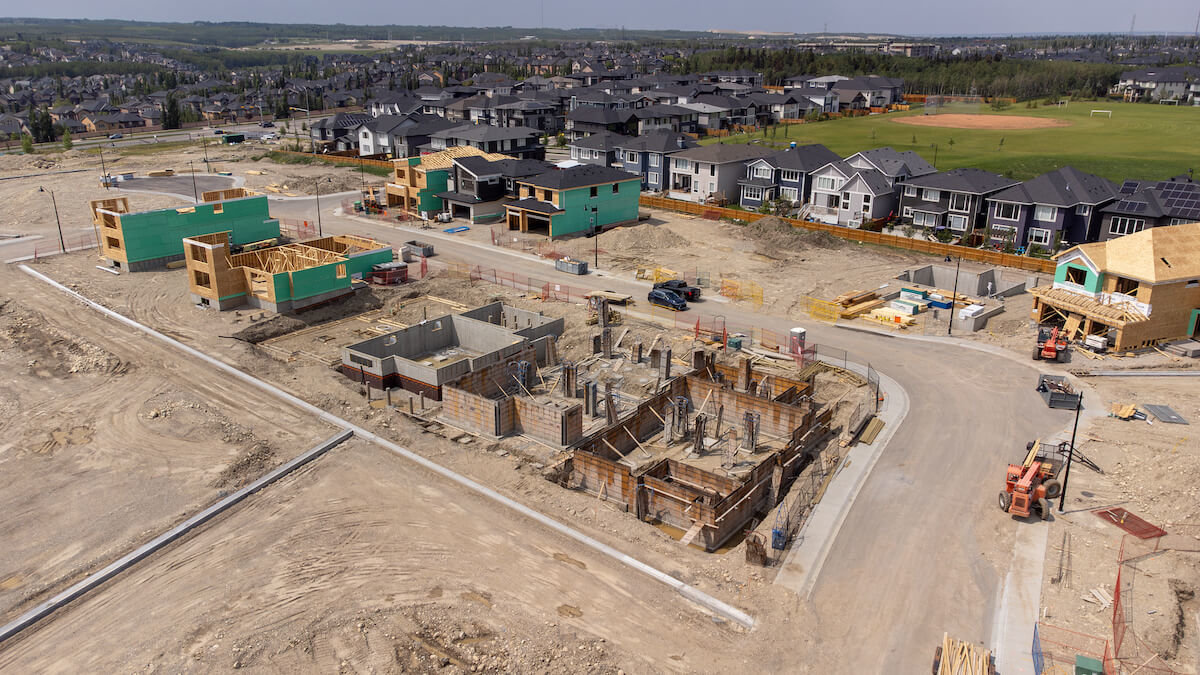
Buying in a developing community means you are also buying into a construction timeline.
For several years you may experience:
- Construction traffic
- Dust
- Temporary roads
- Unfinished landscaping
- Nearby building activity
- New phases opening
- Changing amenities
There can also be benefits.
You may gain:
- New schools
- New retail
- Parks
- Pathways
- Community facilities
- Additional housing choices
Ask the developer or builder what is planned around the lot.
The empty field behind a showhome is not guaranteed to stay empty.
Review the Builder Contract Carefully
Builder contracts are not the same as a standard resale purchase contract.
They may contain detailed terms dealing with:
- Construction timelines
- Delays
- Material substitutions
- Lot dimensions
- Square-footage tolerances
- Upgrade payments
- Deposits
- Financing
- Changes to plans
- Possession
- Deficiencies
- Landscaping
- Architectural controls
Do not assume a clause is standard simply because the salesperson says every buyer signs it.
Understand what you are agreeing to.
For major legal questions, have the contract reviewed by a qualified real-estate lawyer.
Alberta New Home Warranty: Know the 1-2-5-10 Structure
Alberta’s New Home Buyer Protection Act requires minimum warranty coverage on new homes.
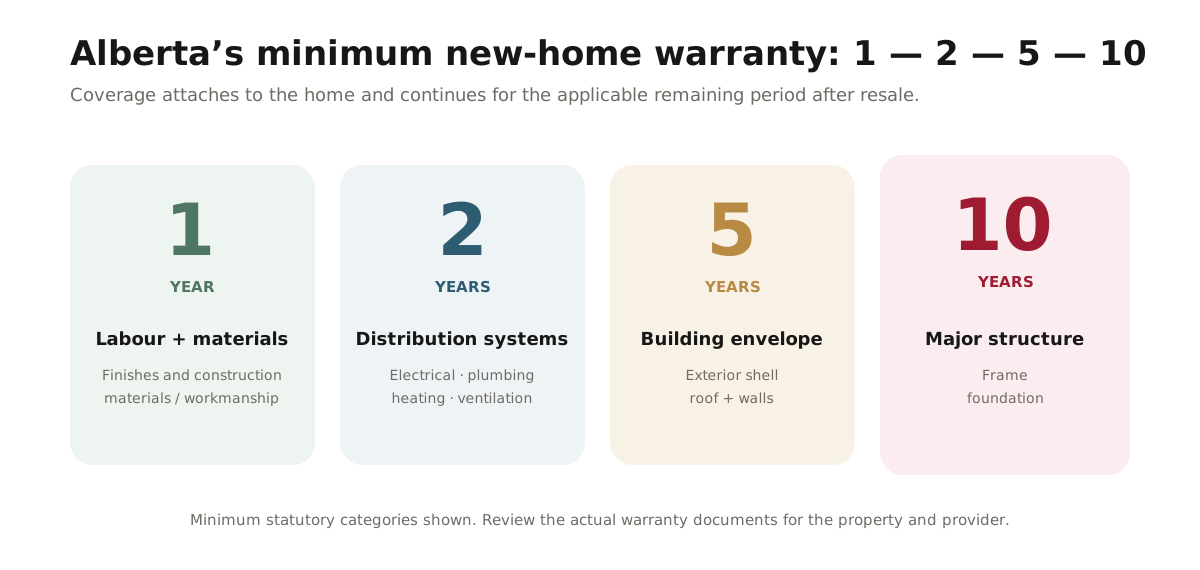
The minimum structure is:
1 year — labour and materials
Covers defects in materials and labour related to the construction and finishes.
2 years — delivery and distribution systems
Covers systems such as electrical, plumbing, heating, ventilation and air conditioning distribution.
5 years — building envelope
Covers the exterior shell of the home, including items such as the roof and walls.
10 years — major structural components
Covers major structural elements such as the frame and foundation.
Warranty attaches to the home, not only to the original owner, and the remaining coverage can continue after resale.
Look Up the Builder and Warranty
Alberta provides public registries where buyers can search:
- Residential builder licensing
- New-home warranty information
- Warranty provider details
That should be part of your due diligence.
Do Not Skip the Possession Inspection
A brand-new home can still have deficiencies.
Before possession, inspect carefully.
Common items to review include:
- Paint and drywall
- Flooring
- Cabinets
- Countertops
- Windows
- Doors
- Plumbing fixtures
- Electrical fixtures
- Appliances
- Exterior finishes
- Mechanical systems
Document deficiencies in writing.
Take photos.
Keep records of warranty communication after possession.
Consider an Independent Home Inspection
“New” does not mean “perfect.”
An independent inspector can provide another set of eyes on the property.
Depending on timing and builder rules, buyers may consider inspections:
- During construction where permitted
- Before possession
- Near the end of the first-year warranty period
The inspection does not replace the warranty.
It can help identify issues to document and investigate.
Quick Possession vs Building From Scratch
A quick-possession home can reduce uncertainty.
You can often see:
- The actual layout
- Actual finishes
- Lot position
- Construction progress
But you give up some customization.
Building from an earlier stage gives you more selection control but creates more exposure to:
- Construction timelines
- Selection deadlines
- Pricing upgrades
- Change orders
- Delays
Neither option is automatically better.
A Better Way to Compare Builders
Before choosing, create the same comparison sheet for every builder.
Track:
- Final price with your actual upgrades
- Lot premium
- Standard specification
- Structural options
- Deposit schedule
- Estimated possession
- Contract conditions
- Warranty provider
- Inspection access
- Post-possession service process
That forces the comparison away from showhome emotion and toward the actual purchase.
Frequently Asked Questions
Who is the best home builder in Calgary?
There is no single best builder for every buyer. Compare the builder’s product, specific community, specifications, contract, customization, warranty process and final all-in price.
Which Calgary builders have been around the longest?
Several major Calgary builders have decades of history, including Morrison Homes, Homes by Avi, Shane Homes, Sterling Homes, Jayman BUILT, Cardel Homes, Cedarglen Homes, Excel Homes and Trico Homes.
Is it cheaper to buy directly from a builder?
Not automatically. The final price depends on the home, lot, upgrades, incentives and contract. Compare the complete purchase, not only the advertised base price.
Does every new home in Alberta have a warranty?
Alberta’s New Home Buyer Protection Act requires minimum warranty coverage for new homes subject to the legislation, with 1-year, 2-year, 5-year and 10-year coverage categories.
Should I get a home inspection on a brand-new house?
An independent inspection can still be useful because new construction can have deficiencies. The inspection should complement, not replace, the builder and warranty processes.
The Bottom Line
Choosing a Calgary home builder is not about finding the company with the best showhome.
It is about comparing what you are actually buying.
Look at:
- Builder experience
- Floor plan
- Lot
- Standard specifications
- Upgrade pricing
- Contract
- Construction process
- Warranty
- Possession timeline
- Post-possession support
The builder name matters.
But the specific home, community and deal matter just as much.
A disciplined comparison before signing can save far more money and frustration than trying to fix the wrong decision after construction starts.
Sources & Methodology
Builder histories and long-standing differentiators were cross-checked against official builder information. Alberta warranty requirements were verified against Government of Alberta New Home Buyer Protection resources. Builder offerings, communities and specifications change over time, so buyers should confirm current details directly for the specific project before signing.
This article is for general informational purposes only and is not legal, construction or warranty advice. Builder contracts and property-specific concerns should be reviewed with the appropriate qualified professionals.