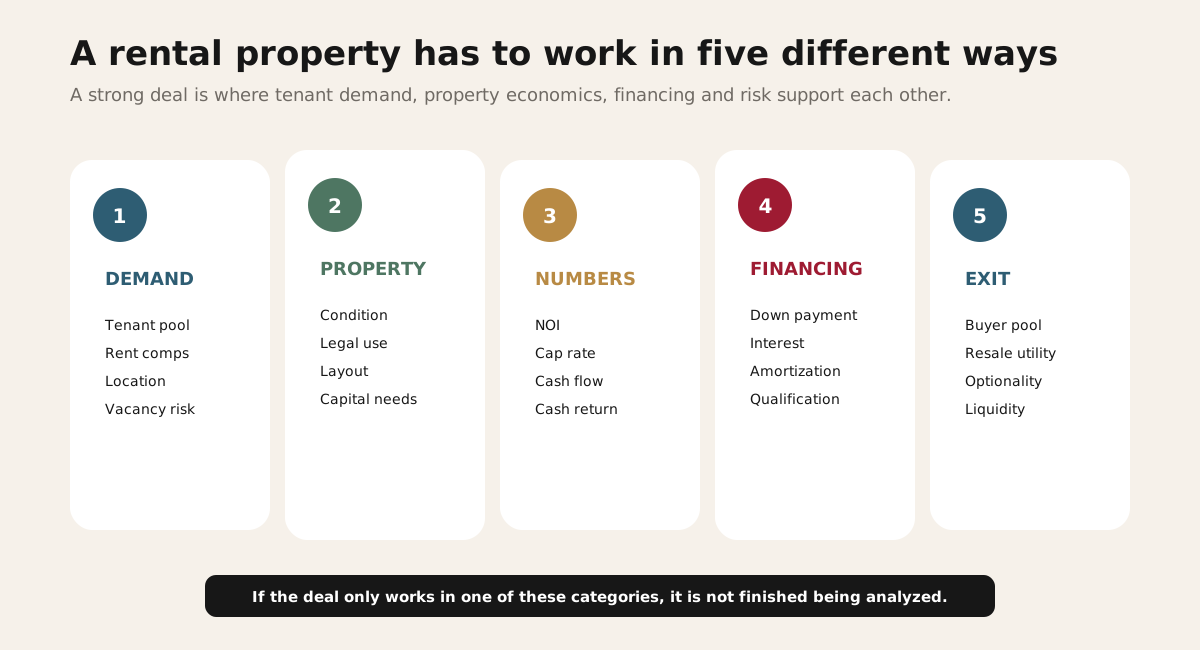
A good investment property is not simply a house that might go up in value.
It is a property where the numbers, location, tenant demand, financing and operating risk all make sense together.
That distinction matters because a home can be:
- Beautiful
- In a desirable neighbourhood
- Easy to imagine owning
- Likely to appreciate over a long period
and still be a poor rental investment at the price you are paying.
The investment decision should begin with the property as a business.
Before asking whether you like the kitchen or whether the backyard is impressive, ask:
Who would rent this property?
What would they realistically pay?
What will the property actually cost to operate?
How much cash will be tied up in the deal?
What happens if rent is lower, expenses are higher, or the property sits vacant?
Start With the Investment Strategy
"Investment property" can mean several different things.
The right property depends on what you are trying to accomplish.
Long-term rental
The goal is typically stable tenancy, recurring rent and long-term ownership.
You may prioritize:
- Tenant demand
- Low turnover
- Functional layout
- Durable finishes
- Manageable maintenance
- Strong rent-to-price relationship
House hack / owner-occupied multi-unit
You live in part of the property and rent another unit.
Examples can include:
- Duplex
- Triplex
- Fourplex
- Home with a legal secondary suite
The economics can be attractive because rental income may offset part of your own housing cost.
Financing rules can also differ from a fully non-owner-occupied rental.
Value-add property
You buy a property where targeted improvements may increase rent, utility or resale value.
The opportunity only works if the improvement cost is lower than the value created.
Appreciation-focused property
You accept weaker current cash flow because you believe the location or property has stronger long-term growth potential.
That is a legitimate strategy.
But it should be a conscious decision rather than an excuse for poor numbers.
The First Rule: Buy for the Tenant, Not for Yourself
A rental property is not your dream home.
The features that matter most are the ones tenants consistently value.
Depending on the renter and property type, that can include:
- Good access to employment
- Transit
- Parking
- Functional bedrooms
- Laundry
- Storage
- Safe and practical entry
- Schools
- Shopping
- Parks
- Reasonable utility costs
- A useful floor plan
Your personal preference for a dramatic dining room or luxury tile may not produce higher rent.
The investment should be designed around rental demand, not owner emotion.
Location Still Matters — But Define What "Good Location" Means
A strong investment location is not automatically the most expensive neighbourhood.
A useful rental location usually has some combination of:
- Employment access
- Transit
- Schools
- Amenities
- Shopping
- Recreation
- Stable neighbourhood demand
- Housing types renters actually want
- Reasonable commute times
The best location is often where the rent a tenant will pay is strong relative to the purchase price and operating cost.
A prestige address can be a weak rental if the purchase price is too high for the rent it commands.
Research Rent Before You Analyze the Purchase
Do not begin with the seller's projected rent.
Build your own rent opinion.
Look at competing rental properties with similar:
- Property type
- Bedroom count
- Bathroom count
- Size
- Location
- Parking
- Condition
- Basement
- Utilities
- Furnishing
- Pet policy
Active rental listings tell you what landlords are asking.
Whenever possible, also learn what similar units actually rented for and how long they took to lease.
Use a realistic number.
A deal that only works at the highest rent you can find is fragile.
Ask Who the Likely Tenant Is
Different properties attract different renter profiles.
One-bedroom condo
Likely renter priorities may include:
- Transit
- Downtown access
- Secure parking
- Fitness facilities
- Walkability
Family-oriented detached home
Likely priorities may include:
- Bedrooms
- Schools
- Yard
- Garage
- Storage
- Long-term stability
Secondary-suite property
Likely renter priorities may include:
- Separate entrance
- Privacy
- Laundry
- Parking
- Natural light
- Legal / safe configuration
A property is easier to rent when the design matches a clear renter group.
Verify Any Secondary Suite
In Calgary, do not assume that a basement kitchen and separate entrance automatically make a legal secondary suite.
The City maintains a Secondary Suite Registry for approved suites.
Registered suites have obtained the necessary permits and inspections and meet applicable safety requirements.
Before paying a premium for "suite potential," verify:
- Whether a suite is registered
- Existing permits
- Egress
- Fire separation
- Heating / ventilation
- Electrical
- Plumbing
- Entrance configuration
- Parking / site requirements where applicable
A legal suite and an illegal suite do not carry the same risk.
And a space that could become a legal suite is not worth the same as one that is already compliant and rentable.
Separate Gross Rent From Net Operating Income
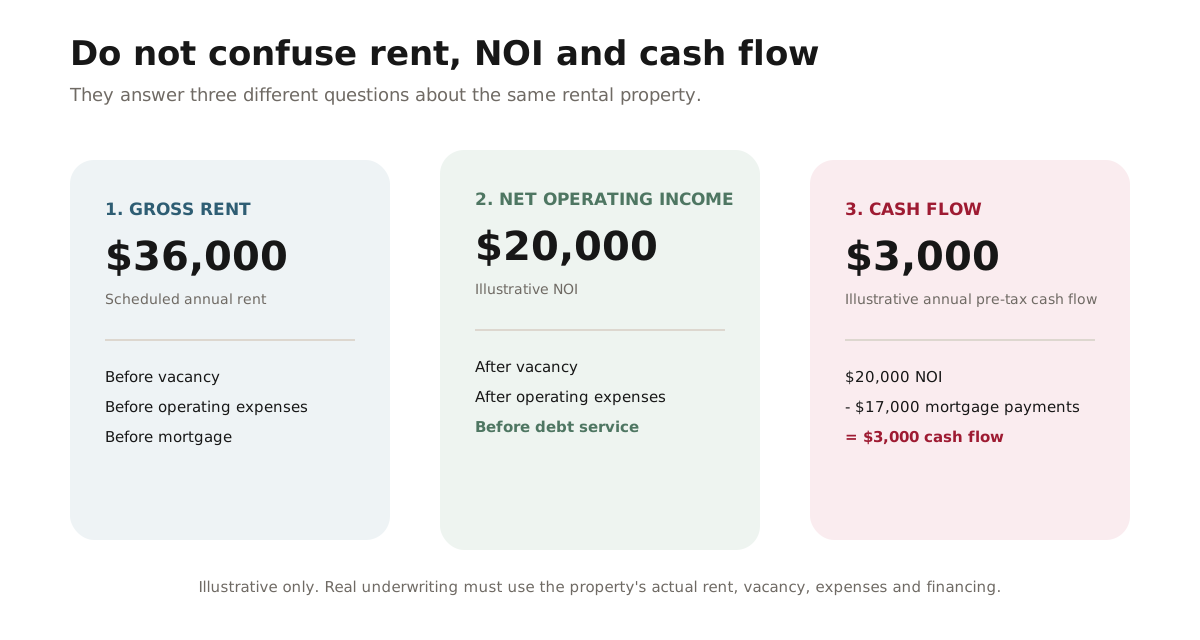
Gross rent is not profit.
If a property collects $3,000 per month, that does not mean it produces $36,000 per year for the owner.
Operating expenses come first.
Common rental-property expenses can include:
- Property taxes
- Insurance
- Condo fees
- Utilities paid by landlord
- Property management
- Repairs
- Maintenance
- Landscaping
- Snow removal
- Licensing or administration
- Vacancy
- Capital-replacement reserve
The income left after normal property operating expenses is often discussed as Net Operating Income, or NOI.
For basic property analysis:
NOI = Gross operating income − operating expenses
Mortgage principal and interest are normally kept outside NOI when comparing the performance of the real estate itself.
That lets you separate:
How the property performs
from
How you chose to finance it.
Do Not Pretend Vacancy Is Zero
A property is unlikely to remain perfectly occupied forever.
A realistic analysis should allow for:
- Turnover
- Marketing
- Cleaning
- Lease-up time
- Non-payment risk
Even when the rental market is strong, zero vacancy forever is not a useful underwriting assumption.
Build a vacancy allowance into your model.
Repairs Are Not the Same as Capital Replacements
A repair budget covers ordinary problems:
- Plumbing service
- Appliance repairs
- Minor electrical work
- Paint
- Hardware
- Small maintenance items
Capital replacements are larger, less frequent items:
- Roof
- Furnace
- Windows
- Hot-water equipment
- Major appliances
- Exterior work
A property can appear cash-flow positive for years while quietly approaching a $15,000–$25,000 capital expense.
That is why cash flow should include some form of reserve planning.
Calculate the Cap Rate
The capitalization rate is one simple way to compare income-producing properties.
A common purchase analysis is:
Cap rate = Annual NOI ÷ Purchase price
Example:
- Purchase price: $500,000
- Gross scheduled rent: $36,000
- Effective rental income after vacancy: $34,200
- Operating expenses: $14,200
- NOI: $20,000
Cap rate:
$20,000 ÷ $500,000 = 4.0%
A higher cap rate is not automatically better.
A higher return may come with:
- More management
- More tenant turnover
- Weaker location
- Older systems
- Higher repair risk
- Less appreciation potential
Cap rate is one lens, not the whole decision.
Then Calculate Cash Flow
Cash flow includes the financing.
A simplified formula is:
Cash flow = NOI − mortgage debt service
If the property has:
- $20,000 NOI
- $17,000 annual mortgage payments
then pre-tax cash flow is approximately:
$3,000 per year
or:
$250 per month
That sounds positive.
But you still need to ask whether $250 per month is enough compensation for:
- Risk
- Management
- Capital tied up
- Unexpected expenses
Cash-on-Cash Return
Cash-on-cash return looks at the cash flow relative to the cash you invested.
A basic version is:
Annual pre-tax cash flow ÷ cash invested
If:
- Annual cash flow = $3,000
- Total cash invested = $120,000
then cash-on-cash return is:
2.5%
That does not include every economic benefit of ownership.
It does not directly capture:
- Mortgage principal paydown
- Appreciation
- Tax consequences
- Future sale costs
But it helps answer an important question:
How much current cash return am I receiving on the money I put into the deal?
Do Not Count Mortgage Principal as an Operating Expense
Mortgage payments contain:
- Interest
- Principal
Principal repayment builds equity.
It reduces cash in your bank account but is not the same economic cost as an operating expense.
That is why good investment analysis separates:
- Property operations
- Debt service
- Principal reduction
- Appreciation
- Tax effects
Mixing everything together makes it difficult to understand why the investment is performing.
Financing Can Change the Entire Deal
Two buyers can purchase the same property and experience very different returns because of financing.
Factors include:
- Down payment
- Interest rate
- Amortization
- Mortgage type
- Qualification
- Rental-income treatment
- Owner occupancy
CMHC has separate programs for owner-occupied properties and small non-owner-occupied rental properties.
For qualifying non-owner-occupied 2–4 unit small rental properties, CMHC Income Property allows financing up to 80% loan-to-value, subject to its requirements.
Owner-occupied 1–4 unit properties can fall under different CMHC homeowner rules.
Do not assume your primary-residence financing applies to a rental.
Confirm the financing structure before you start making offers.
A Property Can Cash Flow Better With a Larger Down Payment — But That Does Not Automatically Make It a Better Investment
Putting more money down reduces debt service.
That often improves monthly cash flow.
But it also increases the cash tied up in the property.
For example:
Scenario A
$100,000 cash invested $4,000 annual cash flow
Cash-on-cash return = 4%
Scenario B
$200,000 cash invested $7,000 annual cash flow
Cash-on-cash return = 3.5%
Scenario B has more cash flow.
Scenario A has the higher current return on cash invested.
This is why you need more than one metric.
Stress-Test the Deal Before You Buy
Do not analyze only the optimistic scenario.
Test what happens when:
- Rent is 5% lower
- Vacancy is higher
- Insurance increases
- Condo fees rise
- Repairs are larger
- Interest rates reset higher at renewal
- Property management is required
- A major appliance fails
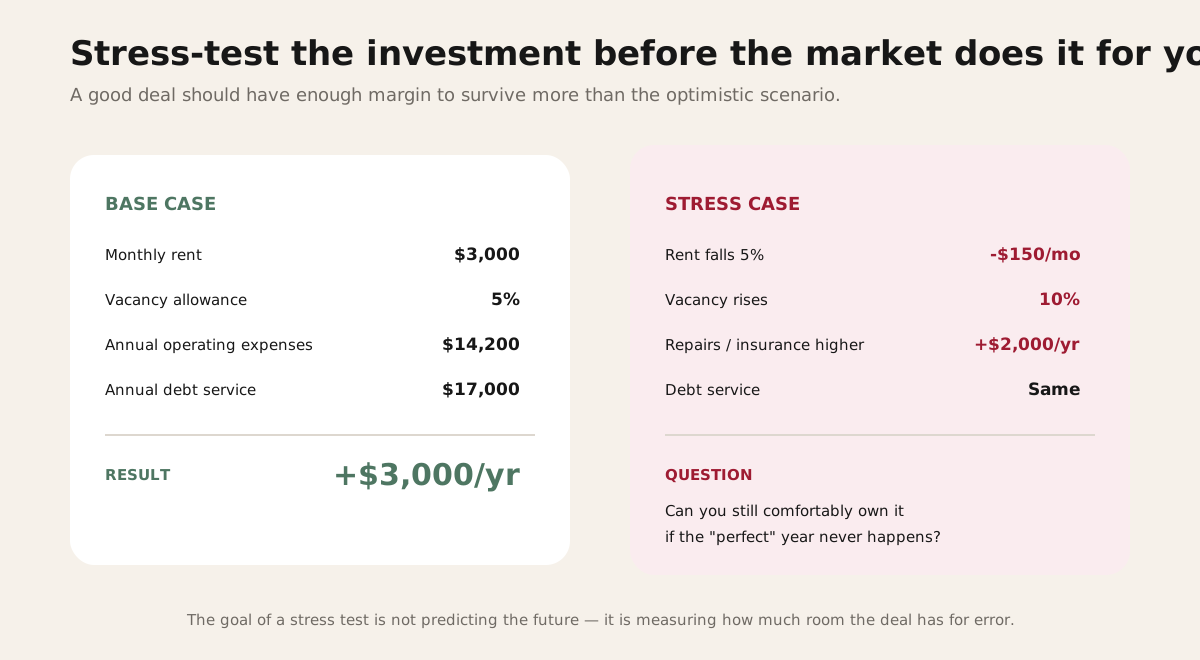
If one small change makes the investment unaffordable, the deal has very little margin for error.
Pay Attention to Condo Investment Risk
A condo can be an excellent rental property.
But analyze the condominium corporation as part of the investment.
Review:
- Condo fees
- What the fees include
- Reserve fund
- Reserve-fund study
- Special levies
- Insurance
- Bylaws
- Rental restrictions
- Pet restrictions
- Board minutes
- Major upcoming work
An investor does not only own a unit.
They own an interest in the corporation's financial obligations.
A low-priced condo with weak reserve funding can be more expensive than a higher-priced unit in a healthier building.
Property Management Changes the Numbers
If the property only works because you assume your own labour is free, understand that you are partly buying yourself a job.
Self-management can involve:
- Advertising
- Showings
- Tenant screening
- Lease preparation
- Move-ins
- Inspections
- Maintenance calls
- Rent collection
- Arrears
- Disputes
- Move-outs
Even if you plan to self-manage, run the numbers once with a realistic management expense.
That tells you whether the property works as an investment or only works because you personally provide unpaid labour.
Alberta Landlord Responsibilities Matter
Investment analysis should include the operating reality of being a landlord.
Residential tenancies in Alberta are governed by the Residential Tenancies Act and related rules.
Landlords need to understand matters such as:
- Security deposits
- Inspection reports
- Rent collection
- Repairs and maintenance
- Entry
- Notices
- Ending tenancies
- Dispute resolution
For 2025, Alberta's minimum annual interest rate payable on residential tenancy security deposits is 0.5%.
The point is not that landlord regulation makes rental property unattractive.
The point is that rental ownership is an operating business with legal responsibilities.
Do Not Ignore Taxes
Rental income has tax consequences.
Keep records for:
- Rent
- Interest
- Property taxes
- Insurance
- Repairs
- Management
- Professional fees
- Utilities
- Capital improvements
CRA distinguishes between current expenses and capital expenses.
The tax treatment of mortgage interest, improvements, depreciation / capital cost allowance and eventual sale can materially affect your actual return.
Use an accountant when the investment becomes meaningful enough that tax assumptions could change the decision.
Appreciation Should Be the Bonus — Not the Only Thing Holding the Deal Together
Real estate can appreciate.
It can also remain flat or decline for periods of time.
A dangerous investment thesis is:
"The monthly loss is fine because prices always go up."
A stronger thesis is:
"I understand the current economics, and long-term appreciation would improve the return."
If the investment requires aggressive appreciation just to become worthwhile, you are speculating more than underwriting.
Look at Exit Liquidity
Before buying, ask:
Who will buy this property from me later?
A strong exit property may appeal to:
- Other investors
- First-time buyers
- Families
- Downsizers
- Owner-occupiers
A highly specialized property may have a smaller buyer pool.
The larger the future buyer pool, the more options you may have when you want to sell.
Avoid Properties With Only One Path to Success
The strongest investment properties often have multiple possible uses.
For example:
- Rent the entire home
- Live upstairs and rent a legal suite
- Rent both legal units
- Sell later to an owner-occupier
- Renovate strategically
- Hold long term
Optionality matters.
A property that only works if one exact rental strategy remains legal and profitable forever carries more risk.
Build an Investment Property Scorecard
Before viewing properties, decide what matters.
A useful scorecard can include:
Rental demand
Is there a clear tenant pool?
Rent-to-price relationship
Is the expected rent reasonable relative to the acquisition price?
Operating cost
Are taxes, insurance, condo fees and maintenance manageable?
Condition
Are major capital expenses approaching?
Financing
Does the mortgage structure work?
Legal use
Are suites and rental uses compliant?
Management burden
How difficult will this property be to operate?
Exit options
Who else could buy the property later?
This keeps you from falling in love with a property before the numbers are finished.
A Simple Investment Property Underwriting Example
Consider a hypothetical Calgary rental:
Acquisition
Purchase price: $500,000
Income
Monthly market rent: $3,000
Annual scheduled rent:
$36,000
Vacancy / credit allowance:
$1,800
Effective rental income:
$34,200
Operating costs
Property tax: $3,500
Insurance: $1,600
Repairs / maintenance: $2,400
Management allowance: $3,000
Utilities / other landlord costs: $1,700
Capital reserve: $2,000
Total operating costs:
$14,200
NOI
$34,200 − $14,200 = $20,000
Cap rate
$20,000 ÷ $500,000 = 4.0%
Now add financing.
If annual mortgage payments are $17,000:
Pre-tax cash flow:
$3,000 per year
The next question is whether that return is attractive relative to the cash invested and risk being taken.
This is the point where investment analysis begins — not ends.
Red Flags When Evaluating an Investment Property
The rent estimate comes from the seller
Verify it independently.
There is an "illegal suite" being valued like a legal one
Verify the property and permits.
The deal only works with zero vacancy
Use realistic assumptions.
There is no repair allowance
Every property ages.
The condo fee is excluded from the analysis
Include all recurring ownership expenses.
The current tenant is far below or above market
Understand the lease, rent history and legal implications before assuming immediate changes.
The property requires appreciation to justify the monthly loss
Know that you are taking market risk.
You cannot explain why tenants would choose it
That is a demand problem.
Frequently Asked Questions
What makes a good investment property in Calgary?
A good investment property combines realistic tenant demand, sustainable rent, manageable expenses, suitable financing, acceptable maintenance risk and a purchase price that supports the investor's return target.
Should an investment property always be cash-flow positive?
Not every investor uses the same strategy, but negative cash flow should be a deliberate decision rather than an unpleasant surprise. Understand exactly what return you expect from appreciation, principal paydown or future improvements.
What is cap rate?
Cap rate is a property's annual net operating income divided by its value or purchase price for the analysis. It helps compare property-level income performance before financing.
What is the difference between NOI and cash flow?
NOI measures the property's income after operating expenses but before mortgage debt service. Cash flow considers the mortgage payments and therefore depends on how the property is financed.
How much down payment do I need for an investment property?
It depends on property type, occupancy and lender / insurer requirements. CMHC Income Property permits up to 80% LTV for qualifying non-owner-occupied 2–4 unit rental properties, while owner-occupied properties use different rules. Confirm your specific financing before shopping.
How do I know whether a Calgary basement suite is legal?
Check the City of Calgary Secondary Suite Registry and verify permits and property information. A separate entrance or second kitchen alone does not prove that the suite is legal.
The Bottom Line
Choosing an investment property should feel less like shopping for a home and more like underwriting a small business.
Start with rent.
Subtract realistic expenses.
Build in vacancy.
Plan for repairs.
Separate property performance from financing.
Stress-test the result.
Then ask whether the location, tenant demand, legal use and exit options support the numbers.
The best investment property is not necessarily the cheapest home.
It is the one where the return makes sense without needing perfect conditions for the deal to survive.
Sources & Methodology
Financing concepts were cross-checked against CMHC homeowner and small-rental mortgage-insurance resources. Calgary secondary-suite guidance was cross-checked against the City of Calgary Secondary Suite Registry and permit resources. Alberta landlord obligations were cross-checked against Government of Alberta residential-tenancy guidance available by the August 23, 2025 publication date.
This article is for general informational purposes and is not investment, mortgage, tax or legal advice. Returns, financing, rental income, operating costs and tax treatment vary by property and investor.