Calgary property tax becomes much easier to understand once you separate assessment from taxation.
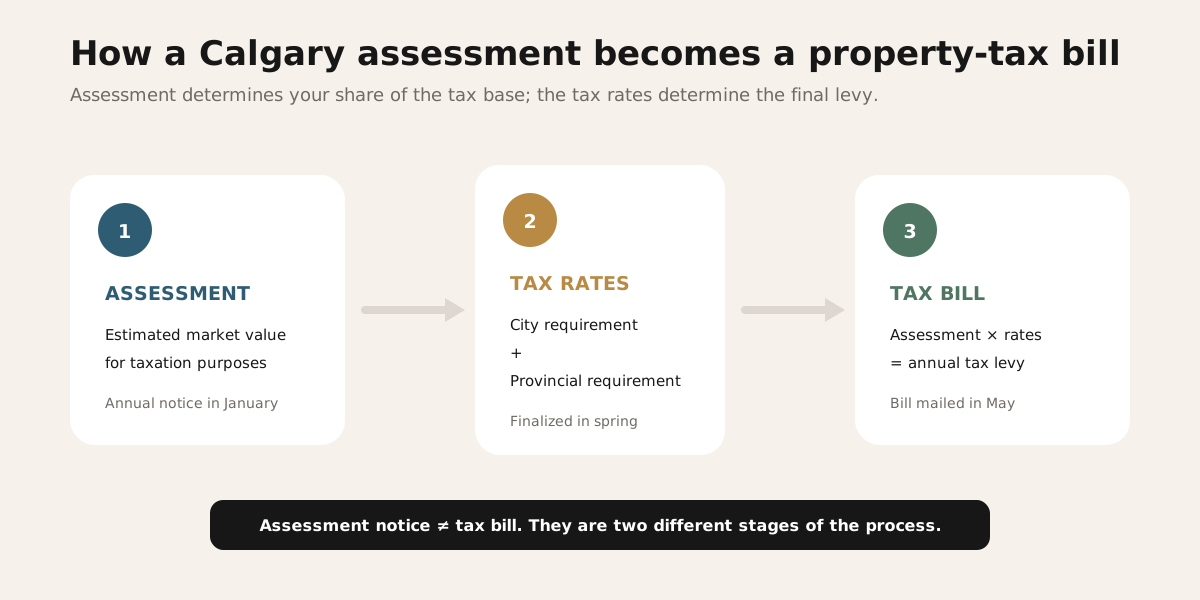
The City first estimates the market value of your property.
Later, tax rates are applied to that assessed value to determine your share of the municipal and provincial property-tax requirements.
That means your January assessment notice is not your tax bill.
And a 10% increase in assessed value does not automatically mean a 10% increase in property tax.
The important question is how your property’s assessment changed relative to the rest of the tax base.
Assessment and Property Tax Are Two Different Steps
The annual process can be thought of in two stages.
Stage 1: The City Assesses the Property
Calgary prepares annual property assessments to distribute taxes among property owners.
For market-value properties, the assessment reflects an estimate of the property's market value as of July 1 of the previous year, while its physical characteristics and condition are considered as of December 31.
For example, the 2025 assessment roll used a July 1, 2024 valuation date and December 31, 2024 physical-condition date.
Residential properties are generally assessed using the sales-comparison approach.
Stage 2: Tax Rates Are Applied
After municipal budget requirements and the provincial property-tax requisition are known, tax rates are established.
Your annual tax bill then applies the applicable municipal and provincial rates to your assessed value.
In simple terms:
Assessed value × applicable tax rates = property tax
What Was the 2025 Calgary Residential Property Tax Rate?
For 2025, Calgary's residential rates were:
- City rate: 0.0038706
- Provincial rate: 0.0023097
- Combined residential rate: 0.0061803
A residential property assessed at $700,000 would therefore produce an illustrative tax calculation of roughly:
$700,000 × 0.0061803 = $4,326.21
The actual bill may contain adjustments or other account-specific details, so use the City's tax bill and calculator for the final amount.
What Did the Typical Calgary Home Pay in 2025?
The City's published 2025 example used a median single-detached residential assessment of $697,000.
That produced approximately:
- $2,697.81 in property tax to The City of Calgary
- $1,610 in property tax to the Province of Alberta
- $4,308 total
For that published 2025 example, approximately 63% of residential property-tax dollars stayed with the City and 37% went to the Province.
Those are citywide examples.
Your own tax bill depends on your property’s assessment.
Why a Higher Assessment Does Not Automatically Mean the Same Tax Increase
This is one of the most misunderstood parts of property tax.
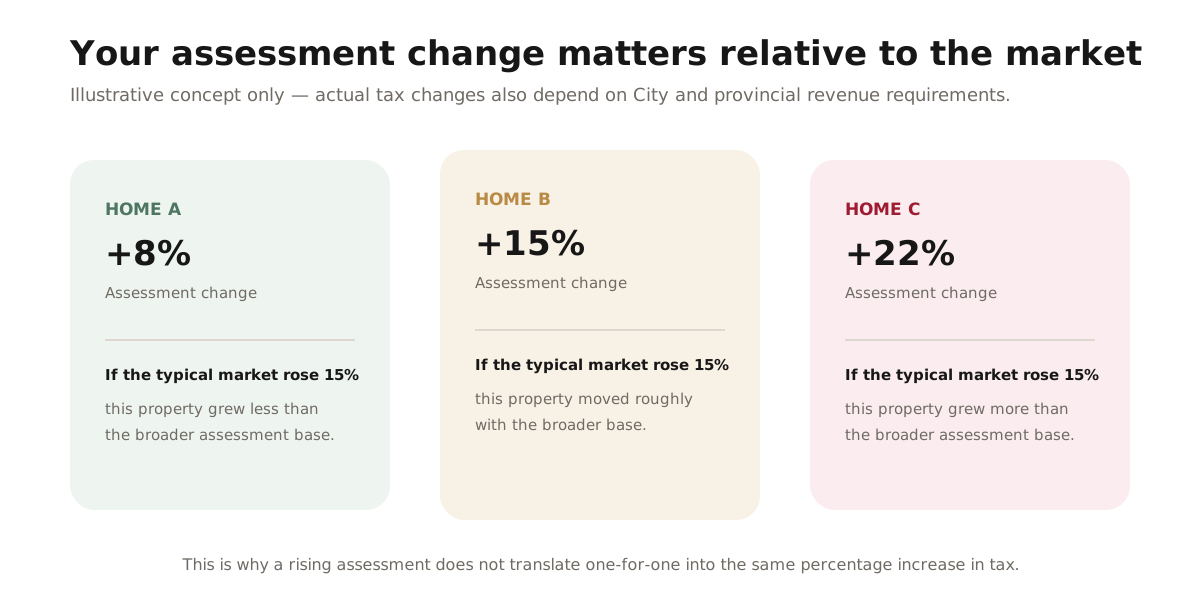
Suppose the typical residential property in Calgary rises substantially in assessed value.
If your property rises by roughly the same amount as the broader assessment base, your property-tax change may be driven more by budget and tax-rate changes than by the assessment increase itself.
If your property’s assessed value rises more than the typical property, your share of the tax base may increase.
If it rises less than the typical property, your share may decrease relative to others.
The assessment process is primarily a way of distributing the required tax revenue.
It does not mean the City simply collects the same tax rate on every increase in market value forever.
When Do Calgary Assessment Notices Arrive?
Annual property-assessment notices are generally mailed in January.
For 2025:
- Assessment notices were mailed January 10, 2025
- The Customer Review Period ran from January 10 to March 21, 2025
- March 21 was also the final date to file a formal assessment complaint for the annual roll
Your own assessment notice shows the applicable review and complaint dates.
What Should You Check on Your Assessment Notice?
Do not look only at the final assessed value.
Review the property information the City used.
Check items such as:
- Property type
- Living area
- Lot characteristics
- Garage
- Basement information
- Renovations or additions
- Location details
- Other property characteristics
You can also compare your property with other assessed properties and relevant sales through City assessment tools.
If the underlying property information is wrong, that can affect the assessed value.
Can You Appeal Your Property Taxes?
You cannot appeal the tax rate or simply appeal because you dislike the amount of tax owing.
The formal complaint process relates to the assessment and other appealable assessment information.
During the Customer Review Period, property owners can raise concerns with the City Assessor.
If an error is found, the City may be able to correct the assessment without a formal hearing.
If the issue is not resolved, the owner may file a complaint with the Assessment Review Board before the deadline shown on the assessment notice.
The filing requirements and fee must be followed correctly.
Assessment Value Is Not the Same as a Realtor's Market Evaluation
An assessed value has a specific taxation purpose and valuation date.
A real-estate market evaluation answers a different question:
What might the property sell for in the current market?
Those numbers can differ because:
- The assessment uses a legislated valuation date
- Market conditions can change after that date
- Assessment uses mass-appraisal methods
- A current market evaluation can account for recent comparable sales and property-specific positioning
Do not use the municipal assessment as a substitute for a current pricing analysis when buying or selling.
When Are Calgary Property Taxes Due?
For 2025, annual property-tax bills were mailed in May and the payment deadline was:
Monday, June 30, 2025
The City applied a 7% late-payment penalty on July 1 to any unpaid portion of the annual property tax.
Not receiving the bill in the mail did not remove the payment obligation or penalty.
Property owners could also access current and previous tax information through the City's myTax system.
TIPP: Paying Monthly Instead of in One Lump Sum
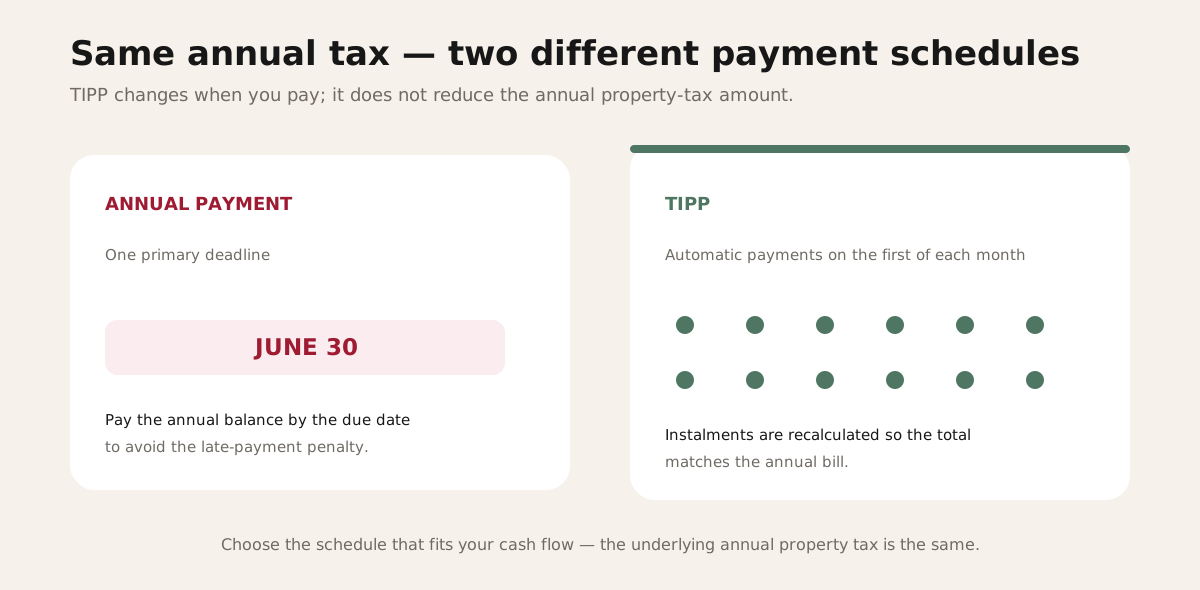
Calgary's Tax Instalment Payment Plan, or TIPP, allows owners to pay the same annual property-tax amount through automatic monthly withdrawals rather than one large June payment.
Key features include:
- Automatic withdrawal on the first day of each month
- No fee to join
- No annual re-enrollment while participation continues
- Instalments recalculated during the year so the total matches the annual tax bill
TIPP does not reduce the amount of property tax.
It changes the timing of the payments.
How TIPP Instalments Are Recalculated
The City reviews TIPP instalments twice during the year.
For the first half of the year, the final current-year tax rates are not yet known, so instalments are based partly on the previous year's tax amount and budget decisions.
After the annual tax bill is produced, later instalments are adjusted so the owner pays no more or less than the annual amount due.
That means a TIPP payment can change mid-year.
A payment increase does not necessarily mean a new fee was added.
It may simply be the recalculation required to finish paying the current annual tax bill.
What Happens When You Buy a Home Mid-Year?
Property taxes are commonly adjusted through the legal closing process.
The seller may have already paid some or all of the year's property tax, or may have paid monthly amounts through TIPP.
Your real-estate lawyer calculates the appropriate adjustment so each party is responsible for their share based on the agreed transaction and possession date.
This is one reason your closing statement may show a property-tax adjustment even though your annual City tax bill is not due that day.
What Happens to TIPP When You Move?
TIPP is tied to the specific property account.
If you sell one home and buy another, do not assume the existing TIPP arrangement simply follows you.
Review the City's process for ending or updating participation and setting up payments for the new property.
Property Taxes and Mortgage Payments
Some mortgage arrangements collect property-tax amounts as part of the borrower's regular mortgage payment and then remit taxes on the owner's behalf.
Others do not.
Know which structure applies to your mortgage.
If your lender is collecting taxes, confirm how and when the annual tax bill is handled.
If your lender is not collecting them, you are responsible for paying the City directly or using TIPP.
What Do Calgary Property Taxes Pay For?
Residential property-tax revenue supports municipal services and also includes an amount collected on behalf of the Province of Alberta.
Municipal tax dollars help support areas such as:
- Police, fire and emergency response
- Roads and transportation
- Transit
- Parks and recreation
- City infrastructure
- Municipal programs and services
The provincial portion is collected by the City and remitted to the Province.
Why Property Taxes Can Change From One Year to the Next
Your annual bill can change because of several moving pieces.
1. Municipal budget decisions
The City determines how much property-tax revenue is required to support municipal services.
2. Provincial requisition
The Province determines the amount Calgary must collect for the provincial portion.
3. Your property assessment
A change in the assessed value can change your share of the tax base.
4. Other properties' assessments
Your relative position matters.
Your home can increase in value while your relative tax share remains similar if the broader market changes similarly.
A Better Way to Estimate Next Year's Tax
Do not simply multiply last year's bill by your home's market-value increase.
Instead, use the City's property-tax calculator once the relevant assessment and tax information is available.
Before final tax rates are approved, any estimate is still an estimate.
The final bill arrives after the municipal and provincial tax requirements have been incorporated.
Buying a Home? Include Property Tax in the Monthly Budget
Property tax should be part of the affordability calculation from the beginning.
For example, an annual tax bill of $4,800 represents an average of:
$400 per month
Even if you pay the bill once a year, the cost is still part of monthly homeownership.
Your complete housing budget may include:
- Mortgage
- Property tax
- Home insurance
- Utilities
- Condo fees where applicable
- Maintenance
- Future repairs
Purchase price alone does not tell you the cost of owning the home.
Selling a Home? Know the Current Tax Position
Before listing or accepting an offer, it is useful to know:
- Current assessment
- Annual tax amount
- Whether the account is current
- Whether TIPP is being used
- Whether any supplementary tax information applies
Your lawyer handles the closing adjustment, but having the information organized makes the transaction smoother.
Frequently Asked Questions
How is Calgary property tax calculated?
The City's municipal and provincial property-tax rates are applied to the property's assessed value. The final bill may also reflect account-specific adjustments.
When were Calgary property taxes due in 2025?
The 2025 annual property-tax deadline was June 30, 2025.
What was the 2025 Calgary residential property-tax rate?
The combined published residential rate was 0.0061803, consisting of a City rate of 0.0038706 and provincial rate of 0.0023097.
What is TIPP?
TIPP is Calgary's Tax Instalment Payment Plan. It allows the annual property-tax amount to be paid through automatic monthly withdrawals instead of one annual lump-sum payment.
Can I appeal my property-tax bill?
You cannot appeal the tax rate simply because you disagree with the amount due. Property owners can review and, where appropriate, formally complain about the property assessment during the applicable assessment-review period.
Is my City assessment the same as current market value?
Not necessarily. The assessment uses a legislated valuation date and mass-appraisal process for taxation. A current real-estate market evaluation addresses today's market using current comparable sales and property-specific factors.
The Bottom Line
Calgary property tax is easiest to understand when you follow the process in order:
The property is assessed.
Municipal and provincial revenue requirements are established.
Tax rates are calculated.
Those rates are applied to the assessed value.
The final bill is mailed and paid either directly or through TIPP.
Your assessment matters, but it is only one part of the equation.
If you own a home in Calgary, review the assessment notice when it arrives, confirm the property details are correct, understand the review deadline, and budget for the final tax bill before June.
Sources & Methodology
Calgary-specific 2025 assessment dates, tax rates, payment deadlines, TIPP information and tax calculations were cross-checked against City of Calgary assessment, property-tax and 2025 public-information resources.
This article is for general informational purposes only and is not legal, tax or financial advice. Assessment values, tax rates, deadlines and account details can change from year to year; confirm current information with The City of Calgary.