
When most people think about real estate investing, they usually picture residential homes, condos or rental properties.
Commercial real estate is a different category.
Instead of renting space to individual residents, commercial properties generate income through businesses using the space. This can include office buildings, retail spaces, industrial properties, multi-unit buildings and other income-producing assets.
For investors looking beyond traditional residential properties, commercial real estate can provide opportunities — but it also requires a different level of analysis.
The biggest mistake is assuming commercial real estate is simply “a bigger rental property.”
It is a different investment model.
What Is Commercial Real Estate?
Commercial real estate refers to properties designed primarily for business or income-producing purposes.
Common categories include:
- Office buildings
- Retail spaces
- Industrial properties
- Warehouses
- Multi-unit residential properties
- Mixed-use developments
Each category behaves differently.
An industrial property with a long-term tenant has a very different risk profile than a downtown office building.
Why Investors Consider Commercial Real Estate
Commercial real estate can offer several potential advantages.
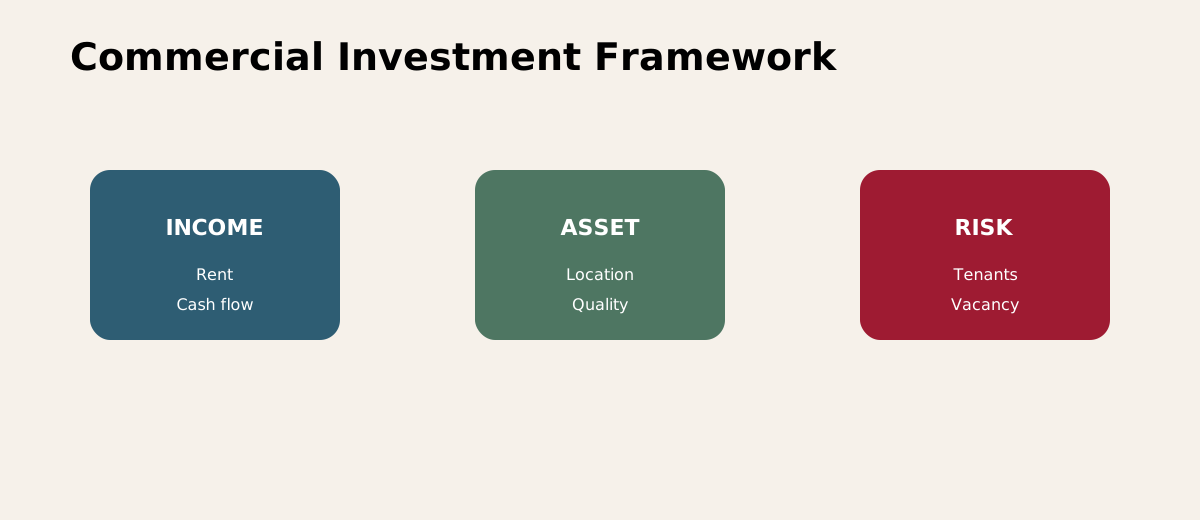
1. Income Potential
Commercial properties are often purchased because of their ability to generate ongoing income.
The basic idea is:
Rental income minus operating expenses equals net operating income.
Investors analyze this income stream to determine whether the property makes financial sense.
2. Longer Lease Structures
Many commercial leases are structured differently than residential leases.
Depending on the property and agreement, tenants may sign longer commitments and may take responsibility for certain operating costs.
This can create more predictable income for owners.
3. Diversification
For investors who already own residential real estate, commercial properties can provide exposure to a different asset class.
Different property types can perform differently depending on economic conditions.
4. Potential Appreciation
Like other real estate investments, commercial properties may increase in value over time.
However, commercial valuation is heavily connected to income performance.
A property's value is often influenced by factors such as:
- Tenant quality
- Lease terms
- Location
- Operating expenses
- Market demand
Commercial Real Estate Is Not Passive
One of the biggest misconceptions is that commercial real estate is effortless income.
In reality, investors need to understand:
- Leasing
- Tenant retention
- Vacancy risk
- Maintenance
- Financing
- Property management
- Market cycles
A vacant commercial property can create very different challenges than a vacant residential rental.
Types of Commercial Properties
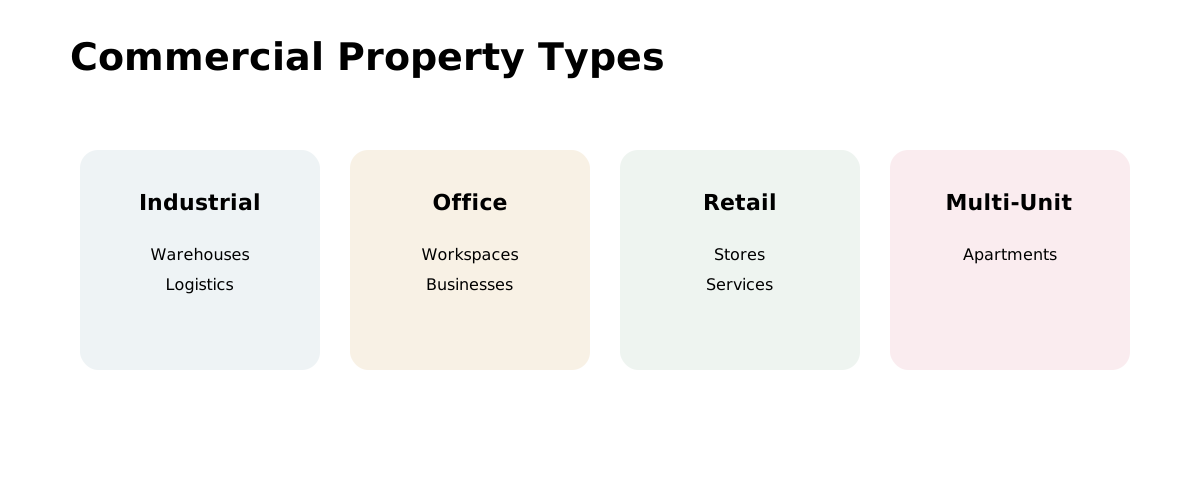
Industrial
Industrial properties include warehouses, distribution facilities and manufacturing spaces.
Investors often value industrial properties because businesses may require specialized spaces and longer commitments.
Office
Office properties have changed significantly in recent years.
Location, building quality, tenant profile and future demand are especially important considerations.
Retail
Retail properties depend heavily on location, visibility and surrounding consumer activity.
A strong location can be a major advantage.
Multi-Unit Residential
Apartment buildings and larger rental properties are often considered commercial investments once they exceed certain size thresholds.
They combine real estate ownership with rental operations.
How Commercial Properties Are Valued
Residential buyers often compare similar homes.
Commercial investors focus heavily on income.
Important concepts include:
Net Operating Income (NOI)
NOI represents the income a property produces after operating expenses, before financing costs.
Capitalization Rate
The capitalization rate, or cap rate, compares income performance with property value.
It is one of the metrics investors use when evaluating commercial opportunities.
Tenant Quality
A reliable tenant can significantly affect the stability of an investment.
A property with strong tenants and favourable lease terms may be viewed differently than one with uncertain occupancy.
Commercial Real Estate Risks
Commercial real estate can create opportunities, but investors need to understand the risks.

Vacancy
A vacant commercial space can take longer to fill than a residential rental.
Financing
Commercial lending can involve different requirements than residential mortgages.
Market Changes
Business needs, economic conditions and industry trends can affect demand.
Tenant Dependence
A property with one major tenant may have more concentration risk if that tenant leaves.
Is Calgary a Good Market for Commercial Real Estate?
Calgary has a diverse economy with major industries including energy, professional services, technology, transportation and logistics.
The city also has an active commercial real estate market with different opportunities across office, industrial, retail and mixed-use properties. citeturn0search12turn0news8
However, the right investment depends on the specific property.
A great commercial property in the wrong location can still struggle.
Questions to Ask Before Buying
Before purchasing commercial real estate, investors should understand:
- Who are the tenants?
- How long are the leases?
- What expenses does the owner pay?
- What is the vacancy history?
- What improvements are required?
- How does the property compare with alternatives?
- Does the income justify the purchase price?
Commercial vs Residential Real Estate
Neither option is automatically better.
Residential properties often have:
- Larger buyer pools
- Simpler analysis
- Easier financing
Commercial properties may offer:
- Different income opportunities
- Longer lease structures
- Greater focus on business fundamentals
The right choice depends on the investor's goals, experience and risk tolerance.
The Bottom Line
Commercial real estate can be a powerful investment strategy, but it requires a different approach than buying a rental home.
Successful investors focus on the numbers:
- Income
- Expenses
- Tenant quality
- Location
- Risk
- Long-term potential
The best commercial investment is not necessarily the most expensive property.
It is the property where the fundamentals make sense.
Sources & Methodology
Commercial real estate investing involves financial risk, and investors should consult qualified accounting, legal and commercial brokerage professionals before making investment decisions.