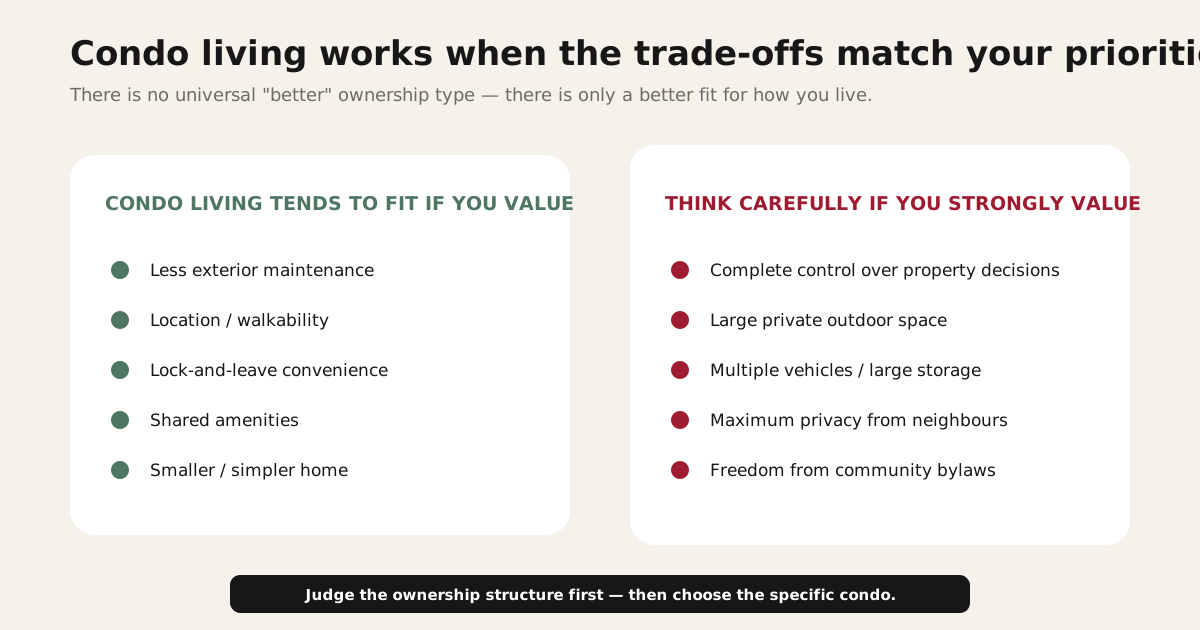
Condo living can be a great fit for the right buyer.
It can also be frustrating for someone who values complete control over their property.
The biggest mistake is treating a condo as simply a smaller house.
You are buying two things at the same time:
Your private unit.
And an ownership interest in a larger condominium corporation that controls, maintains and finances the shared property.
That changes how maintenance works.
It changes how expenses are shared.
It changes what you can modify.
And it means the financial health of the condominium corporation matters alongside the condition of the unit itself.
The better question is not:
“Are condos good or bad?”
It is:
“Does this ownership structure fit the way I want to live, spend and make decisions?”
What Does Condo Ownership Actually Mean?
When you buy a condominium unit, you own your unit and an interest in the condominium's common property.
Depending on the condominium structure, common property can include things such as:
- Hallways
- Elevators
- Roof
- Exterior walls
- Parkade
- Landscaping
- Shared mechanical systems
- Recreation facilities
- Common rooms
- Roadways or private access areas
The condominium corporation is responsible for operating and managing the condominium under Alberta's Condominium Property Act, regulations and the corporation's own bylaws.
As an owner, you are part of that corporation.
That means condo ownership includes both private-property ownership and shared decision-making.
Condo Living Can Reduce Day-to-Day Maintenance
One of the biggest attractions is that many exterior and common-property responsibilities are handled collectively.
Depending on the building, owners may not personally need to manage:
- Snow removal
- Landscaping
- Exterior painting
- Roof maintenance
- Common-area cleaning
- Elevator service
- Parkade maintenance
- Shared mechanical systems
For buyers who do not want to spend weekends shovelling, mowing or coordinating exterior contractors, that can be a major lifestyle benefit.
But the work has not disappeared.
You are paying your share of it through condominium contributions.
Low Maintenance Is Not No Maintenance
A condo owner is still responsible for the parts of the unit assigned to the owner under the legislation, condominium plan and bylaws.
That can include items such as:
- Interior finishes
- Appliances
- Plumbing fixtures
- Certain in-unit mechanical equipment
- Improvements
- Damage caused from within the unit
- Other owner-maintenance obligations
The exact boundary between owner responsibility and corporation responsibility differs by condominium.
Do not assume every condo works the same way.
Condo Fees Buy Convenience — But They Also Create a Fixed Monthly Cost
Regular condominium contributions fund the corporation's operating obligations and long-term planning.
Depending on the property, fees may support:
- Common-area maintenance
- Building insurance
- Property management
- Utilities
- Landscaping
- Snow removal
- Security
- Amenities
- Reserve-fund contributions
That predictable cost can be useful.
Instead of personally receiving a large roof bill for a detached house, a condominium corporation plans and collects funds collectively for major common-property work.
But condo fees also reduce your monthly budget flexibility.
They continue alongside:
- Mortgage
- Property tax
- Personal condo insurance
- Utilities not included
- Parking charges where applicable
- In-unit maintenance
A condo that looks inexpensive based on purchase price can feel expensive if the full monthly ownership cost is ignored.
Amenities Can Be Valuable — If You Actually Use Them
Some Calgary condominiums offer amenities such as:
- Fitness rooms
- Concierge or security
- Party rooms
- Guest suites
- Rooftop patios
- Pools
- Saunas
- Workshops
- Car washes
- Bike storage
These can add convenience and make the building more enjoyable.
But amenities cost money to operate, maintain, insure and eventually replace.
A pool you never use is still part of the corporation's expense structure.
Before buying, ask:
Would I personally pay for the amenities this building offers?
If the answer is no, a simpler building may fit you better.
Privacy Is Different in a Condo
Detached-home buyers control more physical separation from neighbours.
Condo buyers usually share more space.
That can mean:
- Common walls
- Shared hallways
- Elevators
- Parkades
- Lobbies
- Balconies near other units
- More frequent interaction with neighbours
For some people, this feels social and convenient.
For others, it feels restrictive.
Think honestly about your tolerance for:
- Footsteps above you
- Hallway noise
- Elevator traffic
- Neighbours on both sides
- Shared entrances
- Building rules around noise
A beautiful unit can still be the wrong home if the living environment does not suit you.
Rules Matter More Than Many First-Time Condo Buyers Expect
Condominium corporations have bylaws and may also establish rules within the limits of Alberta legislation.
These can affect everyday life.
Restrictions may involve:
- Pets
- Smoking
- Short-term rentals
- Renovations
- Flooring
- Balcony use
- Barbecues
- Parking
- Storage
- Noise
- Moving hours
- Common areas
The rules are not an afterthought.
They are part of the property you are buying into.
If you have a large dog, want to rent the unit later, plan a major renovation or need multiple vehicles, review the bylaws before becoming unconditional.
Condo Living Means Giving Up Some Control
This is the trade-off behind shared maintenance.
You do not personally choose:
- Which roofing contractor the corporation hires
- When the parkade is repaired
- Which insurer the corporation uses
- Whether common-area carpet is replaced
- How the lobby is redesigned
- How aggressively the reserve fund is funded
Owners elect a board, vote on certain matters and can participate in the governance of the corporation.
But you still do not have the same direct control you would have over a detached property.
If having final authority over every property decision matters deeply to you, condo ownership may feel frustrating.
The Board Matters
A condominium board is responsible for major decisions involving the corporation.
A strong board can help keep the property:
- Financially organized
- Properly maintained
- Insured
- Governed consistently
- Prepared for future repairs
Poor governance can create:
- Deferred maintenance
- Owner conflict
- Weak financial planning
- Repeated emergencies
- Confusing communication
This is why document review matters.
The quality of the unit does not tell you the quality of the corporation.
The Reserve Fund Is One of the Most Important Financial Pieces
Alberta condominium corporations are required to establish and maintain reserve funds for major repair and replacement obligations.
The reserve fund is intended to help plan for large common-property costs.
Examples can include:
- Roof replacement
- Parkade repairs
- Elevators
- Exterior envelope work
- Major mechanical equipment
- Common piping
- Paving
- Other capital replacement
The reserve fund is not simply a savings account you judge by its balance.
A building with $1 million in reserve funds could still be underfunded if several million dollars of work is approaching.
A smaller building with a much lower balance could be in a strong position if its upcoming obligations are limited and its funding plan is realistic.
Compare the reserve balance with the reserve-fund study and plan.
Special Levies Are a Real Part of Condo Ownership
If the corporation needs additional money beyond regular contributions, the board may approve a special levy for purposes permitted under Alberta legislation.
That can happen because of:
- Unexpected repair
- Operating shortfall
- Reserve-fund need
- Major project
- Other qualifying corporation expense
A special levy can require an owner to contribute additional money on top of monthly condo fees.
That does not mean every condo is financially dangerous.
Detached homeowners also experience unexpected repair bills.
The difference is that the condominium corporation decides when certain common-property work is required and how it will be funded.
Condo Living Changes How You Think About Maintenance Risk
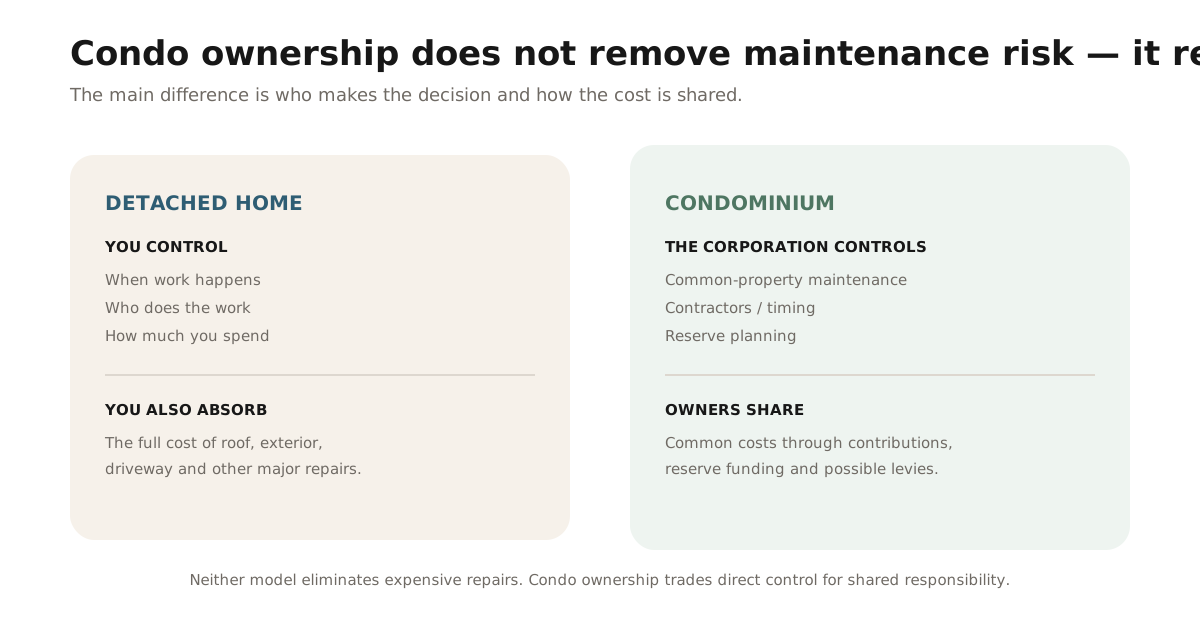
Detached ownership
You control more decisions.
But you may personally face the entire cost of:
- Roof
- Furnace
- Exterior
- Driveway
- Landscaping
- Sewer line
- Major repairs
Condo ownership
You personally control less.
But common-property expenses are spread among owners according to the condominium's allocation rules.
Neither structure eliminates repair risk.
The risk is simply organized differently.
Insurance Works Differently Too
The condominium corporation generally maintains insurance for the corporation's insurable interests and common property as required.
Owners still need their own condo-unit insurance.
Your policy can help address items such as:
- Personal belongings
- Improvements and betterments
- Personal liability
- Additional living expenses
- Certain deductible exposure
- Other unit-specific risks
Do not assume the corporation's insurance means you do not need your own coverage.
Before purchasing, review:
- Corporation insurance summary
- Deductibles
- Standard insurable unit description where applicable
- Your own insurer's requirements
A large corporation deductible can be relevant to an owner depending on the circumstances and bylaws.
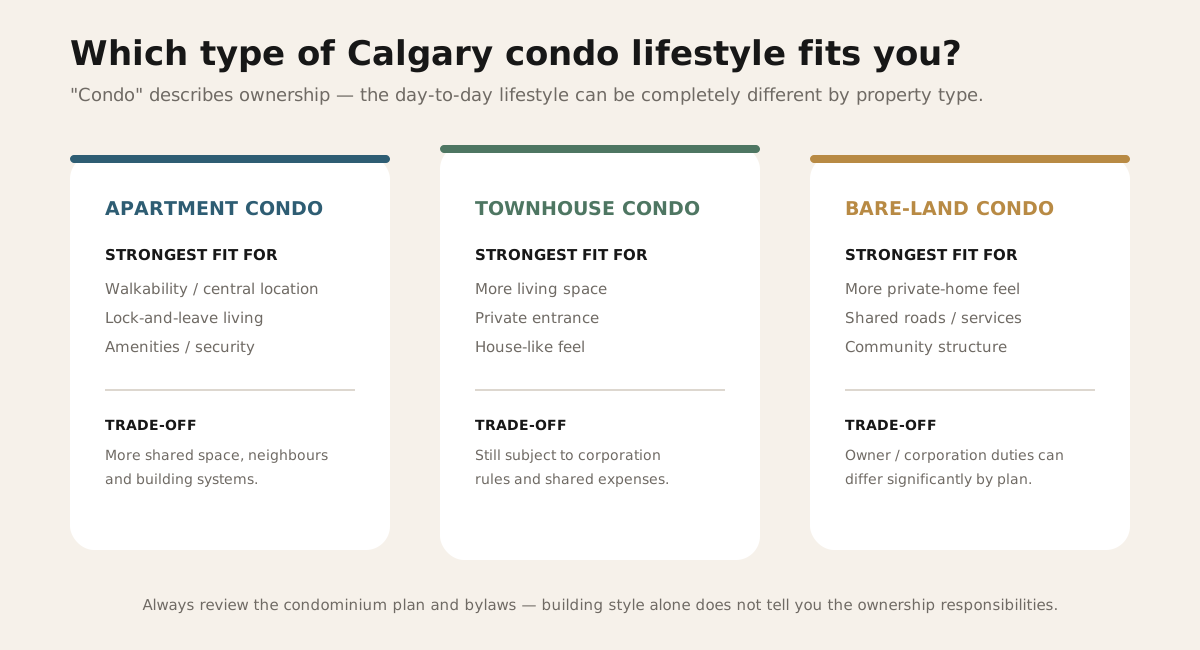
Apartment Condo vs Townhouse Condo
"Condo" describes an ownership structure, not a building shape.
A condominium can be:
- High-rise apartment
- Low-rise apartment
- Townhouse
- Villa
- Bare-land development
- Mixed-use building
That matters because the lifestyle can differ substantially.
Apartment-style condo
Often offers:
- More shared interior space
- Elevators
- Underground parking
- Security
- More amenities
- Less exterior responsibility
Townhouse condominium
May offer:
- Private entrance
- More living space
- Fewer shared interior areas
- Yard or patio
- More residential feel
Bare-land condominium
Can look much more like conventional detached or semi-detached ownership while still having condominium obligations for shared property and services.
Do not decide whether you "like condos" until you understand the range of condo formats available.
Calgary Location Can Be One of the Biggest Condo Advantages
Condo living can give buyers access to locations where detached homes may be less attainable.
That can include areas closer to:
- Downtown
- Employment centres
- CTrain
- Universities
- Hospitals
- Restaurants
- Entertainment
- River pathways
- Established inner-city amenities
A buyer who values location more than private outdoor space may prefer a condo even when a similarly priced townhouse or detached property exists farther away.
The right comparison is not simply:
Condo vs house
It is:
This condo in this location vs the alternatives I could buy for the same total budget.
Condo Living Can Work Well for Frequent Travellers
A condominium can suit buyers who want a "lock-and-leave" property.
Depending on the building, you may benefit from:
- Secured common entrance
- Underground parking
- Exterior maintenance handled
- Snow removal
- On-site management or building staff
- Neighbours nearby
That can make travel easier.
But you still need to follow insurance requirements for a vacant or unattended unit and arrange any required checks.
A secure building does not override your insurance policy.
Pets Can Be a Deal-Breaker
Do not assume a pet-friendly listing means every pet is permitted.
Bylaws can regulate:
- Number of pets
- Type
- Size
- Registration
- Approval
- Behaviour
- Common-area access
If your pet is important to your housing decision, get clarity before removing conditions.
Parking Can Matter More Than the Unit
A great condo with the wrong parking arrangement can become frustrating quickly.
Confirm:
- Titled vs assigned parking
- Underground vs surface
- Stall number
- Visitor parking
- EV charging
- Height restrictions
- Additional vehicle options
- Parking rules
Also understand whether the stall is:
- Part of the title
- Separate titled property
- Exclusive-use common property
- Assigned by the corporation
The legal arrangement matters when buying and reselling.
Storage Deserves the Same Attention
Ask:
- Is there a storage locker?
- Is it titled, assigned or leased?
- Is it secure?
- Are bicycles permitted?
- Can tires be stored there?
- Are there restrictions on contents?
Condo square footage feels very different when there is nowhere to put seasonal items.
Who Is Condo Living Usually a Strong Fit For?
A condo may be a strong fit if you:
- Value location over lot size
- Want less exterior maintenance
- Travel frequently
- Prefer predictable shared maintenance costs
- Use building amenities
- Are comfortable with community rules
- Do not need a large private yard
- Understand and accept shared governance
- Want a smaller or simpler home
Who Should Think More Carefully?
A condo may be a weaker fit if you:
- Strongly dislike rules governing your property
- Need substantial private outdoor space
- Have hobbies requiring large storage or workshop space
- Want complete control over renovations
- Have several vehicles
- Are highly sensitive to neighbour noise
- Would struggle with a sudden special levy
- Do not want to participate in shared ownership decisions
None of those automatically rules out every condo.
But they should shape which condo types you consider.
Before Buying, Review the Corporation — Not Just the Unit
Important condominium documents can include:
- Bylaws
- Budget
- Financial statements
- Reserve-fund study
- Reserve-fund plan
- Annual reserve report
- Board minutes
- AGM minutes
- Insurance information
- Special-levy information
- Professional reports
- Management agreement
- Estoppel certificate
- Parking / storage information
Alberta provides rights for owners, mortgagees and prospective purchasers to obtain certain condominium documents through the legislated process.
A professional condo-document review can help buyers understand the package.
Questions to Ask Before You Make an Offer
What does the condo fee include?
Know which utilities, services and amenities are actually included.
What is the corporation responsible for?
Understand where common-property responsibility ends and owner responsibility begins.
What are the bylaws?
Check your lifestyle against the actual rules.
What does the reserve study say?
Look at future capital work, not just the current bank balance.
Are there special levies?
Understand anything already approved or under serious discussion.
What do the minutes reveal?
Repeated discussion of leaks, elevators, insurance, litigation or major projects deserves attention.
How is the building insured?
Understand the corporation's coverage and relevant deductibles.
Does the total monthly cost fit?
Compare mortgage, taxes, condo fees, insurance, utilities and parking.
Frequently Asked Questions
Are condos cheaper than houses in Calgary?
They can have a lower purchase price than detached homes in the same area, but affordability should be based on total monthly ownership cost, including condo fees, insurance, taxes and utilities.
What do condo fees pay for?
It depends on the corporation. Contributions may fund common-property maintenance, insurance, management, utilities, amenities and reserve-fund needs.
Can condo boards make rules?
Condominium corporations operate under Alberta legislation and their registered bylaws, and boards may establish rules within the legal framework. Buyers should review the actual bylaws and rules before purchasing.
Can condo owners get special assessments?
Alberta legislation allows condominium corporations to collect special levies for permitted purposes when additional funds are required beyond regular contributions.
Does the condo corporation's insurance cover my unit?
The corporation carries insurance for its insurable interests as required, but owners still need their own unit-owner insurance for personal property, liability and other owner-specific risks.
Is a townhouse considered a condo?
It can be. Condominium describes the ownership structure, not the architectural style. Some townhouses are condominiums and others are fee-simple properties.
The Bottom Line
Condo living is a trade.
You give up some control.
In return, you can gain convenience, location, shared maintenance and a simpler day-to-day ownership experience.
For the right buyer, that can be an excellent exchange.
For the wrong buyer, rules, shared decisions, fees and neighbour proximity can become frustrating.
Before buying, evaluate four things separately:
The unit.
The building or development.
The condominium corporation.
Your own lifestyle.
If all four fit, condo living can make a lot of sense.
If one does not, keep looking.
Sources & Methodology
Alberta-specific condominium governance, ownership, bylaws, reserve funds, special levies and insurance concepts were cross-checked against Government of Alberta condominium guidance and publications available by the October 4, 2025 publication date.
This article is for general informational purposes and is not legal, insurance or condominium-document-review advice. Buyers should review the documents and bylaws for the specific condominium and use qualified professionals where appropriate.