
Downsizing is often described as moving from a bigger house to a smaller one.
That is technically true.
But the better way to think about it is:
You are trading space you no longer need for something you value more.
That might be:
- Lower maintenance
- A better location
- Fewer stairs
- Less yard work
- More travel flexibility
- Lower carrying costs
- A newer home
- A simpler routine
The move only makes sense when the trade is actually an improvement.
A smaller home can reduce work and free up capital.
It can also create new costs, less storage, parking compromises, condo fees, renovation expenses or a layout that becomes frustrating after the excitement of moving wears off.
The goal is not to own fewer square feet.
The goal is to create a home that fits the next stage of your life better than the current one.
Start With the Reason You Want to Downsize
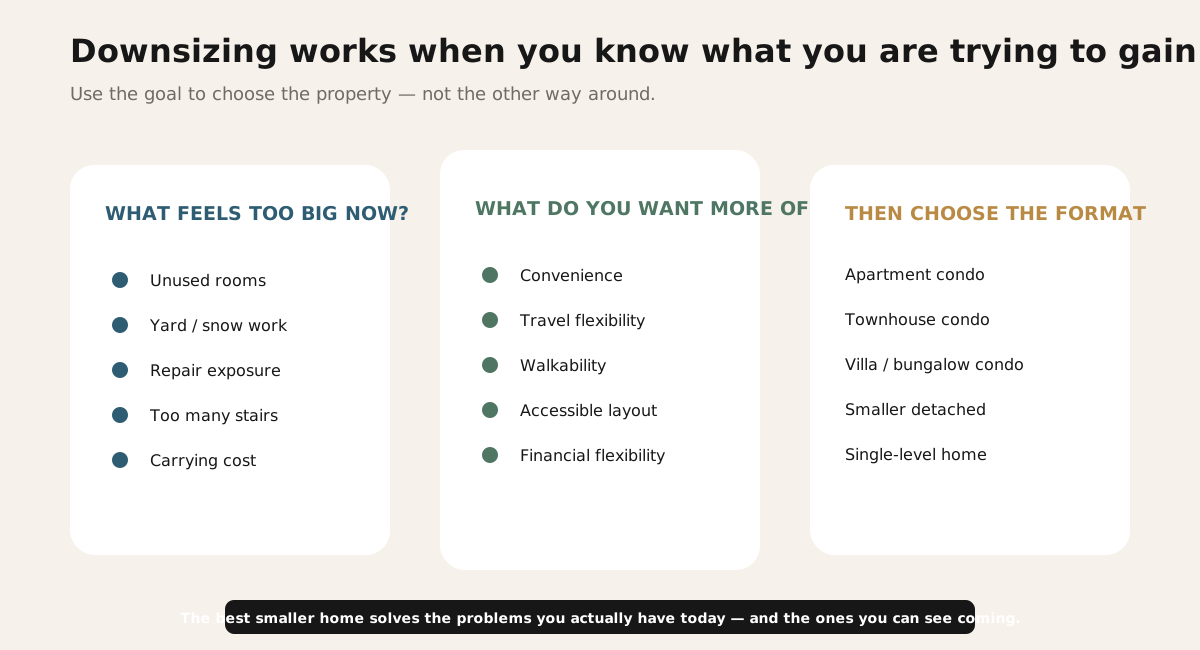
Before looking at condos, villas or smaller detached homes, define the problem you are trying to solve.
Common reasons include:
- Too much unused space
- Too much yard work
- Expensive maintenance
- Too many stairs
- Wanting to travel more
- Wanting to live closer to family
- Wanting to move closer to amenities
- Wanting to release equity
- Wanting a newer property
- Wanting a lock-and-leave lifestyle
Those goals do not all lead to the same type of property.
If your biggest problem is yard work, a bungalow on another large lot may not solve it.
If your biggest problem is stairs, a three-storey townhouse may make things worse.
If your goal is lower monthly cost, a smaller luxury condo with high fees may not accomplish it.
Define the outcome first.
A Smaller Home Is Not Automatically a Cheaper Home
This is one of the most important downsizing assumptions to test.
A smaller property may reduce:
- Mortgage
- Property tax
- Heating
- Insurance
- Maintenance
- Repair exposure
But it can also introduce or increase:
- Condo fees
- Parking costs
- Storage fees
- Moving costs
- Legal costs
- Renovation costs
- Furniture replacement
- Special levies in a condominium
- Higher price per square foot in a premium location
The right comparison is not:
Big house payment vs small house payment.
It is:
Total current ownership cost vs total future ownership cost.
Build a Current-Home Cost Baseline
Before shopping, calculate what the current house really costs to own.
Include:
- Mortgage
- Property taxes
- Home insurance
- Electricity
- Natural gas
- Water
- Internet
- Landscaping
- Snow removal
- Repairs
- Regular maintenance
- Major replacement reserve
- Condo fees if applicable
Some costs are monthly.
Others arrive once every few years.
That does not make them free.
A roof, furnace, exterior project or major plumbing repair should still be part of how you think about long-term ownership cost.
Then Build the Future-Home Budget
For each downsizing option, estimate:
- Purchase price
- Mortgage if any
- Property taxes
- Insurance
- Utilities
- Condo fees
- Parking
- Storage
- Maintenance
- Renovation required before moving in
Then add one-time transition costs:
- Selling expenses
- Legal fees
- Moving
- Cleaning
- New furniture
- Storage
- Repairs to prepare the current home for sale
A downsizing plan should work after those costs — not before them.
Selling and Buying at the Same Time
Many downsizers are not simply selling a house.
They are coordinating two transactions.
That creates timing decisions such as:
- Sell first or buy first?
- How much overlap is comfortable?
- Is temporary accommodation acceptable?
- Is bridge financing needed and available?
- How flexible is the possession date?
- How much cash must remain available after the move?
The right structure depends on your finances and risk tolerance.
If you need the sale proceeds from the current home to buy the next one, coordinate the financing and legal timing before writing an offer.
Do Not Buy the Smaller Home Before You Understand Your Stuff
Square footage is abstract until you translate it into belongings.
A better downsizing exercise is to audit how the current home is actually used.
Go room by room and ask:
What do I use weekly?
What do I use seasonally?
What am I storing only because I have the space?
What would I pay to store elsewhere?
What do I want the next home to accommodate without compromise?
This reveals whether you need:
- Two bedrooms or three
- Dedicated office
- Large storage locker
- Double garage
- Workshop
- Guest room
- Basement
- Hobby room
- Large dining space
Downsizing works best when you eliminate unused space, not useful space.
Use a Three-Zone Space Audit
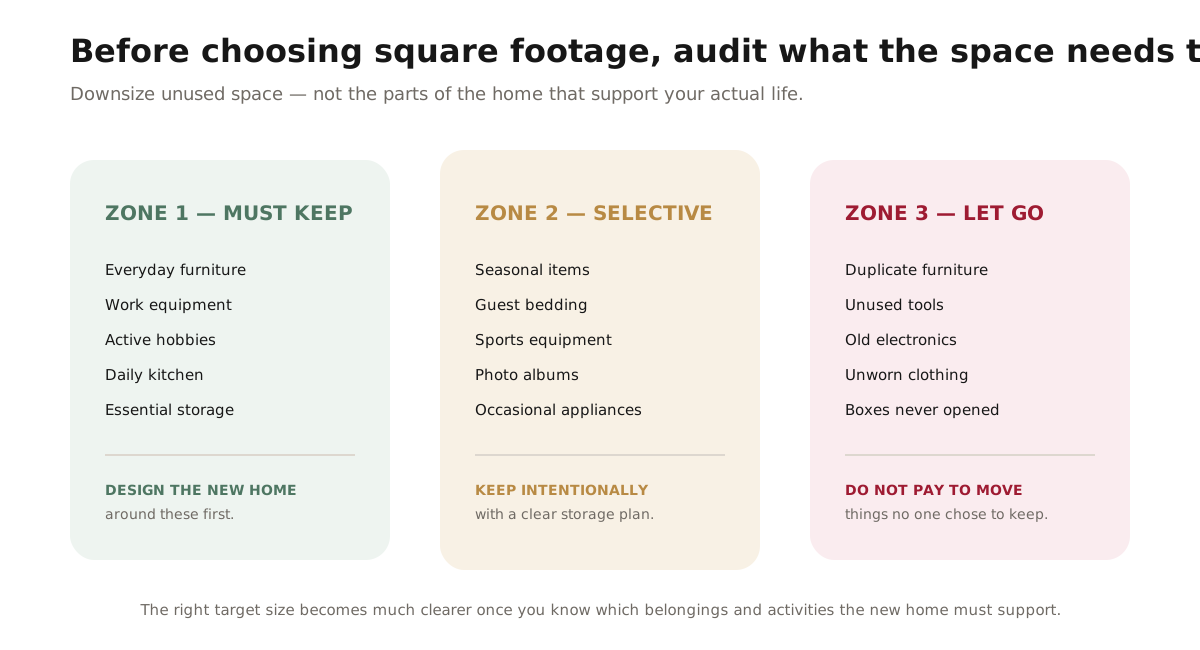
Zone 1: Must keep
Items and spaces you use regularly.
Examples:
- Everyday clothing
- Primary furniture
- Work equipment
- Essential kitchen items
- Active hobbies
Zone 2: Keep selectively
Things that matter but do not need prime living space.
Examples:
- Seasonal decor
- Guest bedding
- Sports equipment
- Photo albums
- Occasional appliances
Zone 3: Let go
Things you keep mainly because there is room.
Examples:
- Duplicate furniture
- Old electronics
- Clothes no longer worn
- Unused tools
- Boxes untouched for years
The purpose is not minimalism.
It is clarity.
Start Decluttering Before You List
Do not wait until the moving truck is booked.
Early decluttering helps twice.
It makes the current home:
- Easier to show
- Easier to photograph
- Less crowded
- More spacious
And it makes the eventual move easier.
Start with low-emotion areas:
- Pantry
- Linen closet
- Garage
- Storage room
- Utility room
Then move into:
- Clothing
- Books
- Furniture
- Keepsakes
- Family items
Sentimental items are easier to handle after you have already reduced the obvious clutter.
Decide What Happens to Large Furniture Early
A dining table that fits beautifully in a 2,500-square-foot house may dominate a 1,200-square-foot condo.
Before keeping large items, compare:
- Width
- Depth
- Door clearance
- Elevator dimensions
- Stair dimensions
- Room measurements
- Wall placement
Measure the furniture you actually want to keep.
Then take those measurements to showings.
This is more useful than assuming a room "looks big enough."
Choose the Property Type Based on the Lifestyle You Want
Calgary offers several downsizing paths.
Apartment Condominium
Can work well for someone who values:
- Lock-and-leave living
- Elevator access
- Underground parking
- Walkability
- Central location
- Minimal exterior maintenance
Trade-offs may include:
- Condo fees
- Less private outdoor space
- Shared walls
- Rules
- Storage limits
- Elevator dependence
Townhouse Condominium
Can offer:
- Private entrance
- More space
- Garage
- Residential feel
- Less exterior responsibility
But many townhouses have multiple levels.
If stairs are one reason you are moving, that matters.
Villa or Bungalow Condominium
Can be attractive for buyers who want:
- Main-floor living
- More house-like layout
- Exterior maintenance handled
- Basement storage or guest space
- Attached garage
These properties can be highly desirable, so compare availability and total cost carefully.
Smaller Detached Home
Can provide:
- Full control
- Yard
- Garage
- Privacy
- No condo corporation
But the owner still handles:
- Exterior
- Roof
- Snow
- Landscaping
- Repairs
If maintenance reduction is the primary objective, make sure the new property actually reduces it.
Apartment Bungalow / Single-Level Layout
Regardless of property type, single-level living can become more valuable over time.
Useful accessibility features may include:
- Few or no stairs
- Elevator
- Wide hallways
- Walk-in shower
- Main-floor laundry
- Main-floor primary bedroom
- Easy parking access
- Minimal step at entry
You do not need to need those features today for them to improve long-term flexibility.
Think Five to Ten Years Ahead
A home that fits today should ideally continue working as life changes.
Ask:
- Will stairs become annoying?
- Is the bathroom easy to use?
- Is there room for overnight family?
- Can groceries move easily from parking to kitchen?
- Is snow removal manageable?
- What happens if driving becomes less convenient?
- Can the property support a home office?
- Is there nearby transit?
- Is medical care accessible?
- Is the home easy to leave unattended while travelling?
Future-proofing does not mean buying a clinical space.
It means avoiding obvious design problems you may need to solve again in a few years.
Location Can Matter More After Downsizing
A larger suburban home may provide most needs inside the property.
A smaller home works better when the surrounding area adds convenience.
Proximity to these can matter more:
- Grocery stores
- Restaurants
- Coffee shops
- Parks
- Pathways
- Transit
- Medical services
- Recreation
- Family
- Friends
A smaller home in the right location can feel more convenient than a larger home that requires driving for everything.
Parking Is Easy to Underestimate
Before purchasing, verify:
- Number of stalls
- Titled or assigned
- Underground or outdoor
- Visitor parking
- Street parking
- EV charging
- Stall dimensions
- Garage height
- Storage access from parking
If both household members drive, one stall can become an everyday frustration.
Storage Is Part of the Floor Plan
Do not only compare the listed square footage.
Check:
- Closets
- Pantry
- Kitchen cabinets
- Laundry storage
- Mechanical room
- Storage locker
- Garage
- Basement
- Bike storage
A 1,200-square-foot home with excellent storage can function better than a larger home with poor storage.
Condo Fees Need Context
If the downsizing option is a condominium, do not judge the property only by the monthly fee.
Review:
- What the fee includes
- Reserve fund
- Reserve-fund study
- Building insurance
- Special levies
- Major upcoming work
- Board minutes
- Bylaws
A high fee can reflect extensive services or strong reserve funding.
A low fee can reflect a simple property — or insufficient funding.
The number only makes sense in context.
Condo Rules Can Affect the Lifestyle
Before purchasing, review bylaws relating to:
- Pets
- Smoking
- Renovations
- Flooring
- Parking
- Storage
- Barbecues
- Rentals
- Moving
- Common areas
If you travel frequently, have a large dog or plan to renovate, those rules matter before you buy.
Smaller Can Mean Less Maintenance — But Not Always
A newer condo may dramatically reduce personal maintenance.
An older small detached home can still require:
- Roof
- Furnace
- Windows
- Exterior
- Sewer
- Yard
- Snow
Do not use square footage as a proxy for maintenance.
Review the actual components and responsibilities.
Think About Guests Honestly
Many people maintain an extra bedroom for visitors who stay a few nights each year.
That may still be worth it.
But calculate the cost.
Ask whether you would rather have:
- Larger home year-round
or:
- Smaller home plus guest suite / hotel / short-term accommodation when family visits
Some condominium buildings also offer guest suites.
If guests are the only reason you need another bedroom, quantify how often it is actually used.
Think About Hobbies Before Eliminating Space
Downsizing should not eliminate the activities that make the home enjoyable.
If you need space for:
- Piano
- Woodworking
- Golf equipment
- Bicycles
- Art
- Fitness
- Sewing
- Collections
- Gardening
put that on the purchase criteria from the beginning.
Do not buy first and assume you will "figure it out."
Downsizing With Adult Children
Family belongings can create a surprising amount of the clutter in long-held homes.
Before selling, set a deadline for adult children to decide what happens to:
- Childhood furniture
- School items
- Sports equipment
- Boxes
- Keepsakes
- Clothing
Otherwise, the parents can end up paying to move and store belongings nobody has actively chosen to keep.
Be Careful With Sentimental Decisions
Not every item needs to survive physically to preserve the memory.
Options include:
- Photographing items
- Digitizing documents
- Creating one keepsake box per family member
- Keeping representative pieces
- Giving meaningful items to family early
Downsizing is easier when sentimental decisions are made intentionally rather than under moving-day pressure.
Timing the Sale of Your Current Home
The best strategy depends on:
- Market conditions
- Property type
- Community
- Condition
- Current competition
- Your purchase plans
- Possession flexibility
Before listing, establish:
- Likely sale range
- Likely time to sell
- Expected net proceeds
- Minimum acceptable possession timing
- Price range for the replacement home
That turns downsizing from an idea into a plan.
Know the Net Proceeds — Not Just the Sale Price
A $700,000 sale does not mean $700,000 is available for the next purchase.
The net amount can be affected by:
- Mortgage payout
- Real estate fees
- Legal costs
- Adjustments
- Repairs
- Moving
- Other transaction costs
Ask your lawyer and mortgage professional for the transaction-specific figures.
The replacement-home budget should be based on net available funds, not gross sale price.
Do Not Assume Downsizing Means Paying Cash
Some homeowners can buy the replacement property without a mortgage.
Others choose not to.
There can be reasons to maintain:
- Liquidity
- Investments
- Emergency reserves
- Renovation funds
Mortgage qualification and financial planning should be handled before shopping.
The right answer depends on the household.
Compare the Cost Swap
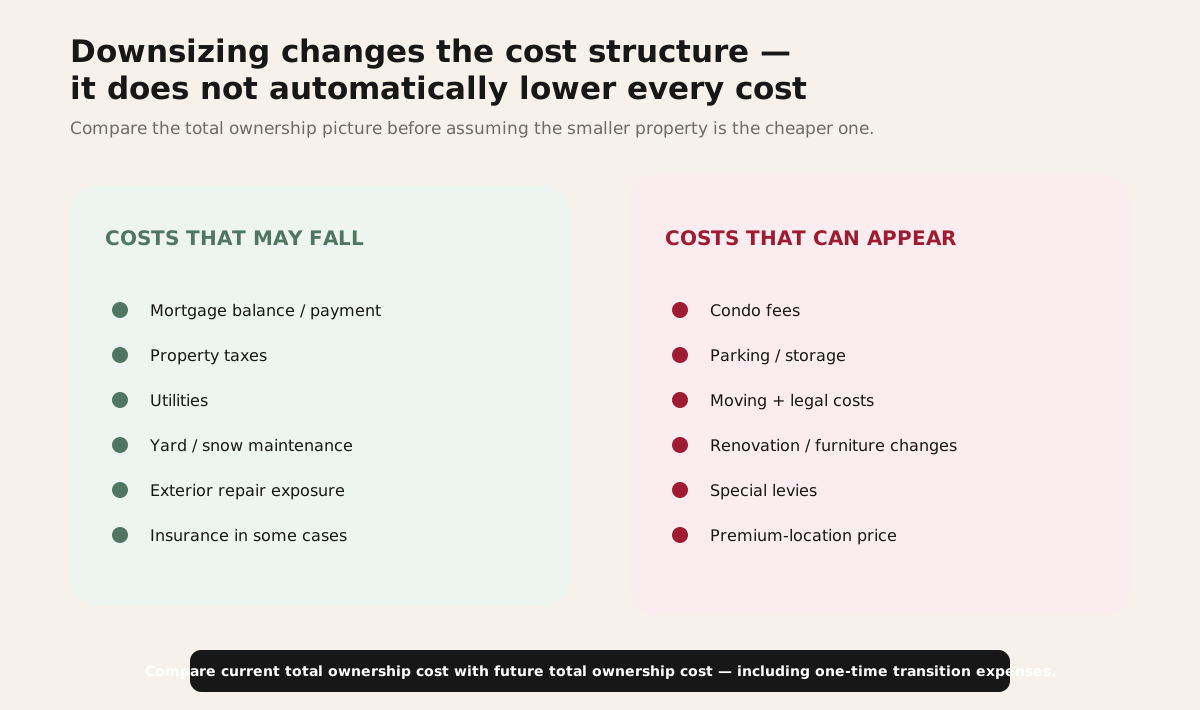
Costs that may decrease
- Mortgage
- Property tax
- Utilities
- Yard maintenance
- Exterior maintenance
- Major-home repair exposure
Costs that may appear or increase
- Condo fees
- Parking
- Storage
- Moving
- Renovations
- Building levies
- Premium-location cost
This is why the word "downsize" should not be confused with "spend less."
What About Capital Gains Tax?
For many Canadians, a home that qualifies as their principal residence for the relevant years may benefit from the principal residence exemption.
But tax circumstances can become more complicated when a property includes:
- Rental use
- Business use
- Multiple properties
- Change in use
- Other special circumstances
Do not make a downsizing decision based on a generic tax assumption.
If the tax treatment could materially affect the sale, speak with a qualified accountant or tax professional.
Downsizing Before Retirement vs After Retirement
There is no universal right age.
Moving earlier can have advantages:
- More energy for decluttering
- More flexibility
- Easier adjustment to a new community
- Opportunity to choose before health limits options
Waiting can make sense if:
- Current home still works
- Family still uses the space
- Market timing is unfavourable
- Replacement options are limited
The decision should be based on the household, not a milestone birthday.
Do a Trial Downsizing Exercise
Before listing, pretend one part of the house no longer exists.
For example:
- Stop using one spare bedroom
- Consolidate storage
- Move seasonal items to one zone
- Reduce kitchen duplication
- Use only one living area
This can expose what you genuinely need.
If you can comfortably stop using 30% of the home, the transition may be easier than expected.
A Practical Downsizing Checklist
Financial
- Estimate current home value
- Estimate net sale proceeds
- Build replacement-home budget
- Compare ongoing ownership cost
- Confirm financing if needed
- Maintain emergency reserves
Property
- Choose acceptable property types
- Define minimum bedroom count
- Define parking needs
- Define storage needs
- Review stairs and accessibility
- Decide maintenance tolerance
Location
- Family
- Transit
- Healthcare
- Shopping
- Recreation
- Walkability
Possessions
- Measure furniture
- Declutter
- Sell / donate
- Organize keepsakes
- Resolve adult children's storage
- Plan moving logistics
Transaction
- Decide sell-first vs buy-first strategy
- Coordinate possession dates
- Review condo documents if applicable
- Confirm insurance
- Plan legal closing
Frequently Asked Questions
When is the right time to downsize?
There is no universal age or life stage. Downsizing makes sense when the current home is providing less value than the cost, work or inconvenience it creates — and a realistic replacement property better fits your priorities.
Does downsizing always save money?
No. A smaller home can reduce some costs while introducing condo fees, moving expenses, renovations, parking or premium-location pricing. Compare total ownership cost.
What type of home is best for downsizing in Calgary?
It depends on the goal. Apartment condos can maximize convenience, townhouse condos provide more space, villa or bungalow condos can offer main-floor living, and smaller detached homes preserve independence but retain more maintenance.
Should I sell my current home before buying the next one?
It depends on available cash, financing, market conditions, risk tolerance and possession flexibility. Establish the likely sale proceeds and financing structure before choosing a strategy.
How do I know how much space I actually need?
Audit how the current home is used. Identify the rooms, storage, furniture, hobbies and guest space you use regularly, then build the next-home criteria around those actual needs.
Should I renovate before downsizing?
Only when the likely improvement in sale price or marketability justifies the cost and effort. Often repairs, paint, cleaning, decluttering and presentation can be more efficient than a major renovation.
The Bottom Line
Downsizing works when the move improves more than one number on a floor plan.
The right smaller home should make life:
- Easier
- More functional
- More financially comfortable
- Better located
- Better suited to the future
Start with what you want to gain.
Then calculate the true cost of the current home.
Audit the space you actually use.
Choose the property type around your lifestyle.
And compare the entire financial picture before committing to the move.
The best downsizing decision is not:
"How small can we go?"
It is:
"What is the simplest home that still lets us live the way we want?"
Thinking About Downsizing in Calgary?
Use the website's existing home evaluation form to establish the first number in the plan: what your current property could realistically sell for in today's Calgary market.
From there, compare the expected net proceeds with the cost and availability of the types of homes you would actually consider moving into.
Sources & Methodology
This guide approaches downsizing as a lifestyle, space and total-cost decision rather than a purely financial one, and adds a Calgary-specific property-selection framework. Transaction costs, condominium obligations and individual housing needs vary substantially between households.
This article is for general informational purposes and is not financial, tax, mortgage or legal advice. Transaction costs, financing, taxes, condominium obligations and individual housing needs vary.