Buying your first home can feel like one giant decision.
It is easier when you break it into smaller ones.
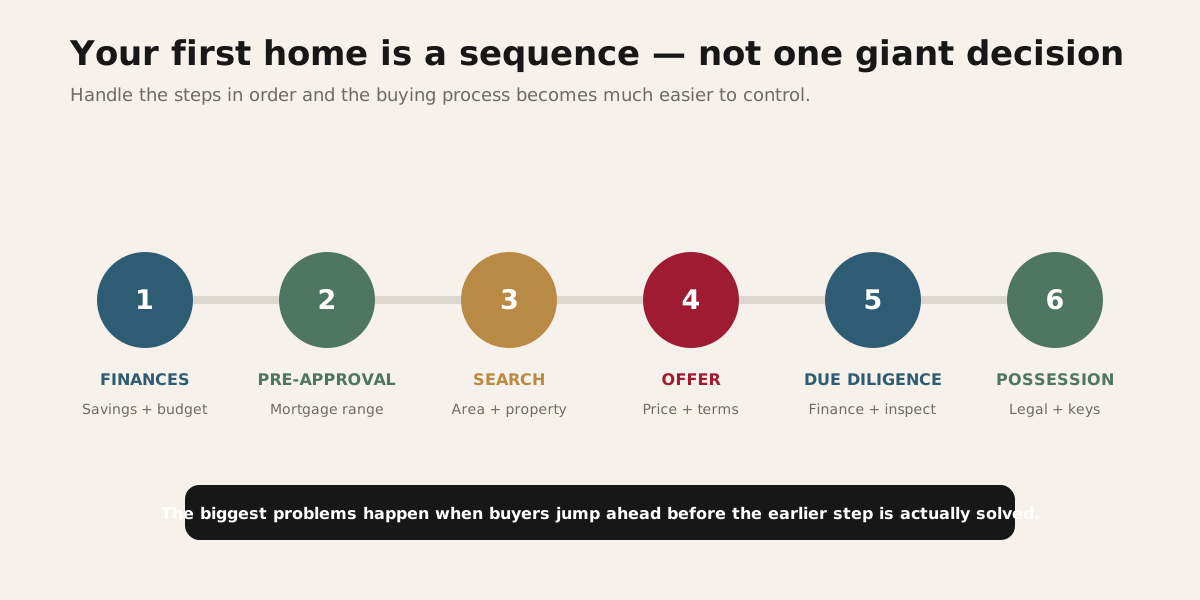
The process is really a sequence:
Get financially ready.
Understand your mortgage range.
Choose the right type of property and neighbourhood.
Evaluate the home carefully.
Write an offer that protects you appropriately.
Complete the conditions, legal work and closing.
The biggest first-time-buyer mistakes usually happen when those steps are done out of order.
A buyer starts shopping before understanding the mortgage.
Falls in love with a property before knowing the monthly cost.
Or focuses entirely on the purchase price and forgets about closing cash, condo fees, repairs and future ownership costs.
A better approach is to understand the full process before you start chasing listings.
Step 1: Know What You Can Comfortably Spend
Your maximum mortgage approval and your comfortable housing budget are not necessarily the same number.
Before talking about houses, build a realistic monthly budget.
Include:
- Mortgage payment
- Property taxes
- Home insurance
- Utilities
- Condo fees where applicable
- Maintenance
- Transportation
- Existing debt payments
- Regular savings
- Lifestyle spending
Homeownership becomes stressful when every available dollar is committed to the house.
A first home should fit your life rather than consume it.
Step 2: Build the Down Payment — and Keep Money Beyond It
The down payment is only one part of the cash required to purchase.
For an owner-occupied home eligible for insured mortgage financing, the general minimum down-payment structure is:
- 5% on the first $500,000
- 10% on the portion above $500,000
- Homes at $1.5 million or more are not eligible for CMHC homeowner mortgage insurance and generally require at least 20% down
If the down payment is below 20%, mortgage default insurance will generally apply.
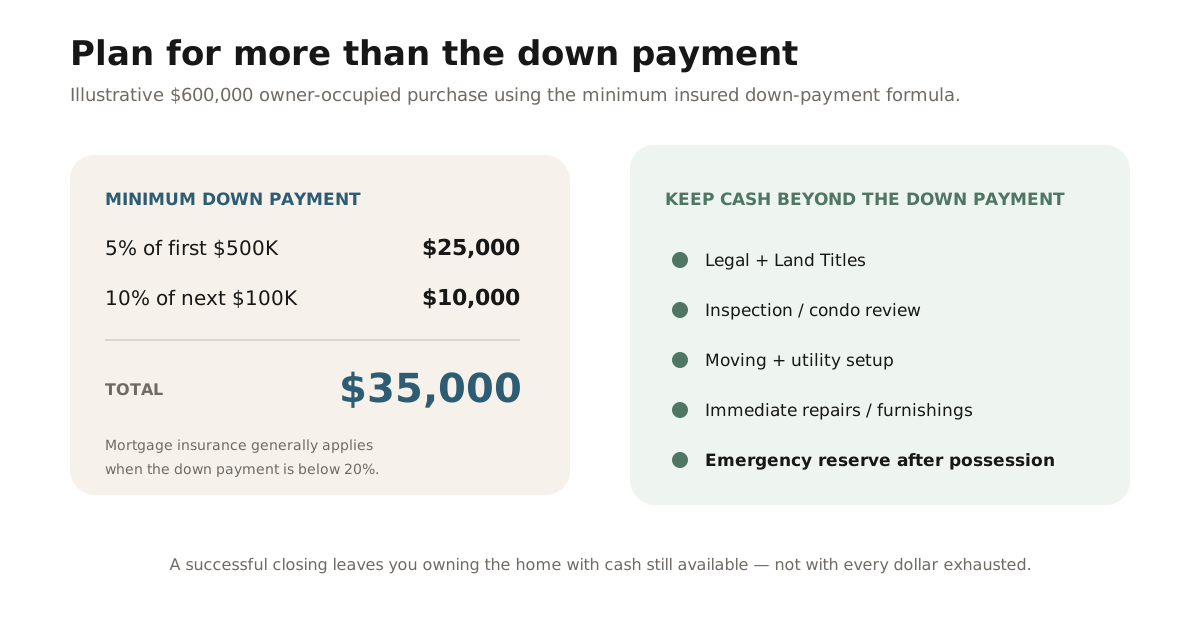
Example: $600,000 purchase
Minimum down payment:
- 5% of first $500,000 = $25,000
- 10% of remaining $100,000 = $10,000
- Total = $35,000
But arriving at possession with only $35,000 available would be risky.
You may also need cash for:
- Lawyer
- Land Titles registration costs
- Property-tax adjustments
- Home inspection
- Condo-document review
- Moving
- Utility setup
- Immediate repairs
- Furniture and household items
Keep a separate closing and emergency reserve.
Step 3: Use First-Time Buyer Savings Tools Properly
Canada has several tools that can help eligible first-time buyers accumulate or access funds.
First Home Savings Account
An FHSA combines features of an RRSP and TFSA.
For eligible account holders:
- First-year participation room begins at $8,000
- Additional room can accrue in later years under the program rules
- Lifetime participation is generally capped at $40,000
- Eligible contributions may be deductible
- Qualifying withdrawals used to buy a qualifying home can be tax-free
If homeownership is part of your medium-term plan, opening an FHSA earlier can matter because participation room begins once the account is opened.
Home Buyers' Plan
The Home Buyers' Plan can allow an eligible buyer to withdraw up to $60,000 from an RRSP toward a qualifying home.
The HBP and FHSA can be used for the same qualifying purchase when the applicable conditions are met.
They are not interchangeable.
FHSA qualifying withdrawals do not work like HBP withdrawals, and HBP amounts generally have repayment rules.
Before relying on either account for closing funds, confirm the timing and eligibility requirements with your financial or tax professional.
Step 4: Get Mortgage Pre-Approval Before Serious Shopping
A mortgage pre-approval helps establish a realistic range before you begin writing offers.

The lender or mortgage professional may review:
- Income
- Employment
- Down payment
- Credit
- Existing debts
- Mortgage amount
- Property type
- Source of funds
A pre-approval can also help you understand:
- Expected payment
- Rate options
- Amortization
- Whether mortgage insurance applies
- Documentation you will need later
Since December 15, 2024, qualifying first-time home buyers can access insured mortgages with amortization periods up to 30 years, subject to the applicable mortgage-insurance and lender requirements.
A longer amortization can lower the scheduled payment, but it can also increase total interest paid over time.
Compare payment comfort with long-term borrowing cost.
Pre-Approval Is Not Final Approval
This distinction matters.
A lender still needs to approve the actual property and transaction.
Final mortgage approval can depend on:
- Purchase price
- Appraised value
- Property type
- Condo project
- Condition of the home
- Updated income or credit
- Other lender requirements
Do not take on major new debt between pre-approval and closing without discussing it with your mortgage professional.
Financing a new vehicle or opening new credit can change the application.
Step 5: Decide What You Actually Need
Before browsing hundreds of listings, separate needs from preferences.
Needs
Examples:
- Maximum commute
- Minimum bedrooms
- Parking
- Transit access
- Pet rules
- Accessibility
- School location
- Home office
- Property type
Preferences
Examples:
- Quartz countertops
- South-facing backyard
- Bonus room
- Newer finishes
- Specific cabinet colour
- Fireplace
Needs should shape the search.
Preferences should help you choose between homes that already work.
The more specific your non-negotiables become, the smaller your inventory will be.
Step 6: Compare Neighbourhoods Before Homes
The house can be renovated.
The location cannot.
For Calgary buyers, consider:
- Commute
- CTrain or bus access
- Main road connections
- Schools
- Parks and pathways
- Shopping
- Future development
- Property type mix
- Community age
- Noise
- Resale appeal
Visit communities at different times of day.
A neighbourhood at 2 p.m. on Sunday can feel completely different during the weekday commute.
Step 7: Understand the Trade-Off Between Condo, Townhome and Detached
First-time buyers often focus on the lowest purchase price.
Ownership structure matters just as much.
Condominium
Can offer:
- Lower-maintenance living
- Lower entry price in some areas
- Amenities
- Central locations
But buyers need to evaluate:
- Monthly condo fee
- Reserve fund
- Bylaws
- Insurance
- Special assessments
- Building maintenance
- Board minutes and financials
Townhome
Townhomes can be condominium or fee-simple.
Do not assume the ownership structure from the building style.
Detached or semi-detached home
Can offer more control and private space, but the owner is generally responsible for more maintenance and exterior costs.
There is no universally better option.
Compare total ownership cost and lifestyle.
Step 8: Learn How to View a Home Critically
A showing is not just a design tour.
Look at the expensive parts.
Pay attention to:
- Roof age and condition
- Furnace
- Hot-water system
- Windows
- Electrical
- Plumbing
- Foundation
- Drainage
- Basement moisture
- Exterior condition
- Renovation quality
Also look at the functional details:
- Furniture placement
- Storage
- Natural light
- Stair layout
- Parking
- Noise
- Neighbouring properties
A home that photographs beautifully can still be the wrong purchase.
Step 9: Compare Sold Homes, Not Just Asking Prices
List price is a seller's strategy.
Sold price is market evidence.
Before writing an offer, review comparable sales where possible.
Look at:
- Similar property type
- Similar size
- Similar location
- Similar condition
- Recent sale timing
- Garage and basement
- Lot differences
An active listing can tell you what another seller hopes to receive.
A sold comparable tells you what a buyer actually agreed to pay.
Step 10: Understand the Offer Before Signing
A purchase contract includes much more than price.
Terms can include:
- Deposit
- Financing condition
- Home-inspection condition
- Condo-document review
- Possession date
- Included goods
- Excluded goods
- Additional terms
- Offer expiry
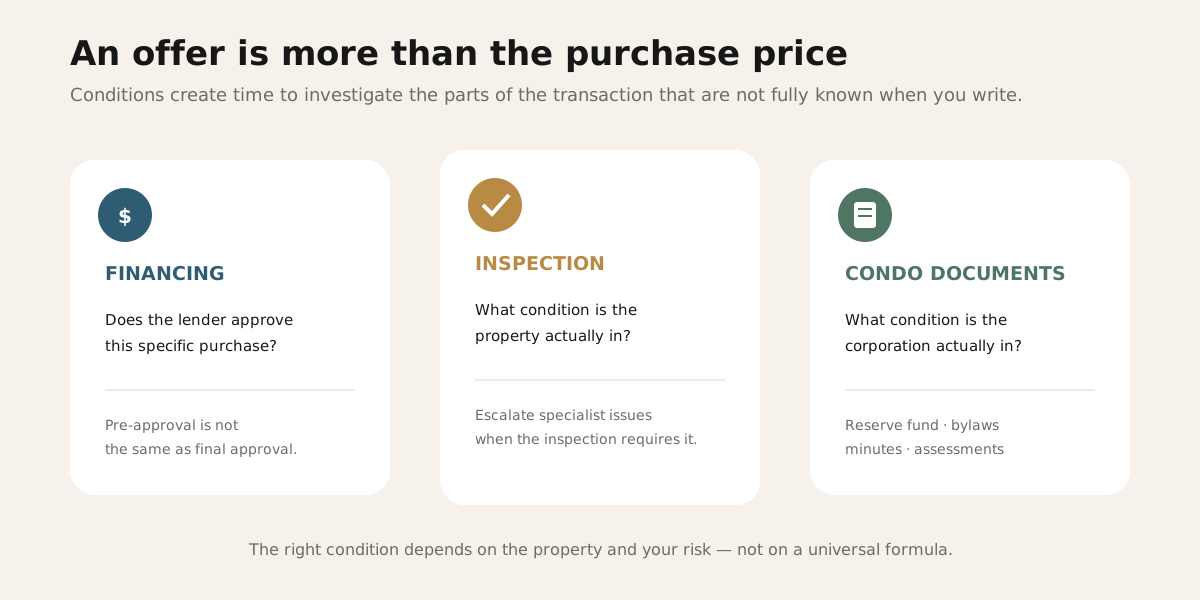
The strongest offer is not necessarily the one with the fewest conditions.
The strongest offer is one where the buyer understands the risk they are accepting.
Financing Condition
A financing condition can give the buyer time to confirm that the lender approves the specific purchase.
This is different from simply having a pre-approval.
Your mortgage professional may need:
- Purchase contract
- MLS information
- Property details
- Updated documents
- Appraisal where required
Do not treat financing as automatic.
Home Inspection
A professional inspection is one of the most useful due-diligence steps available to a buyer.

The inspector may review visible and accessible components such as:
- Structure
- Roof
- Exterior
- Electrical
- Plumbing
- Heating
- Attic
- Insulation
- Interior
- Windows and doors
The purpose is not to produce a perfect-home certificate.
It is to help you understand the condition of the property you are buying.
If the inspector identifies something outside their scope, you may need a specialist.
Condo Document Review
For a condominium purchase, the condition of the unit is only part of the risk.
You are also buying into the condominium corporation.
Important documents can include:
- Bylaws
- Financial statements
- Reserve-fund study
- Reserve-fund plan
- Budget
- Board minutes
- Insurance information
- Estoppel certificate
- Special-assessment information
A lower-priced condo can become expensive if the corporation is underfunded or facing major repair obligations.
Review the building, not just the unit.
Step 11: Budget for Closing Costs
The purchase price is not the final cash number.
Alberta does not use the same provincial land-transfer-tax structure found in some other provinces, but Land Titles registration fees still apply to transfers and mortgage registrations.
Since October 2024, Alberta's common registration levy uses a sliding amount based on property value and mortgage principal.
Your lawyer can provide the transaction-specific estimate.
Other potential costs include:
- Legal fees
- Title insurance
- Inspection
- Condo-document review
- Property-tax adjustments
- Home insurance
- Moving
- Utility setup
- Immediate maintenance
Ask for a closing-cost estimate before you remove conditions, not the day before possession.
Step 12: Protect the Period Between Condition Removal and Possession
After conditions are waived, the deal may be firm — but you still have work to do.
Avoid financial changes that can affect mortgage approval.
Complete lender requests quickly.
Arrange:
- Home insurance
- Lawyer appointment
- Utilities
- Moving
- Final funds
- Identification and banking documents
Keep your down-payment and closing funds traceable.
Large unexplained transfers can create unnecessary lender-documentation issues.
Step 13: Complete the Final Walk-Through
A final walk-through is not another inspection.
It is a chance to confirm that the property is generally in the condition expected before possession.
Check:
- Agreed inclusions are present
- Major damage has not occurred
- Home has not materially changed
- Appliances or fixtures included in the contract remain
- Agreed repairs appear complete where applicable
Raise concerns before possession rather than discovering them after you have the keys.
Step 14: Possession Day
Your lawyer handles the legal transfer and funds.
Once closing requirements are completed and possession is released, you receive access to the property.
Then:
- Confirm keys and remotes
- Locate water shut-off
- Change access codes as appropriate
- Review mechanical systems
- Keep legal and inspection documents
- Start a maintenance file
Owning the home is the beginning of the next process.
Common First-Time Buyer Mistakes
Shopping before pre-approval
This can anchor your expectations to homes outside your comfortable range.
Using every dollar for the down payment
The home still needs to be moved into, maintained and insured.
Buying based on monthly payment only
Compare total price, interest, condo fees, taxes and future repairs.
Ignoring resale
Your first home does not need to be your forever home.
Consider how future buyers may view the location, layout and property type.
Waiving conditions without understanding the risk
A competitive market can create pressure.
Pressure does not change what the risk is.
Underestimating maintenance
Even a well-maintained house eventually needs repairs and replacement.
A Simple First-Time Buyer Roadmap
- Build savings and emergency reserve
- Use FHSA / HBP strategically where eligible
- Get mortgage pre-approval
- Define needs and budget
- Choose communities
- Tour and compare homes
- Review sold comparables
- Write an informed offer
- Complete financing / inspection / condo review
- Remove conditions only when satisfied
- Complete legal closing
- Final walk-through
- Take possession
When each step is handled in order, buying your first home becomes much easier to understand.
Frequently Asked Questions
How much down payment does a first-time buyer need in Calgary?
For an insured owner-occupied purchase below $1.5 million, the general minimum is 5% of the first $500,000 and 10% of the portion above $500,000. Mortgage and insurer requirements still apply.
Can I use both an FHSA and the Home Buyers' Plan?
Yes, eligible buyers can use a qualifying FHSA withdrawal and HBP withdrawal for the same qualifying home when the requirements for both programs are met.
Can a first-time buyer get a 30-year mortgage?
Since December 15, 2024, eligible first-time home buyers can access insured mortgage amortizations of up to 30 years under the expanded federal rules, subject to lender and insurer qualification.
Do I need a home inspection?
It is not mandatory in every transaction, but a professional inspection can provide valuable information about visible and accessible property conditions before the buyer becomes firm.
What should I review when buying a Calgary condo?
Review the unit and the condominium corporation. Key items can include reserve funding, financial statements, insurance, bylaws, board minutes and any current or anticipated special assessments.
The Bottom Line
Buying your first Calgary home is less about finding a perfect property and more about making a series of good decisions.
Know the budget before the house.
Know the neighbourhood before the finishes.
Know the condition before removing the inspection.
Know the mortgage before removing financing.
And keep enough money after closing to actually enjoy owning the home.
The more preparation you do before writing the offer, the easier it becomes to recognize the right property when it appears.
Sources & Methodology
First-time-buyer savings and mortgage rules were cross-checked against Canada Revenue Agency, Department of Finance Canada and CMHC information available by the December 13, 2025 publication date. Alberta closing-cost and Land Titles information was cross-checked against Government of Alberta resources.
This article is for general informational purposes and is not mortgage, legal, tax or financial advice. Program eligibility, lender requirements and transaction terms vary by buyer and property.