
Moving is stressful for one main reason:
Too many small decisions pile up at the same time.
What stays.
What gets donated.
Which box something belongs in.
When the movers arrive.
Where the keys are.
What the kids need.
Where the dog is going.
Which utility starts when.
What you need tonight versus what can disappear into a box for three weeks.
The easiest way to make moving feel manageable is to stop treating it like one giant event.
A good move is really a sequence of smaller systems:
Reduce what you own.
Pack in the right order.
Label for the new home, not the old one.
Protect the essentials.
Give moving day a clear plan.
Set up the new home by priority instead of trying to finish everything immediately.
Why Moving Feels More Difficult Than It Needs To
The physical work matters, but the mental load is often worse.
A move combines:
- Deadlines
- Money
- Logistics
- Packing
- Cleaning
- Administrative changes
- Emotional attachment
- A disrupted routine
- Decisions about hundreds of belongings
The process becomes especially frustrating when all of those categories are mixed together.
Instead of trying to "work on the move," divide it into separate jobs.
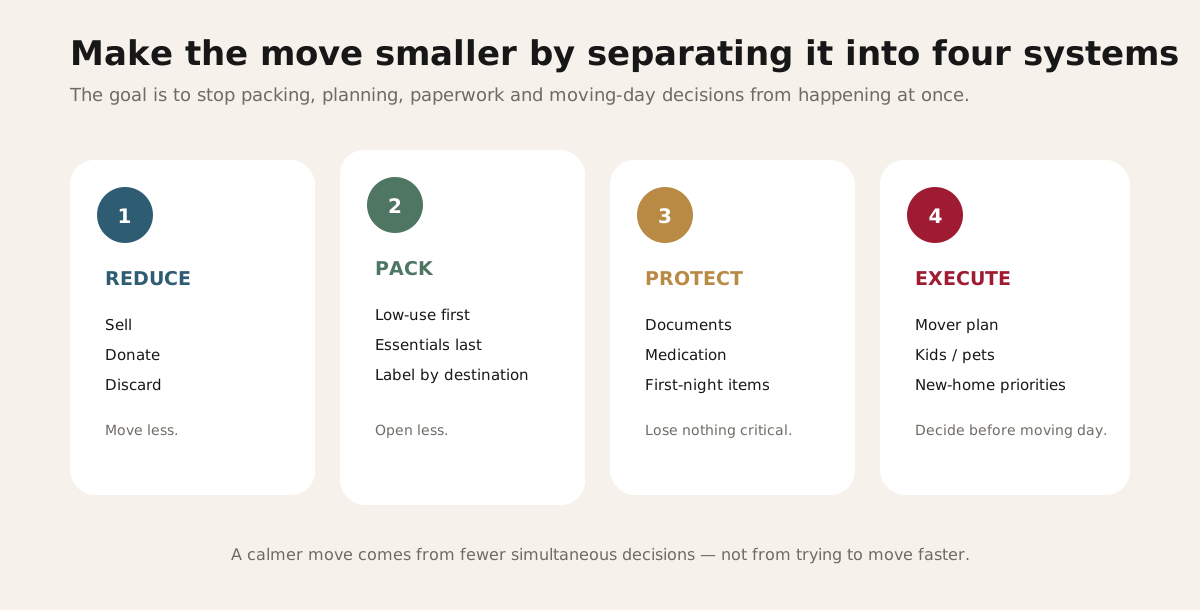
System 1: Get Rid of Things Before You Pack Them
Every item you remove before moving saves work multiple times.
You do not have to:
- Pack it
- Label it
- Carry it
- Load it
- Transport it
- Unload it
- Find a place for it in the new home
Start with areas that tend to collect things quietly:
- Basement storage
- Garage
- Closets
- Spare room
- Kitchen cupboards
- Linen closet
- Children's storage
- Seasonal items
Create four simple categories:
Keep
Things you know will have a place in the new home.
Sell
Items worth the time required to photograph, list and coordinate pickup.
Donate
Useful items that do not justify the effort of selling.
Discard or recycle
Damaged, expired or unusable items.
Do not create a fifth category called "decide later."
That pile tends to become boxes you move without ever making the decision.
Start With Easy Decisions
Decluttering becomes exhausting when you begin with sentimental belongings.
Start with obvious items:
- Expired products
- Broken furniture
- Duplicate kitchen tools
- Clothes you no longer wear
- Old paperwork
- Empty boxes
- Unused household supplies
Build momentum before you touch photographs, keepsakes and emotionally important items.
Do Not Buy Packing Supplies Too Early
Before buying dozens of boxes, first understand how much you are actually moving.
Once you declutter, estimate the remaining volume.
Then gather:
- Small boxes
- Medium boxes
- Large boxes
- Packing paper
- Bubble wrap where useful
- Tape
- Labels
- Markers
- Furniture blankets
- Stretch wrap
- Mattress bags
- Zip bags for hardware
More boxes is not automatically better.
The right box size matters.
Heavy items such as books are easier to move in smaller boxes.
Large boxes work better for light items such as bedding.
System 2: Pack in the Order You Use Things
The mistake is packing room by room without considering how often you use the contents.
Instead, pack from lowest-use to highest-use.
Pack first
- Seasonal decor
- Books
- Collectibles
- Guest-room items
- Extra dishes
- Off-season clothing
- Storage rooms
- Garage overflow
Pack later
- Secondary bathroom items
- Most kitchen equipment
- Office supplies
- Most clothing
- Entertainment items
Pack last
- Medication
- Toiletries
- Chargers
- Everyday clothing
- Coffee / kettle
- Basic cookware
- Cleaning supplies
- Important documents
- Pet supplies
- Children's daily items
The goal is to let the house become progressively more packed without making daily life miserable.
Use the New Home to Label the Boxes
A box should be labeled based on where it is going, not only where it came from.
If your current home has an office but the new home's office is upstairs, label the box:
UPSTAIRS OFFICE — COMPUTER ACCESSORIES
rather than:
OLD OFFICE
Movers do not know your previous floor plan.
They need to know where the box belongs next.
Give Every Box Three Pieces of Information
A strong label tells you:
- Destination room
- General contents
- Priority
Examples:
KITCHEN — BAKING — LOW PRIORITY
PRIMARY BEDROOM — BEDDING — OPEN FIRST
OFFICE — MONITOR / CABLES — FRAGILE
This makes unloading dramatically easier.
Number Boxes When the Move Is Large
For larger moves, number boxes and keep a simple inventory.
For example:
- 01 — Kitchen — cookware
- 02 — Kitchen — glassware
- 03 — Office — books
- 04 — Office — electronics
- 05 — Bedroom — bedding
You do not need a complicated spreadsheet.
The purpose is simply to notice if box 17 never arrives.
Keep Hardware With the Furniture
When disassembling:
- Beds
- Shelving
- Tables
- Desks
- TV stands
Put the screws, bolts and hardware into a small labeled bag.
Then either:
- Tape the bag securely to the furniture, or
- Keep all hardware bags together in one clearly labeled container
A bed frame is much less useful when the bolts are somewhere inside 40 boxes.
Take Photos Before Disconnecting Electronics
Before unplugging:
- TV setup
- Router
- Desktop computer
- Audio equipment
- Gaming console
- Home theatre
Take a quick photo of the cable connections.
That turns setup in the new home from a guessing exercise into a reference task.
A Better Packing Sequence
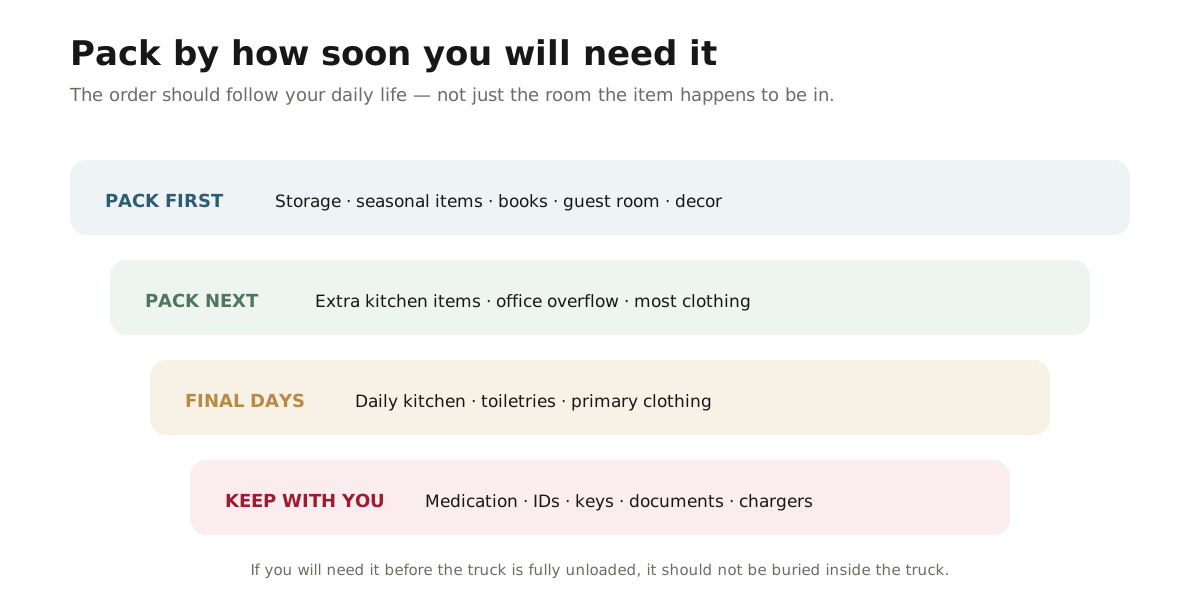
Packing is easiest when each category disappears at the right time.
If you pack daily-use items too early, you spend two weeks reopening boxes.
If you leave everything until the end, labeling and organization collapse.
System 3: Create One Place for Everything That Cannot Get Lost
Some things should never enter the moving truck.
Create a move command bag that stays with you.
It should contain the things that would create a serious problem if they disappeared for a day.
Include:
- Identification
- Keys
- Medication
- Wallet
- Important closing documents
- Lawyer information
- Insurance information
- Chargers
- Laptop
- Small valuables
- Basic toiletries
- Change of clothes
- Water and snacks
If you are moving with children or pets, their critical items belong here too.
Pack a First-Night Box
The first-night box is different from the command bag.
This box contains things you want immediately after moving in.
Examples:
- Toilet paper
- Paper towel
- Basic cleaning supplies
- Soap
- Towels
- Bed linens
- Basic tools
- Coffee maker
- Kettle
- Mugs
- Plates / cutlery
- Garbage bags
- Phone chargers
Load it last so it comes off the truck first.
System 4: Give Moving Day a Job Description
Moving day is not the day to decide what should happen.
It is the day to execute the decisions already made.
Before the movers arrive, know:
- Arrival time
- Parking location
- Elevator booking where applicable
- Loading route
- Who is responsible for children
- Who is responsible for pets
- Who is meeting the movers
- Where keys are
- Which boxes travel with you
- What gets loaded last
- How payment works
- Where furniture goes in the new home
The fewer questions that remain open, the calmer the day becomes.
Make a Simple Floor Plan for Movers
You do not need architectural drawings.
A simple note can say:
MAIN FLOOR
- Kitchen
- Living room
- Dining room
UPSTAIRS
- Primary bedroom
- Bedroom 2
- Office
BASEMENT
- Gym
- Storage
If the boxes are labeled using the same language, movers can place them correctly without asking every few minutes.
Protect High-Traffic Areas
Before heavy furniture starts moving, protect:
- Hardwood
- Carpet
- Stair edges
- Door frames
- Railings
- Elevator walls where required
Also clear anything that can create a trip hazard.
A clear route is faster and safer than carrying furniture around loose boxes.
Moving With Kids: Keep the Routine as Normal as Possible
Children often experience a move differently than adults.
Adults see logistics.
Children may see:
- Their room disappearing into boxes
- Toys being packed
- Familiar routines changing
- Friends becoming farther away
- A new bedroom
- A new school or neighbourhood
Give them age-appropriate involvement.
They can:
- Choose a few items to keep out
- Label their own boxes
- Pack a favourite toy bag
- Choose something for the new room
- Help make a list of first-night essentials
Keep important comfort items accessible.
Do not bury the favourite blanket in the moving truck.
Moving With Pets: Reduce the Chaos Around Them
Moving day can be noisy and unpredictable for pets.
Doors are left open.
People move in and out.
Furniture disappears.
A normally calm animal can become stressed or escape.
Where possible, arrange a quiet and secure place away from the moving traffic.
Prepare:
- Food
- Water
- Medication
- Carrier / leash
- Waste supplies
- Bed / blanket
- Favourite toy
- Veterinary information if needed
At the new home, set up one secure area before giving the pet access to the entire property.
Use Up Food Instead of Moving It
In the final weeks, intentionally reduce:
- Freezer contents
- Open pantry items
- Refrigerator items
- Cleaning liquids
- Restricted moving materials
Plan meals around what is already in the home.
This reduces packing volume and waste.
Ask your moving company what it will not transport.
Certain materials may need separate handling.
Photograph Valuable Items Before They Move
Take photos of:
- Furniture
- Electronics
- Artwork
- Fragile pieces
- High-value belongings
The goal is not to expect damage.
The goal is to have a record of condition before the move.
If using professional movers, keep:
- Quote
- Contract
- Inventory
- Receipts
- Contact information
in your command bag.
Confirm the Move More Than Once
A simple confirmation schedule can prevent a lot of stress.
One to two weeks out
Confirm:
- Date
- Arrival window
- Address
- Services
- Special items
- Building restrictions
24–48 hours out
Confirm again:
- Arrival
- Contact person
- Parking
- Payment
- Equipment
- Access
Do not assume everyone has the same information you provided weeks earlier.
Do a Complete Final Sweep
When the old home looks empty, check it again.
Open:
- Every cabinet
- Every closet
- Every drawer
- Dishwasher
- Oven
- Fridge
- Garage cabinets
- Storage room
- Shed
- Attic access
- Basement storage
Walk room by room.
Then check:
- Windows
- Doors
- Keys
- Remotes
- Thermostat
- Lights
- Garbage
A systematic sweep is better than relying on memory after a long day.
Do Not Try to Unpack the Entire New Home Immediately
The first objective is function.
Set up the new home in this order:
1. Sleep
Build beds and put linens on them.
2. Bathroom
Toilet paper, towels, soap, shower items.
3. Food
Basic kitchen setup, water and coffee.
4. Children / pets
Create familiar and safe spaces.
5. Work
If someone needs to work the next day, set up the necessary equipment.
6. Everything else
Decor can wait.
The house does not need to look finished on night one.
Use the Empty-Box Rule
As you unpack, flatten or remove empty boxes immediately.
Nothing makes a new home feel more chaotic than keeping empty boxes mixed with full boxes.
Create one location for:
- Flattened cardboard
- Packing paper
- Bubble wrap
- Reusable boxes
The visible clutter falls quickly when empty packaging disappears.
Do One Room Properly
A useful psychological trick after moving is to finish one important room.
For many people, that is:
- Bedroom
- Kitchen
- Living room
Having one finished space gives you somewhere that does not feel temporary while the rest of the home is still being organized.
The 24-Hour Moving-Day System
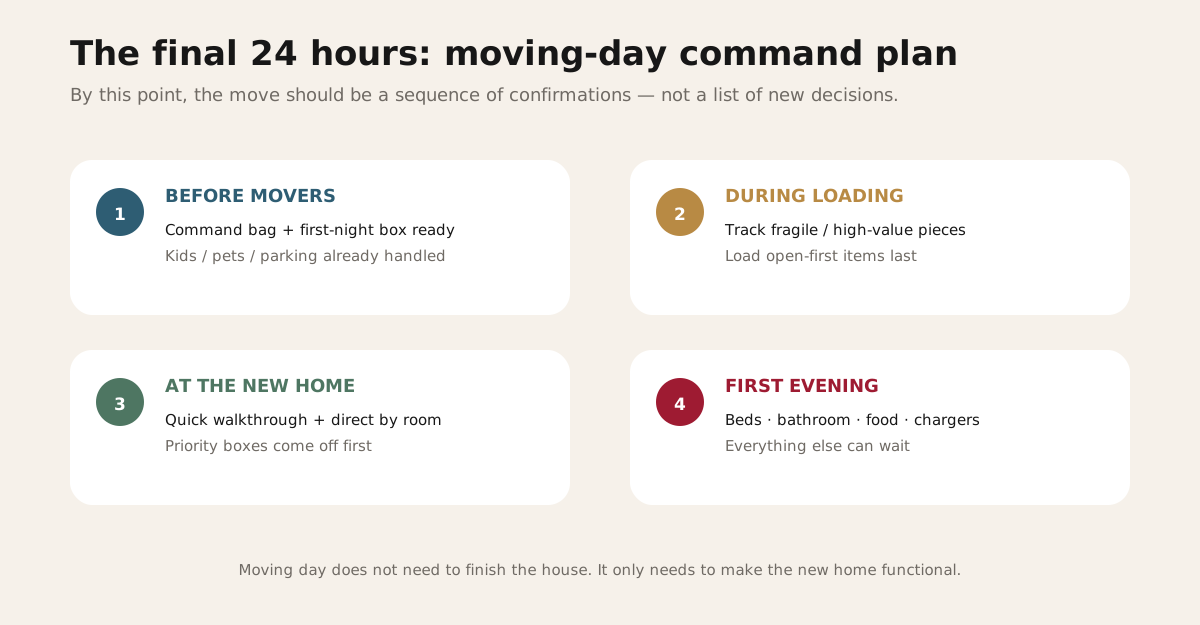
Before movers arrive
- Command bag ready
- First-night box ready
- Floors protected
- Pets / children handled
- Parking clear
- Boxes labeled
During loading
- Keep critical items separate
- Track fragile / valuable pieces
- Confirm nothing is left behind
- Load open-first items last
At the new home
- Quick walkthrough
- Direct furniture by room
- Unload priority items first
- Check for damage
First evening
- Beds
- Bathroom
- Food
- Chargers
- Basic cleanup
That is enough for day one.
Common Moving Mistakes
Packing before decluttering
You create work for items you do not even want.
Mixing multiple rooms in one box
Unpacking becomes slower because the box has no clear destination.
Using only large boxes
Heavy boxes become difficult and unsafe to move.
Packing essential documents
Closing documents, IDs and medication should stay with you.
Forgetting to label priority
A kitchen box is not useful if you have to open twelve of them to find the coffee maker.
Leaving pets in the middle of moving traffic
Open doors and unfamiliar people create unnecessary risk.
Treating moving day like the planning day
If major decisions are still being made while the truck is outside, the preparation happened too late.
Frequently Asked Questions
What is the easiest way to make moving less stressful?
Break the process into separate systems: declutter, pack by priority, label clearly, protect essentials and plan moving day before it arrives.
How early should I start packing?
Start with low-use and seasonal items several weeks before the move. Daily essentials should stay out until the final days.
What should I pack first when moving?
Start with storage, seasonal decor, books, collectibles, guest-room items and anything you will not need before moving day.
What should stay with me instead of going in the moving truck?
Keep identification, keys, medication, documents, valuables, chargers and other items you cannot afford to lose access to.
How can I make moving easier with children or pets?
Maintain as much routine as possible, keep comfort and essential items accessible, and give pets a secure space away from open doors and moving traffic.
The Bottom Line
A less stressful move is not about working faster.
It is about reducing the number of decisions you have to make at the same time.
Declutter first.
Pack in order.
Label for the new home.
Keep critical items with you.
Give children and pets a separate plan.
And use moving day to execute instead of improvise.
The move will still involve work.
It just does not need to feel chaotic.
Sources & Methodology
This guide organizes moving into four systems — reduce, pack, protect and execute — rather than a single undifferentiated checklist. Moving-company policies, building move requirements, insurance terms and household needs vary, so confirm the details that apply to your specific move.
This article is for general informational purposes. Moving-company policies, building move requirements, insurance terms and household needs vary, so confirm the details that apply to your specific move.