Refinancing can lower borrowing costs, unlock home equity, or restructure a mortgage around a homeowner's current needs.
It can also be expensive.
That is why the right question is not simply:
“Can I get a better rate?”
It is:
“After the penalty, fees, new loan amount and long-term interest cost, does replacing my current mortgage actually improve my position?”
For Calgary homeowners, that calculation can become especially important after years of mortgage payments and changing property values.
Refinancing is a financial tool. It works best when the reason for using it is clear and the numbers support the decision.
What Does Refinancing a Mortgage Mean?
Refinancing means replacing your existing mortgage with a new mortgage.
The new loan may have:
- A different interest rate
- A different term
- A different amortization
- A larger principal balance
- A different lender
- Different payment features
Your new mortgage pays out the old one.
If the new mortgage is larger than the amount required to discharge the existing mortgage and related costs, the remaining funds may be available to you, subject to lender approval and applicable loan-to-value limits.
Refinancing Is Different From Renewal
A mortgage renewal happens when your existing term ends and you enter a new term.
Refinancing changes the underlying mortgage more substantially.
For example, you may be refinancing if you:
- Increase the loan amount
- Extend the amortization
- Access equity
- Break the mortgage before maturity
- Replace the current mortgage with a new structure
A simple lender switch at renewal with the same balance and remaining amortization is a different situation from a cash-out refinance.
That distinction matters because qualification requirements and costs can be different.
Why Homeowners Refinance
There are several common reasons.
1. Reduce borrowing costs
If market rates are materially lower than the rate on your existing mortgage, replacing the loan may reduce your interest cost.
But a lower rate alone does not make refinancing worthwhile.
You still need to compare the savings with:
- Prepayment penalties
- Legal or registration costs
- Appraisal costs
- Discharge fees
- Any other lender charges
The true comparison is total savings versus total cost.
2. Access home equity
As you pay down your mortgage — and if the property value increases — your equity can grow.
Homeowners may access that equity for purposes such as:
- Renovations
- Major repairs
- Education
- Investment
- Debt consolidation
- Other large financial needs
Borrowing against the home can offer a lower interest rate than some unsecured debt, but it also converts equity into debt secured by the property.
3. Restructure the mortgage
A homeowner's financial situation may look very different from when the mortgage was first arranged.
Refinancing may be considered to:
- Change amortization
- Change payment structure
- Consolidate secured borrowing
- Move to a different lender or product
- Reorganize monthly cash flow
The goal should be improving the overall financial structure, not simply reducing one monthly payment.
How Much Equity Can You Access?
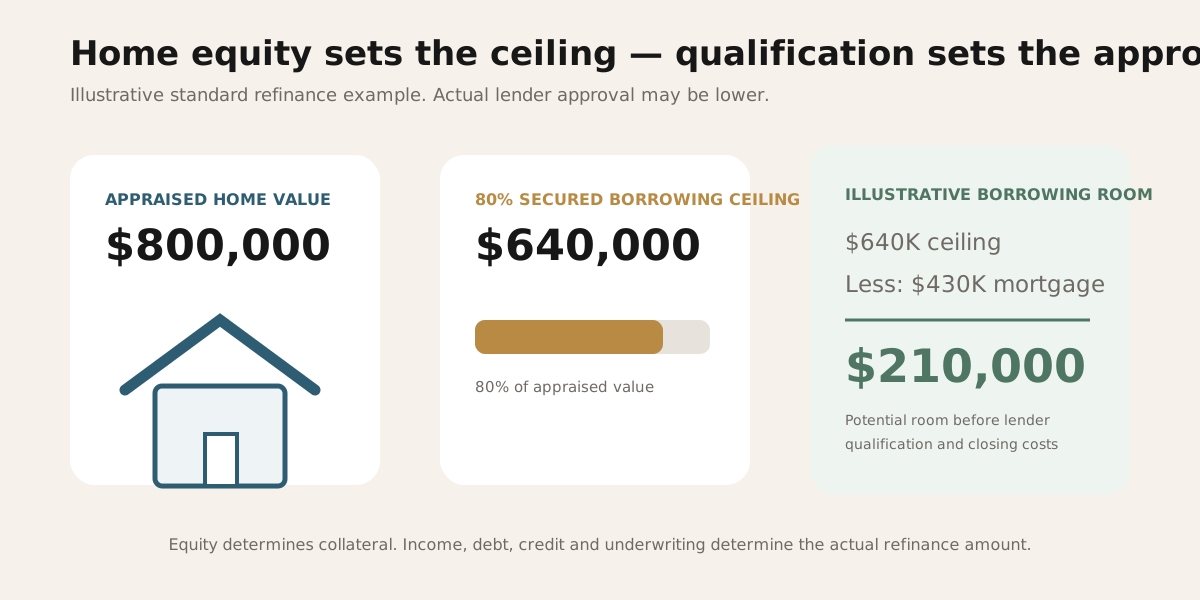
For standard home-equity borrowing, Canadian financial institutions may generally allow total borrowing secured against the home up to 80% of the home's appraised value, subject to qualification and product rules.
A standalone HELOC generally has a lower maximum revolving limit.
Example
Assume:
- Appraised home value: $800,000
- 80% of value: $640,000
- Existing mortgage balance: $430,000
The theoretical room between the existing mortgage and 80% of the home's value is:
$210,000
That does not mean the homeowner automatically qualifies to borrow $210,000.
The lender still evaluates:
- Income
- Existing debts
- Credit
- Property value
- Debt-service ratios
- Mortgage qualification rules
- The specific lending product
Equity determines the security available.
Qualification determines how much the lender is actually prepared to advance.
Why Your Home's Value Matters
Refinancing against equity usually requires the lender to establish a value for the property.
That may involve an appraisal.
For homeowners considering an equity refinance, understanding the property's current market value is therefore useful before assuming how much borrowing room exists.
Want a current Calgary market-value estimate before speaking with your lender?
A real estate market evaluation can help you understand recent comparable sales and where your property may sit in today's market.
A real estate market evaluation is not a lender appraisal, but it can help you begin with a more realistic property-value range.
The Cost That Can Change the Entire Decision: Breaking the Mortgage
If you refinance before the end of a closed mortgage term, your lender may charge a prepayment penalty.
This can be one of the largest costs in the entire transaction.
The Financial Consumer Agency of Canada notes that prepayment penalties may apply when a borrower:
- Breaks a mortgage contract
- Transfers the mortgage before the end of the term
- Pays the mortgage off before maturity
- Makes payments beyond permitted prepayment privileges
The actual penalty depends on the mortgage contract and lender.
Do not estimate it from a generic online rule.
Ask the lender for a written payout or penalty estimate.
Other Refinancing Costs
Depending on the transaction, costs may also include:
- Appraisal fees
- Legal fees
- Mortgage discharge fees
- Registration costs
- Title-related costs
- Administration fees
- Reinvestment fees
- Repayment of certain lender incentives or cash-back features
Some lenders may cover certain switching or setup costs in specific situations.
The comparison should use the actual quote for your mortgage, not an assumed average.
The Break-Even Calculation
One of the most useful refinancing calculations is the break-even period.
The basic idea is:
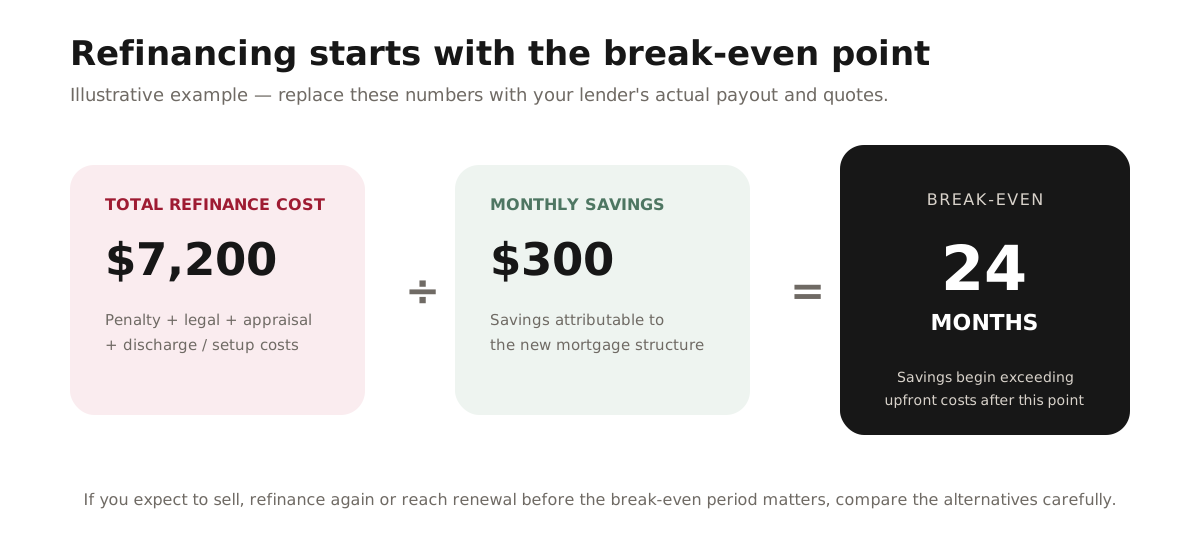
Total refinancing costs ÷ monthly savings = months to break even
Illustrative example
Suppose:
- Total refinancing costs: $7,200
- Monthly payment or interest-cost savings attributable to the refinance: $300
The break-even period would be:
$7,200 ÷ $300 = 24 months
If you expect to refinance again, sell the home, or reach renewal before the savings have meaningfully exceeded the cost, the refinance may be less attractive.
The break-even calculation is not the entire analysis, but it is an excellent first filter.
Lower Payment Does Not Always Mean Lower Cost
A refinance can reduce the monthly payment by extending the amortization.
That may improve cash flow.
But stretching the debt over a longer period can increase the amount of interest paid over time.
Always compare:
- New monthly payment
- New amortization
- New principal balance
- Interest cost over the relevant period
- Total refinancing costs
A smaller monthly number can look appealing while quietly increasing the total cost of the debt.
Refinancing to Consolidate Debt
Homeowners sometimes refinance to pay off higher-interest debt.
The logic can be attractive:
Replace higher-rate unsecured debt with lower-rate mortgage debt.
The danger is that the debt has not disappeared.
It has moved onto the home.
And if the mortgage is amortized over many years, the repayment period can become much longer.
Debt consolidation is strongest when it is paired with a plan that prevents the original balances from building again.
Otherwise, the homeowner may eventually have:
- A larger mortgage
- New credit-card balances
- Less home equity
Refinancing for Renovations
Using equity for renovations can make sense when the project is financially manageable and the homeowner intends to keep the property long enough to benefit from the work.
But renovation borrowing should still be evaluated separately from the projected increase in home value.
A $100,000 renovation does not automatically create $100,000 of market value.
Before borrowing against the home for a major project, understand:
- Total project budget
- Contingency
- Permit and professional costs
- Whether the renovation fits the neighbourhood
- How long you expect to own the property
- How the larger mortgage affects monthly cash flow
A Special Case: Refinancing to Add Secondary Units
Since January 15, 2025, qualifying Canadian homeowners may have access to an insured refinancing framework designed specifically for adding legal secondary units.
The federal parameters include requirements relating to owner or close-relative occupancy, legal self-contained units, project costs and the property's as-improved value.
This is a specialized program and should not be confused with a standard cash-out refinance.
If the purpose of the refinance is adding a legal suite or additional dwelling unit, ask the mortgage professional specifically whether this framework applies.
Qualification Still Matters
Refinancing generally involves underwriting a new mortgage.
The lender reviews your financial position again.
That can include:
- Income
- Employment
- Credit
- Existing debts
- Property value
- Mortgage amount
- Debt-service capacity
For uninsured mortgages at federally regulated lenders, the qualifying-rate framework generally uses the greater of:
- The contract rate plus 2%, or
- 5.25%
A separate rule applies to certain uninsured straight switches at renewal where the loan amount and remaining amortization are not increased.
That exception is one reason homeowners should distinguish switching at renewal from refinancing.
Refinance, HELOC or Wait Until Renewal?
A full refinance is not the only option.
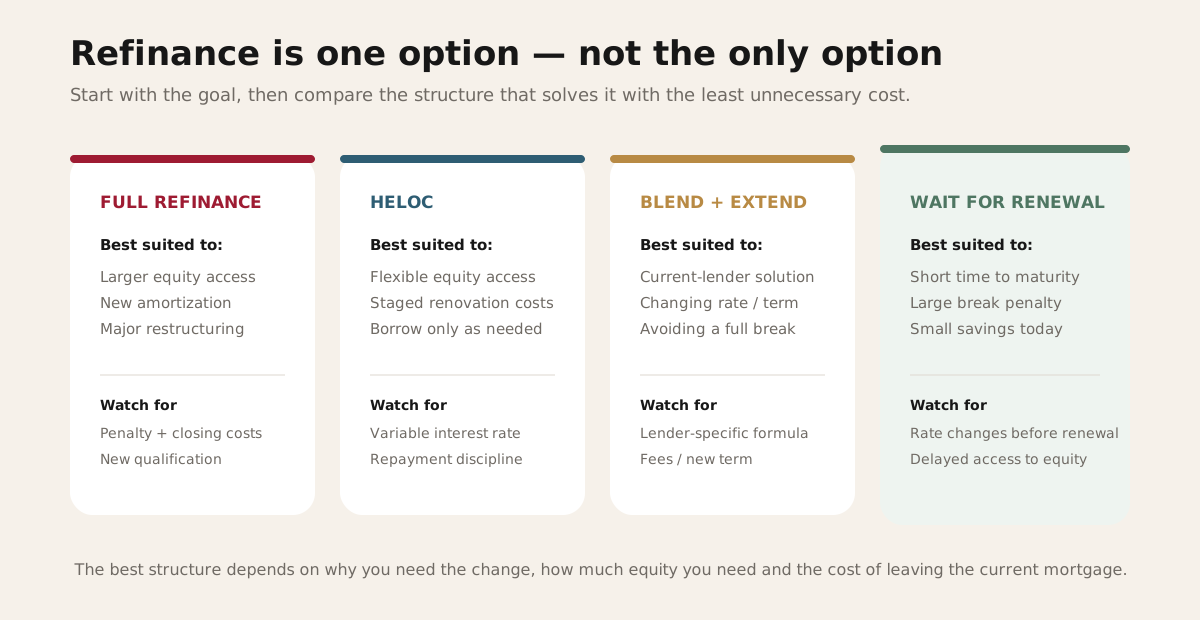
Option 1: Full Refinance
May be useful when you need to:
- Increase the mortgage amount
- Access a substantial amount of equity
- Restructure the amortization
- Replace the current mortgage entirely
Main questions:
- What is the penalty?
- What are the closing costs?
- Will you qualify?
- What is the break-even period?
Option 2: HELOC
A home equity line of credit can provide revolving access to equity.
It may allow you to borrow only what you need rather than increasing the entire mortgage balance immediately.
HELOC rates are generally variable, and the home secures the debt.
This structure can be useful for staged expenses such as renovations, but it requires disciplined repayment.
Option 3: Blend and Extend
Some lenders may allow a borrower to blend an existing mortgage rate with a new rate and extend the mortgage term.
This may avoid the same type of prepayment penalty that would apply to fully breaking the mortgage, although fees and lender-specific rules can still apply.
It can be worth asking your current lender about before replacing the mortgage.
Option 4: Wait Until Renewal
Sometimes the best refinance is no refinance.
If renewal is relatively close, waiting may allow you to make changes without paying a large early-break penalty.
The closer you are to maturity, the more important it becomes to compare the cost of acting now with the cost of waiting.
A Practical Refinancing Process

Step 1: Define the goal
Be specific.
Are you trying to:
- Lower interest cost?
- Reduce payment?
- Access equity?
- Renovate?
- Consolidate debt?
Different goals may lead to different products.
Step 2: Get the mortgage payout information
Ask your current lender for:
- Remaining balance
- Current interest rate
- Maturity date
- Prepayment penalty estimate
- Discharge or administration charges
Step 3: Estimate current property value
A lender may ultimately require an appraisal.
Before that stage, review recent comparable sales and your current market position.
Step 4: Compare actual offers
Do not compare only headline rates.
Compare:
- Interest rate
- Term
- Amortization
- Prepayment privileges
- Penalty structure
- Setup costs
- Portability
- Payment flexibility
Step 5: Run the break-even math
Calculate whether the benefits exceed the switching costs within a timeframe that matters to you.
Step 6: Review the long-term debt position
Compare the new mortgage balance and amortization with what would happen if you simply kept the existing loan.
Step 7: Complete legal and lender requirements
If approved, the new mortgage is used to pay out the old mortgage and register the new security.
Any approved additional proceeds are then handled through the closing process.
When Refinancing May Make Sense
Refinancing deserves a closer look when:
- The interest-cost savings are large enough to overcome the transaction costs
- You have substantial equity and a productive use for the funds
- High-interest debt can be reorganized within a disciplined repayment plan
- A major renovation fits your long-term ownership plan
- The existing mortgage structure no longer matches your financial needs
- You have enough time to move well beyond the break-even point
When It May Be Better to Wait
Waiting may be stronger when:
- The prepayment penalty is substantial
- Renewal is close
- The rate difference is small
- You plan to sell soon
- You are extending debt mainly to create short-term payment relief
- The refinance would use home equity for discretionary spending
- Qualification for the new mortgage is uncertain

Five Questions to Answer Before Signing
1. What does it cost to leave my current mortgage?
Get the actual lender number.
2. What is my break-even point?
Know when the new structure has recovered its upfront costs.
3. Am I reducing debt cost or simply stretching the debt longer?
Compare amortization and total interest.
4. What happens to my home equity?
Equity withdrawn today becomes debt secured against the property.
5. What is the alternative?
Compare refinance, HELOC, blend-and-extend, waiting until renewal, and doing nothing.
Frequently Asked Questions
How much equity can I access when refinancing in Canada?
Standard home-equity borrowing may generally allow total borrowing secured by the home up to 80% of the property's appraised value, subject to lender qualification and product rules.
Can I refinance before my mortgage term ends?
Yes, but breaking a closed mortgage early may trigger a prepayment penalty and other costs.
Is refinancing the same as renewing a mortgage?
No. Renewal generally starts a new term when the current one ends. Refinancing replaces or materially changes the mortgage and may change the balance or amortization.
Do I have to qualify again when refinancing?
Generally, yes. A refinance is normally treated as new underwriting, and the lender reviews your income, debt, credit and property value.
Is a HELOC better than refinancing?
It depends on the goal. A HELOC provides revolving access to equity, while refinancing can restructure the entire mortgage. Compare interest rates, fees, repayment structure and how much money you actually need.
The Bottom Line
Refinancing is not automatically good because rates are lower.
It is not automatically bad because there is a penalty.
It is a math problem built around your specific mortgage.
The strongest decision considers:
- Current balance
- Current rate
- Remaining term
- Penalty
- Property value
- Available equity
- New mortgage terms
- Qualification
- Break-even period
- Long-term debt cost
If those numbers improve your financial position, refinancing can be a useful tool.
If they do not, keeping the existing mortgage may be the better decision.
Sources & Methodology
Canadian refinancing rules and consumer guidance were cross-checked against the Financial Consumer Agency of Canada, the Office of the Superintendent of Financial Institutions, and federal mortgage-insurance policy materials available by the January 24, 2026 publication date.
This article is for general informational purposes only and is not mortgage, financial, legal or tax advice. Mortgage qualification, penalties and available products vary by lender and borrower.