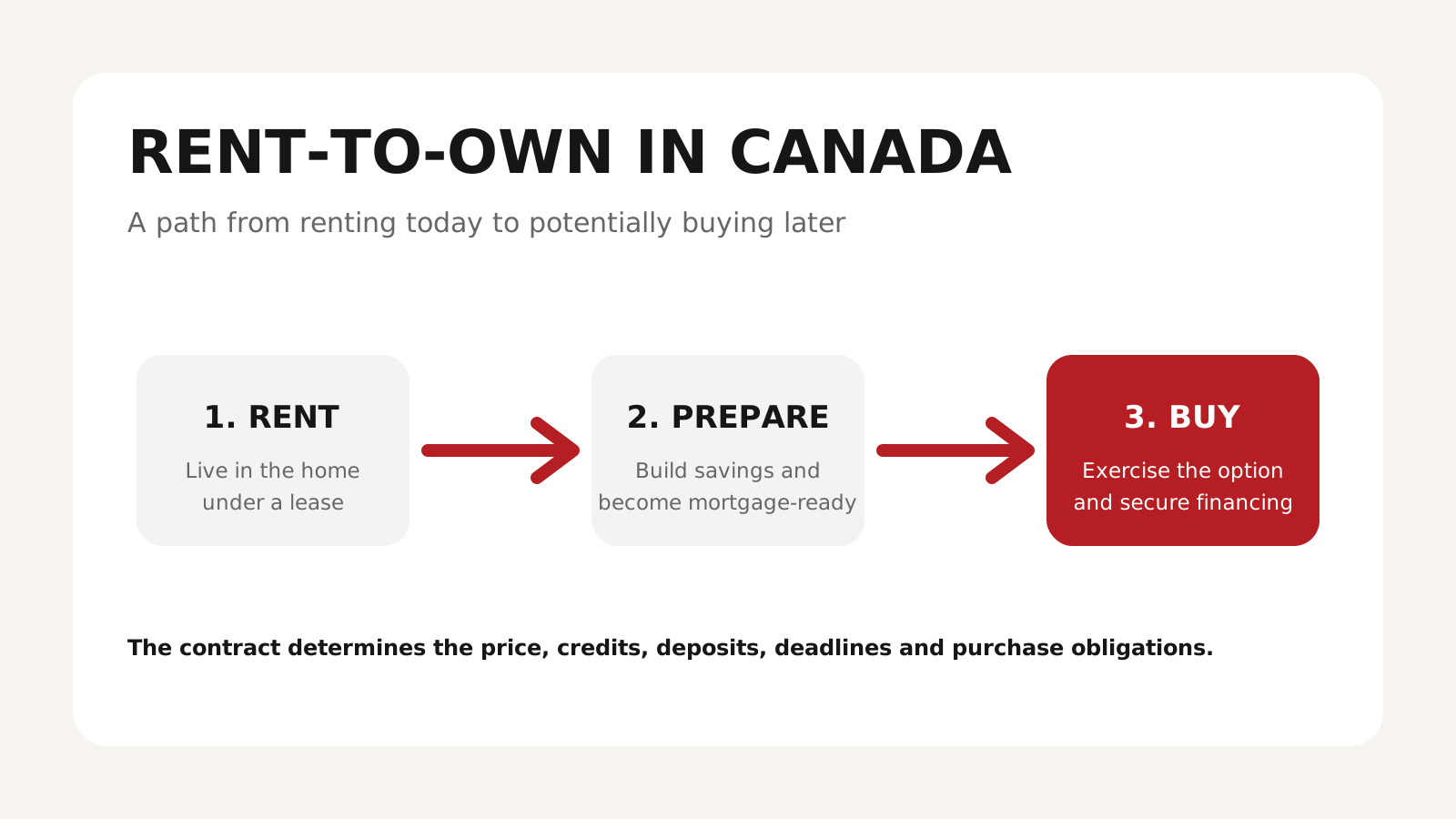
Buying a home usually starts with two things: enough money for a down payment and the ability to qualify for a mortgage. If one of those pieces is not quite in place yet, a rent-to-own arrangement can sometimes create a bridge between renting today and purchasing later.
The basic idea is simple. You move into a home as a tenant, agree on a future opportunity or obligation to purchase it, and make payments under a contract that may allow a portion of your money to be credited toward the eventual purchase.
That can sound like an easy shortcut to homeownership, but the details matter. Rent-to-own contracts vary widely, the monthly cost is often higher than a normal rental, and you can lose money if you are unable or unwilling to complete the purchase.
This guide explains how rent-to-own generally works in Canada, what the costs can look like, where the risks are, and what to review before signing anything.
Important: Rent-to-own agreements are legal and financial contracts. This article is general information only. Have a qualified real estate lawyer review any agreement and speak with a mortgage professional about your ability to qualify for financing before committing.
Rent-to-Own at a Glance
A typical rent-to-own arrangement combines a rental period with a future purchase arrangement.
• You occupy the property as a tenant for a set period, often one to three years.
• You may pay an upfront option deposit or option fee.
• Your monthly payment may be higher than ordinary market rent.
• A stated portion of the monthly payment may be credited toward the future purchase, depending on the contract.
• The purchase price may be fixed at the beginning or calculated using a formula in the agreement.
• You will usually still need to qualify for a mortgage when it is time to complete the purchase.
• If you do not buy, some or all of the upfront deposit and accumulated credits may be forfeited depending on the agreement.
Rent-to-own is therefore less about avoiding a mortgage and more about giving yourself time to become mortgage-ready while living in the home you may eventually purchase.
How a Rent-to-Own Arrangement Works
Most arrangements contain two connected pieces: a lease and a purchase-related agreement.
The lease covers the normal rental terms — monthly payments, length of tenancy, maintenance responsibilities, utilities, rules for the property, and what happens if a payment is late.
The purchase portion deals with the future sale. It can establish the purchase price, the option period, deposits, purchase credits, deadlines, and whether buying the property is optional or mandatory.
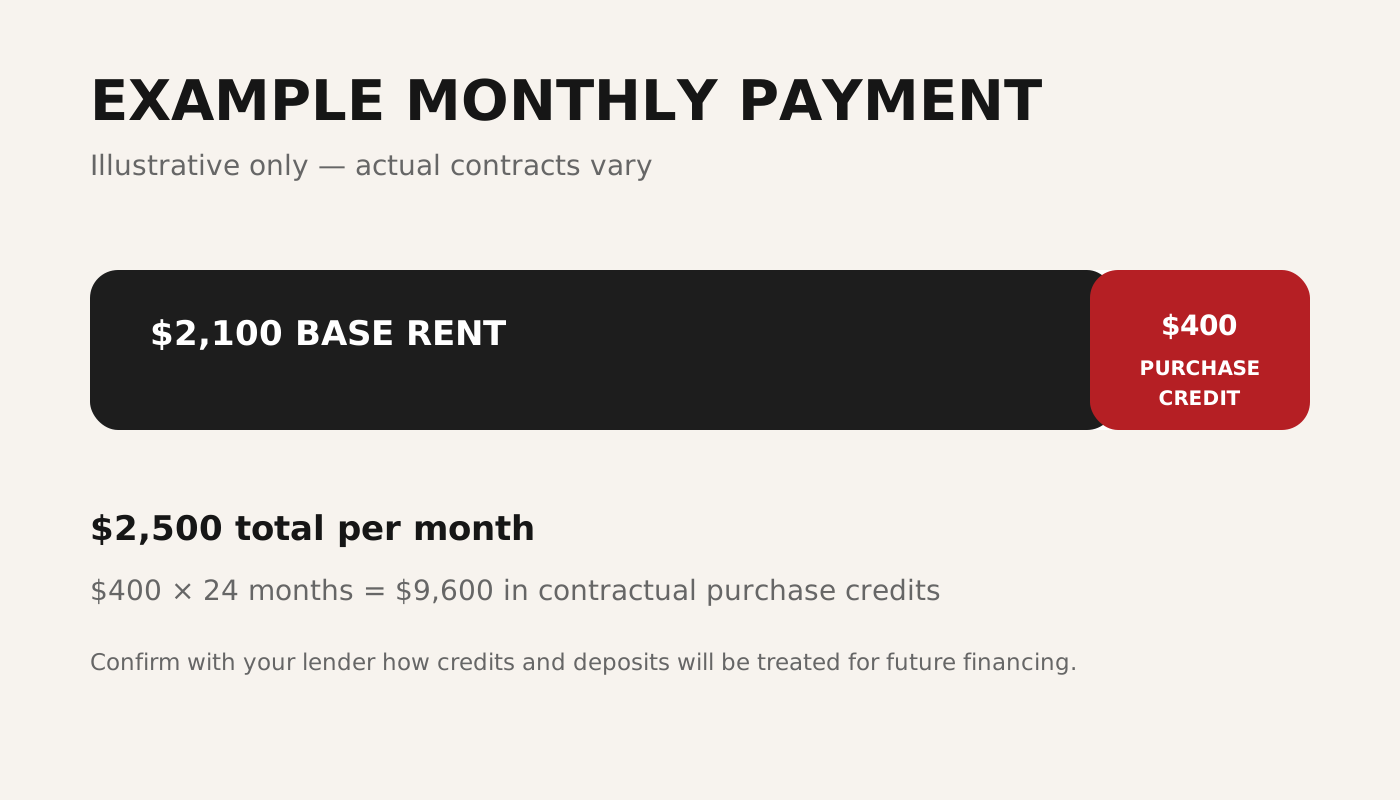
For example, imagine a home is priced at $450,000 and the agreement runs for 24 months. The tenant pays $2,500 per month, with $2,100 treated as rent and $400 identified in the agreement as a purchase credit. Over two years, those monthly credits total $9,600.
If the buyer also paid a $15,000 upfront option deposit that is fully credited toward the purchase, the contract could potentially provide $24,600 in combined credits by the time the purchase is completed.
Whether a lender will recognize those funds in the way you expect is a separate question. That is why it is important to involve a mortgage professional before entering the agreement rather than waiting until the end of the rental term.
What Does Rent-to-Own Cost?
There is no universal rent-to-own pricing model. The numbers are negotiated and can differ significantly between properties and providers.
Upfront Option Deposit
Many agreements require money upfront in exchange for the right to purchase the property later. The amount may be expressed as a percentage of the agreed purchase price or as a fixed dollar amount.
This money may be applied toward the purchase if the transaction closes. If the buyer walks away or cannot complete the purchase, the contract may allow the seller to keep it.
Higher Monthly Payments
A rent-to-own payment is often higher than comparable market rent because the contract may designate an additional amount as a future purchase credit. For example:
| Monthly payment | Amount |
|---|---|
| Base rent | $2,100 |
| Purchase credit | $400 |
| Total monthly payment | $2,500 |
Over 24 months, the purchase-credit portion in this example would total $9,600.
Repairs and Maintenance
Some agreements place more maintenance responsibility on the tenant-buyer than a conventional lease would. Others leave major repairs with the property owner. This should be stated clearly in writing.
A lower monthly payment is not necessarily a better deal if the tenant is also responsible for expensive systems such as the furnace, roof, plumbing, or major appliances.
Rent-to-Own vs. Lease-Purchase
The terminology can be confusing because people sometimes use "rent-to-own," "lease-option," and "lease-purchase" as though they mean the same thing.
The contract — not the label — is what matters.
A lease-option generally gives the tenant the right to buy the home within a certain period without automatically requiring the purchase to happen.
A lease-purchase agreement can create a stronger obligation to complete the purchase at the end of the term.
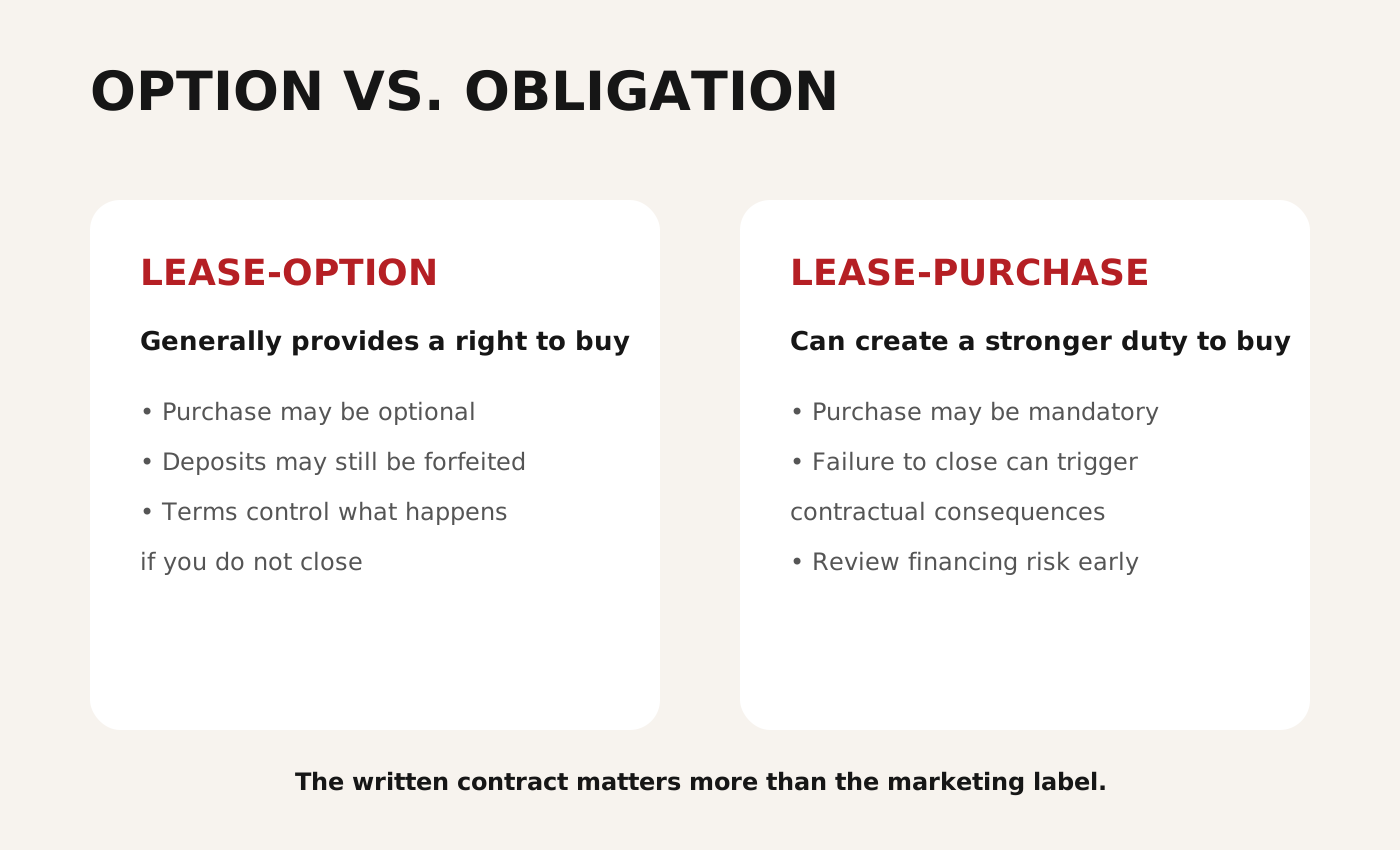
Before signing, confirm in plain language:
• Do you have the option to buy or an obligation to buy?
• What happens if you cannot qualify for a mortgage?
• Is the option deposit refundable under any circumstances?
• What happens to your monthly purchase credits if you do not close?
• Can you purchase the home early?
• What events allow the seller to terminate the agreement?
Never rely on the marketing name of the program to answer these questions.
How Is the Future Purchase Price Set?
The future purchase price is one of the most important terms in the entire agreement.
Some contracts lock in a fixed price at the beginning. This can benefit the buyer if property values rise during the rental period. The opposite is also possible: if the market softens, the agreed purchase price could end up higher than the property's market value when it is time to buy.
Other agreements use a formula — for example, today's value plus a predetermined annual increase.
Before agreeing to a number, buyers should understand how the price compares with current market value. A comparative market analysis or independent appraisal can help provide context.
The price also matters for financing. Even if you agreed to pay $500,000, a lender will make its own assessment when underwriting the mortgage. An appraisal that comes in below the contract price can create a financing gap the buyer may need to cover.
Can Rent-to-Own Help You Qualify for a Mortgage Later?
Potentially — but the rent-to-own contract itself does not guarantee future mortgage approval.
The rental period can give a buyer time to improve the factors lenders care about, such as building savings, reducing consumer debt, improving payment history and credit, establishing more consistent income, organizing income documentation (particularly for self-employed buyers), and allowing time for past credit issues to become less recent.
The strongest approach is to start with a mortgage professional who can identify exactly what is preventing approval today and what needs to change over the next 12, 24, or 36 months.
A rent-to-own plan is much more useful when it is paired with a realistic financing plan.
Does Rent-to-Own Build Equity?
This is one area where wording matters.
During the rental period, you generally do not own the property simply because part of your payment is labelled a purchase credit. The legal owner continues to own the home until a purchase closes and title transfers.
A better way to think about rent credits is as contractual credits toward a future purchase, not the same thing as equity accumulated through mortgage principal payments.
If the purchase never closes, what happens to those credits depends on the agreement.
Who Pays for Repairs, Property Tax and Insurance?
The contract should spell this out clearly.
In a conventional rental, landlords generally retain significant obligations for the property. Rent-to-own arrangements can allocate responsibilities differently, especially for ongoing maintenance.
Questions to answer before signing include:
• Who pays when the furnace fails?
• Who handles appliance replacement?
• Who is responsible for the roof or foundation?
• Who carries property insurance, and what insurance does the tenant need?
• Who pays property taxes?
• Are there limits on renovations or improvements?
• If you pay for an improvement and later do not purchase, are you compensated?
Do not assume that living "like an owner" means you legally have all the benefits of ownership during the lease period.
Where Can Rent-to-Own Opportunities Come From?
Rent-to-own arrangements can be structured in several ways.
Private Property Owners
A landlord or seller may negotiate directly with a tenant who wants to purchase the property later.
Rent-to-Own Companies
Some businesses purchase a property selected by the future buyer and then lease it back under a rent-to-own program. These programs can have specific qualification rules, fees, price-appreciation formulas, and purchase timelines.
Builders or New-Home Sellers
Occasionally, a builder or developer may offer a lease-to-own or similar structure on selected inventory. Terms vary and should be reviewed in the same way as any other purchase contract.
Regardless of who offers the arrangement, buyers should verify ownership of the property, review title, understand all fees, and have the contract reviewed independently.
What to Negotiate Before You Sign
Rent-to-own terms are not all standardized. Key items worth reviewing and, where possible, negotiating include:
The Purchase Price
Make sure the starting value and any future price increases are understandable and defensible.
The Length of the Agreement
A longer term gives you more time to improve your finances, but it can also mean more time paying a premium over ordinary rent.
Monthly Purchase Credits
The contract should state exactly how much of each payment is credited toward the purchase and what conditions must be met to keep those credits.
The Upfront Option Deposit
Understand the dollar amount, when it is due, how it is credited, and every circumstance in which it can be forfeited.
Repair Obligations
Large repairs can materially change the economics of the deal. Avoid vague language such as "tenant responsible for maintenance" without understanding what that includes.
Early Purchase Rights
If your finances improve faster than expected, it may be useful to have the ability to exercise the purchase option before the original end date.
Default Provisions
A single late payment should not be something you discover afterward can erase thousands of dollars in accumulated credits. Review default clauses carefully with your lawyer.
Red Flags to Watch For
A rent-to-own arrangement deserves extra scrutiny when:
• the seller or company discourages you from getting independent legal advice;
• the purchase price is materially above comparable market value;
• large fees are demanded before you have selected or inspected a property;
• the agreement is unclear about what happens to deposits and monthly credits;
• the seller cannot clearly demonstrate ownership or authority to sell the property;
• repair obligations are extremely broad;
• the agreement promises guaranteed future mortgage approval;
• important terms were explained verbally but do not appear in the written contract; or
• you are being pressured to sign immediately.
A legitimate path to homeownership should still withstand normal due diligence.
Who Might Consider Rent-to-Own?
Rent-to-own can be worth exploring when someone is close to mortgage-ready but needs time to solve a specific, realistic problem.
Examples can include a buyer who has stable income but needs more time to build savings, someone recovering from a temporary credit issue, or a self-employed buyer who needs additional income history and documentation.
It is generally less attractive when the buyer already qualifies for conventional financing, expects to relocate soon, has unstable income, or would struggle with the higher monthly payment and upfront deposit.
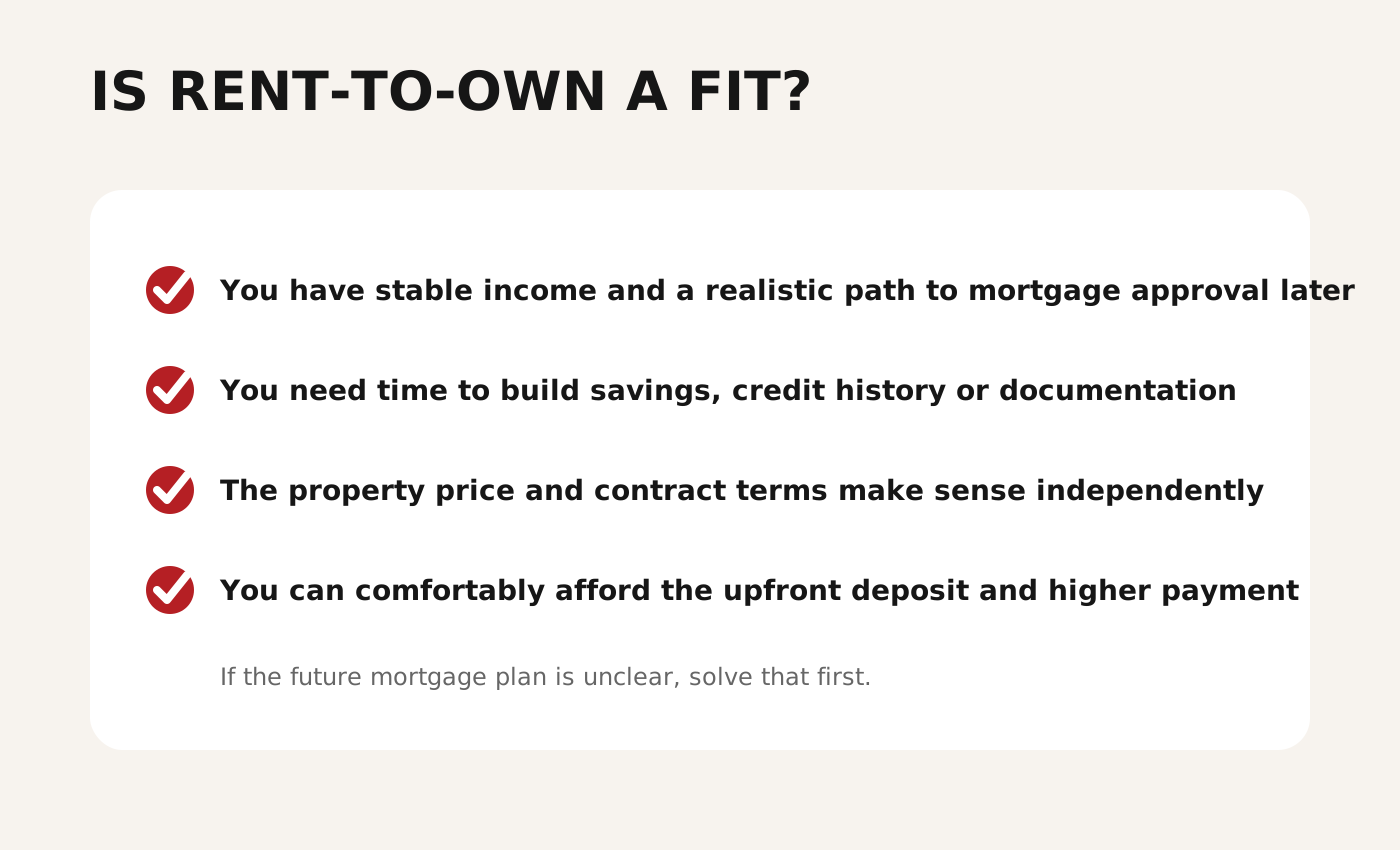
The biggest question is not simply, "Can I afford the rent-to-own payment today?" It is, "Is there a realistic path for me to qualify for the mortgage required to buy this property when the agreement ends?"
Before Entering a Rent-to-Own Agreement
A sensible process looks something like this:
1. Speak with a mortgage professional first. Find out why you do not qualify today and what needs to change.
2. Set a realistic future purchase budget. Do not choose a property based only on what the rent-to-own provider will allow.
3. Research the property and neighbourhood. Treat it as a future purchase, not just a rental.
4. Review comparable sales or obtain an appraisal. Understand whether the purchase price is reasonable.
5. Inspect the home. A rent-to-own agreement is not a reason to skip normal property due diligence.
6. Have a real estate lawyer review the contract. Do this before paying a large option deposit or signing.
7. Confirm how every dollar is treated. Know what is rent, what is a credit, what is refundable, and what can be forfeited.
8. Build a mortgage-readiness plan. Use the lease period to actively improve the specific issues that delayed financing in the first place.
The Bottom Line
Rent-to-own can create a workable route to homeownership for a buyer who is not ready for a mortgage today but has a credible path to becoming ready within a defined period.
It is not a guaranteed shortcut, and it is not simply a regular rental with free equity attached. You are entering a contract that can involve a significant upfront deposit, above-market monthly payments, future financing requirements, and financial consequences if the purchase does not happen.
The best rent-to-own arrangement is one where the property price makes sense, the contract is balanced, the buyer understands every obligation, and there is a realistic mortgage plan in place from day one.
If you are weighing rent-to-own against buying normally or continuing to rent in Calgary, comparing the numbers side by side can make the decision much clearer.