
Selling a home is not one decision.
It is a sequence of decisions — what to fix, what to leave alone, when to list, how to price, how to present the property, which offer to accept, and how to get from an accepted contract to possession without creating unnecessary problems.
The strongest sales usually begin before the listing goes live. A good selling plan starts with three things:
1. Understanding the current market for your specific property type and neighbourhood
2. Knowing what your home is realistically worth
3. Preparing the property around what buyers actually care about
From there, the process becomes much easier to manage.
Start With the Market, Not With the List Price
Calgary is not one single housing market. Detached homes, townhouses, apartments and luxury properties can all behave differently at the same time. Conditions can also vary significantly between communities and price ranges.
That means a useful selling strategy should answer questions such as: How many similar homes are currently for sale? How many have sold recently? How long are comparable homes taking to sell? Are buyers negotiating below list price? Are new listings entering the market faster than buyers are absorbing them? Is your property type in balanced, buyer-favouring or seller-favouring conditions?
Broad headlines are useful context, but they are not enough to price one specific home. The relevant market is the one your property is actually competing in — the most recent Calgary market update is a reasonable place to start.
The First Number You Need Is Your Home's Current Market Value
Before deciding whether to renovate, stage, or even list this month, establish a realistic value range.
A professional comparative market analysis should look at more than a city-wide benchmark. The strongest evaluation considers recent comparable sales, active competing listings, pending sales where information is available, property type, square footage, lot size, renovations and condition, garage and basement development, exact location within the community, current neighbourhood trend, and days on market for similar properties.
The goal is not to produce the highest possible number. The goal is to determine the price range where buyers are most likely to see the property as competitive.
Thinking about selling? Start with the number.
Before you spend money preparing the property, request a free Calgary home evaluation based on recent comparable sales, current competition and your home's specific features.
Pricing Strategy: Why "Testing the Market" Can Backfire
One of the most common selling mistakes is starting high simply to "see what happens." The problem is that buyers see the same competing inventory you do.
If your home appears clearly overpriced beside similar properties, many serious buyers will skip it rather than negotiate from an unrealistic starting point. That can lead to fewer showings, longer time on market, price reductions, buyers wondering what is wrong with the property, and less urgency when an offer finally arrives.
The strongest pricing strategy usually aims to place the home where buyers immediately understand its value relative to the alternatives.
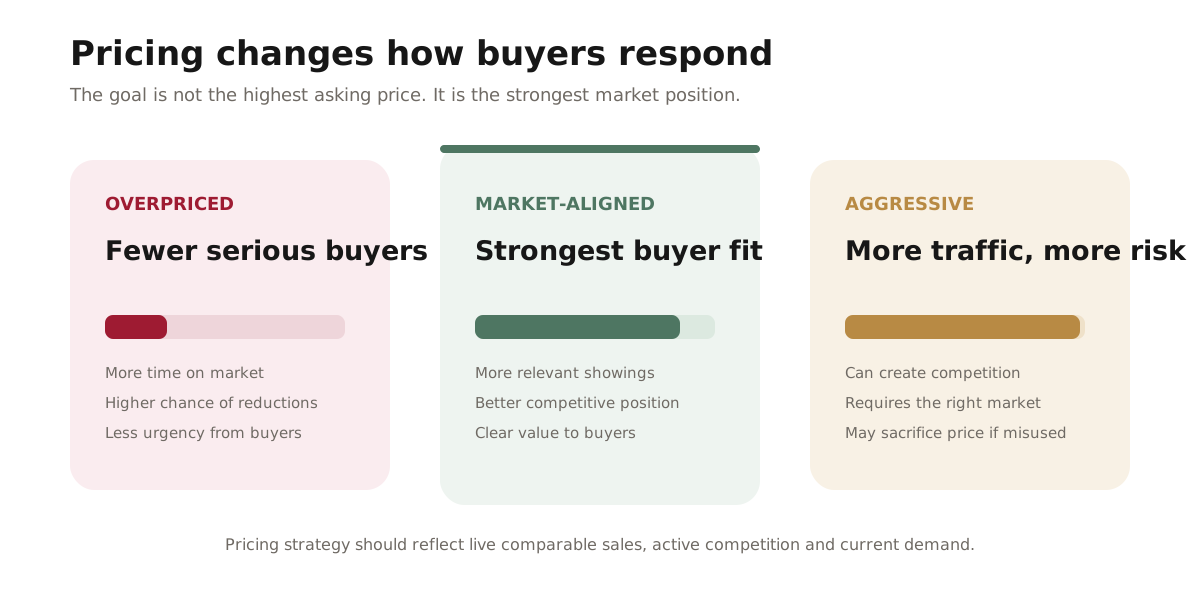
Pricing Too High
You may protect yourself from "leaving money on the table," but you also reduce the number of buyers who see the property as worth viewing.
Pricing Near Market Value
You maximize the chance of attracting the buyers whose budgets and expectations actually match the home.
Pricing Aggressively
In the right market, an intentionally sharp price can create competition. In the wrong market, it can simply result in a lower sale.
Pricing should reflect the property, the competition and the current market — not a one-size-fits-all rule.
Prepare for the Buyer You Actually Want
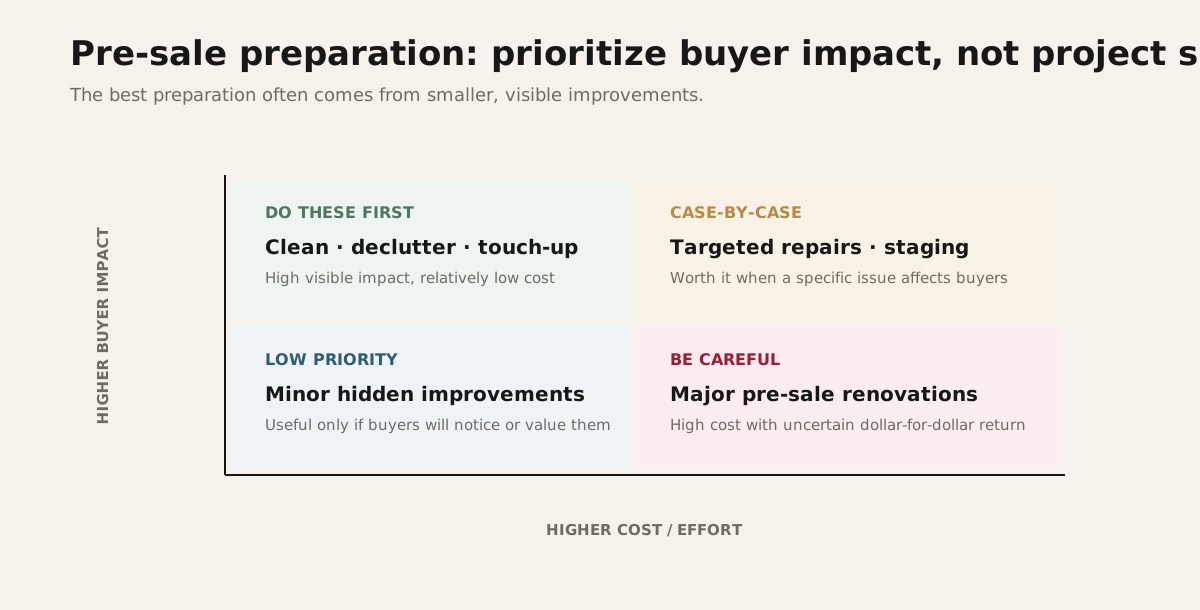
Not every repair or renovation produces a meaningful return. Before listing, separate preparation into three categories.
1. Fix Obvious Deficiencies
These are the items buyers notice immediately and may use as negotiating leverage: leaking faucets, damaged trim, burned-out lights, loose handles, chipped paint, visible drywall damage, broken fixtures and deferred exterior maintenance.
Small defects can create a larger perception problem because buyers start wondering what else has been ignored.
2. Improve Presentation
For many homes, the highest-return work is straightforward: decluttering, deep cleaning, removing excess furniture, touch-up paint, improving lighting, cleaning windows, organizing storage areas and tidying landscaping.
The goal is not to make the home look like someone else's property. The goal is to make the space, condition and layout easy for buyers to understand. There is more detail on this in the selling tips section.
3. Be Careful With Major Renovations
A seller does not automatically recover the full cost of a new kitchen, bathroom or flooring package. Before spending heavily, compare the expected increase in saleability or price against the actual cost, time and risk of the renovation.
Sometimes the better decision is to sell the property honestly in its current condition and price it accordingly.
Curb Appeal Still Matters
The first showing usually happens online. But the exterior still matters because it is often the first image buyers see — and the first thing they experience when they arrive.
Before photography and showings: cut and edge the lawn where seasonally appropriate, trim overgrown shrubs, clear walkways, remove unnecessary items from the front step, clean exterior glass, make the entrance feel maintained, and address obvious peeling paint or damaged trim.
You do not need an elaborate landscaping project. You need the property to communicate that it has been cared for.
Professional Photography Is Part of the Pricing Strategy
Good photography does more than make a listing look attractive. It helps the property compete for attention against every other home buyers see at the same price.
The photography should clearly communicate room size, layout, natural light, renovations, exterior condition, lot and outdoor space, and important features.
For the right property, additional media may include floor plans, drone photography, video walkthroughs, virtual tours, detail photography, and community or location footage.
Marketing does not create value that is not there. But weak marketing can absolutely hide value that is there.
Stage for Clarity, Not Decoration
Staging should help buyers understand how the home lives. That usually means removing excess furniture, giving each room a clear purpose, keeping counters mostly clear, reducing personal items, making beds, using consistent lighting, opening blinds and curtains where appropriate, and making storage spaces feel organized rather than full.
Vacant homes may benefit from professional staging when empty rooms are difficult to interpret or photograph. Occupied homes often need less than sellers expect.
A good pre-listing walkthrough should identify where staging will actually improve buyer perception and where it would simply add cost.
Should You Get a Pre-Listing Inspection?
A pre-listing inspection can be useful in some situations, but it is not automatically necessary for every home.
It may make sense when the property is older, you suspect there may be mechanical or structural issues, you want more certainty before listing, you expect buyers to focus heavily on condition, or you want time to address issues before negotiations.
The benefit is control. If a material issue is discovered before listing, you have time to understand it, get quotes and decide how to handle it. If the buyer discovers it during a conditional period, the negotiation may happen under a tighter deadline.
Discuss the pros and cons before ordering one automatically.
Launching the Listing
Once pricing, preparation and media are ready, the first days on market matter. A strong launch should make it easy for serious buyers to discover the property, understand the value, review high-quality media, book a showing, and compare it favourably with competing homes.
Your listing should be distributed through the MLS® system and supported by the marketing channels appropriate for the property. The exact plan may include MLS® exposure, social media, email marketing, agent-to-agent promotion, open houses, targeted geographic marketing, and property-specific digital content.
The goal is not to create the most marketing activity. It is to create the right exposure to qualified buyers.
Showings: Make the Property Easy to Buy
Once the home is listed, flexibility matters. The easier the property is to show, the more opportunities buyers have to experience it.
Before each showing: keep the home clean, turn on appropriate lights, open blinds where it improves the space, remove strong odours, secure valuables, take pets out where possible, and make the property comfortable to walk through.
Sellers should normally leave during showings. Buyers tend to speak more openly and spend more time in the property when the owner is not present.
Open Houses vs. Private Showings
Private showings remain the core of most residential sales because buyers can view the property on their own schedule with their agent.
Open houses can still be useful when the property has broad appeal, the community receives strong weekend traffic, the listing is newly launched, or there is enough buyer interest to justify concentrated viewing activity.
An open house is a tool, not a strategy by itself. Its value depends on the property and the market.
When an Offer Comes In, Look Beyond the Price
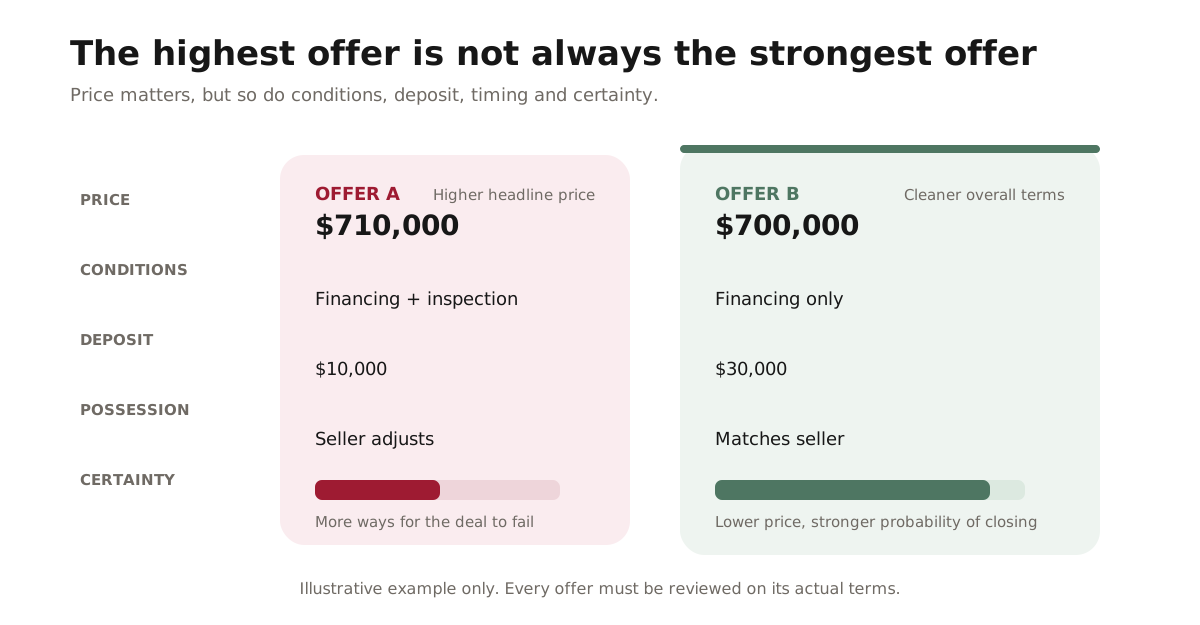
The highest offer is not always the strongest offer. Important terms can include purchase price, deposit, financing condition, inspection condition, condominium document condition, sale-of-buyer's-home condition, possession date, included and excluded items, requested seller concessions, offer expiry, and buyer financing strength.
A slightly lower offer with cleaner conditions and a strong deposit may be materially safer than a higher offer with significant uncertainty.
Multiple Offers Require a Plan
If more than one buyer submits an offer, the goal is not simply to push everyone as high as possible. You need to compare price, conditions, deposit, possession, buyer strength, and the likelihood of the deal actually closing.
The strongest offer is the one that best balances net result and certainty.
After You Accept an Offer
An accepted offer does not always mean the sale is firm. If the contract contains buyer conditions, the property is typically conditional until those terms are satisfied or waived. Common conditions include financing, home inspection, condominium document review, and sale of the buyer's property.
During this period, respond quickly to reasonable requests for documents or access.
If an inspection identifies an issue, the possible outcomes may include the buyer accepting the property as-is, the seller agreeing to repair something, the price being renegotiated, other terms being adjusted, or the buyer not waiving the condition.
The specific contract controls what happens, so legal questions should be directed to the appropriate professional.
Preparing for Closing and Possession
Once the sale is firm, attention shifts to completing the transaction. Typical seller responsibilities include working with your real estate lawyer, providing required documents, completing any agreed repairs, maintaining the property in the agreed condition, arranging your move, closing utility accounts or transferring services, and preparing keys, remotes and access devices.
Your lawyer handles the legal transfer and financial adjustments. Mortgage payout, real estate fees, legal fees, tax adjustments and other costs affect the final amount you receive.
That is why sellers should think in terms of net proceeds, not simply the headline sale price.
What Does It Cost to Sell a Home in Calgary?
Selling costs depend on the property and the services used. Potential costs can include real estate brokerage fees, legal fees, mortgage discharge or prepayment penalties, repairs, cleaning, staging, moving costs, condo-document charges where applicable, and property-tax adjustments.
Before listing, ask for an estimated seller net sheet so you understand approximately what remains after expected selling costs and mortgage payout.
The Seller Roadmap
A clean selling process can be summarized in seven stages:
1. Market evaluation — understand value, competition and timing
2. Preparation plan — decide what is worth fixing or improving
3. Pricing strategy — position the property against current alternatives
4. Marketing launch — photography, MLS® and targeted exposure
5. Showings and feedback — monitor buyer response
6. Offer negotiation — evaluate price, terms and certainty
7. Closing and possession — complete legal and practical handoff
The process is easier when these decisions are made in the right order. A seller consultation walks through them in sequence.
Frequently Asked Questions
How do I know what my Calgary home is worth?
A proper market evaluation should use recent comparable sales, active competition, property-specific features and current market conditions. Municipal assessment and city-wide benchmark prices are useful context but should not determine the list price by themselves.
Should I renovate before selling?
Only when the expected benefit justifies the cost and time. Cleaning, decluttering, minor repairs and targeted cosmetic work often make sense before major renovations.
When is the best time to sell in Calgary?
Calgary usually sees stronger activity during the spring, but the best timing depends on your property type, competition, personal timeline and market conditions. A well-prepared property can sell successfully throughout the year.
How long does it take to sell a home?
It varies by community, property type, price range, condition and market balance. A realistic pricing strategy should use current days-on-market data for comparable properties rather than a city-wide assumption.
Should I accept the highest offer?
Not automatically. Conditions, deposit, financing strength, possession terms and the probability of closing all matter.
Before You Decide What to Do Next
The most useful first step is not choosing a list date. It is establishing where your property sits in the current Calgary market.
A market evaluation gives you the information needed to decide whether now is a good time to sell, what the property may realistically sell for, which improvements are worth doing, what competing listings buyers will compare against, and what your likely net proceeds could look like.
Get a professional Calgary home evaluation before you list.
The evaluation reviews recent comparable sales, active competition, neighbourhood price trends and your property's specific features.
The Bottom Line
A successful home sale is rarely the result of one clever tactic. It comes from getting the sequence right.
Understand the market. Establish the value. Prepare the property strategically. Price it against real competition. Present it properly. Evaluate offers on both price and certainty. Then manage the closing carefully.
When those pieces work together, sellers are in a much stronger position to protect both their timeline and their final result.
Sources & Methodology
The structure of this guide reflects common Calgary residential selling practices and current seller resources. Market-specific decisions should always use live comparable sales, active competition and current conditions for the property being evaluated.
This article is for general informational purposes and is not legal, financial or tax advice. Contract, disclosure and closing questions should be reviewed with the appropriate qualified professional.