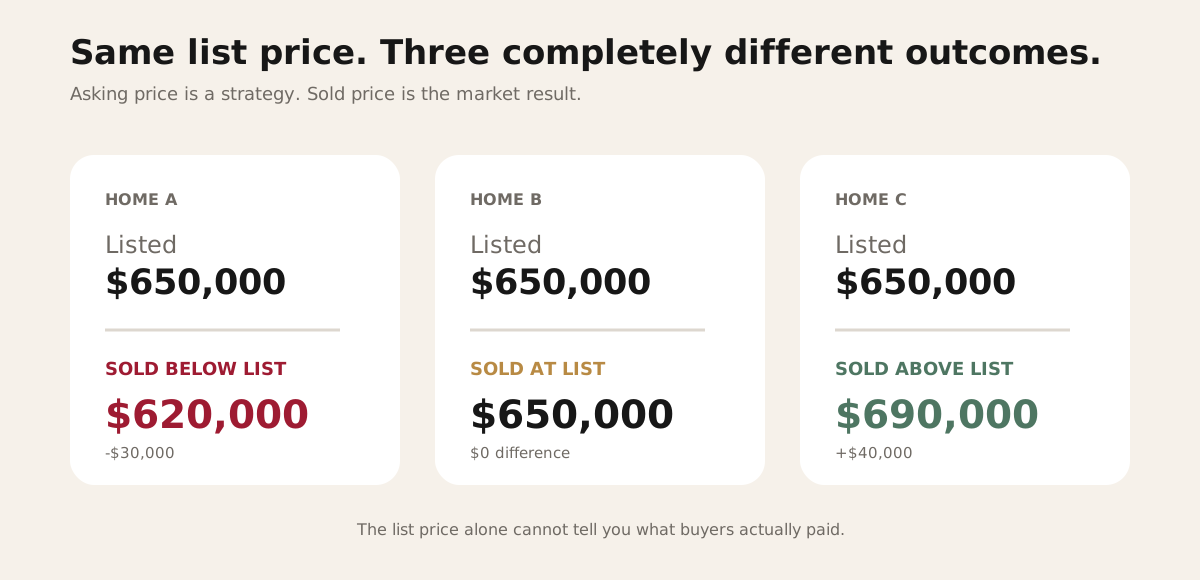
A home can be listed for $650,000 and sell for $620,000. Another can be listed for $650,000 and sell for $690,000.
That is why asking price alone tells you very little about what buyers are actually paying.
Whether you are thinking about selling, preparing an offer, or simply watching your neighbourhood, the sold price is one of the most useful pieces of real estate information you can have.
The challenge is knowing where to find it — and knowing whether the number you are looking at is an actual recorded sale, an MLS® result, or just an automated estimate.
The Fastest Ways to Find a Calgary Sold Price
There are several legitimate ways to research what a home sold for:
1. Ask a Calgary REALTOR® with MLS® access
2. Search Alberta Land Titles records through ARLO when an official land-record source is appropriate
3. Use brokerage or consumer sold-listing tools where data is available
4. Use CREB® market statistics for neighbourhood trends
5. Compare recent sales when your real goal is estimating a property's current value
Each source is useful for a different reason.
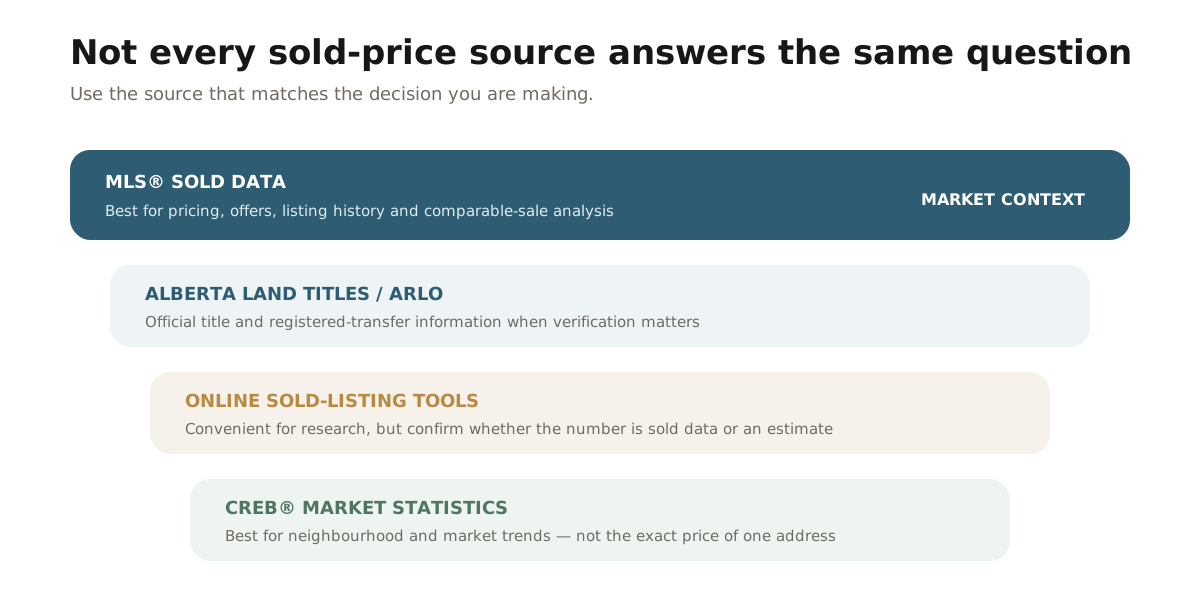
1. MLS® Data: The Most Useful Source for Real Estate Decisions
For most buyers and sellers, MLS® data is the most useful place to start. A licensed real estate professional can typically review the final sold price, original list price, price reductions or increases, days on market, listing history, property features, recent comparable sales, and similar active listings competing in the same market.
The sold price is important, but the surrounding context is what makes it useful.
Consider two homes that both sold for $700,000. One may have been completely renovated with a triple garage. The other may have been larger, on a better lot, but in original condition. The same sale price does not make them equally comparable.
List Price Is a Marketing Number. Sold Price Is a Market Result.
A listing price is chosen before the market has responded. The sold price is the result after buyers have had an opportunity to react. For example:
| Property | List price | Sold price | Result |
|---|---|---|---|
| Home A | $650,000 | $620,000 | Sold below list |
| Home B | $650,000 | $650,000 | Sold at list |
| Home C | $650,000 | $690,000 | Sold above list |
All three homes started with the same asking price. They produced three very different market outcomes.
This is why buyers should not assume a list price represents fair market value — and why sellers should not price their home based only on what nearby properties are currently asking.
2. Alberta Land Titles and ARLO
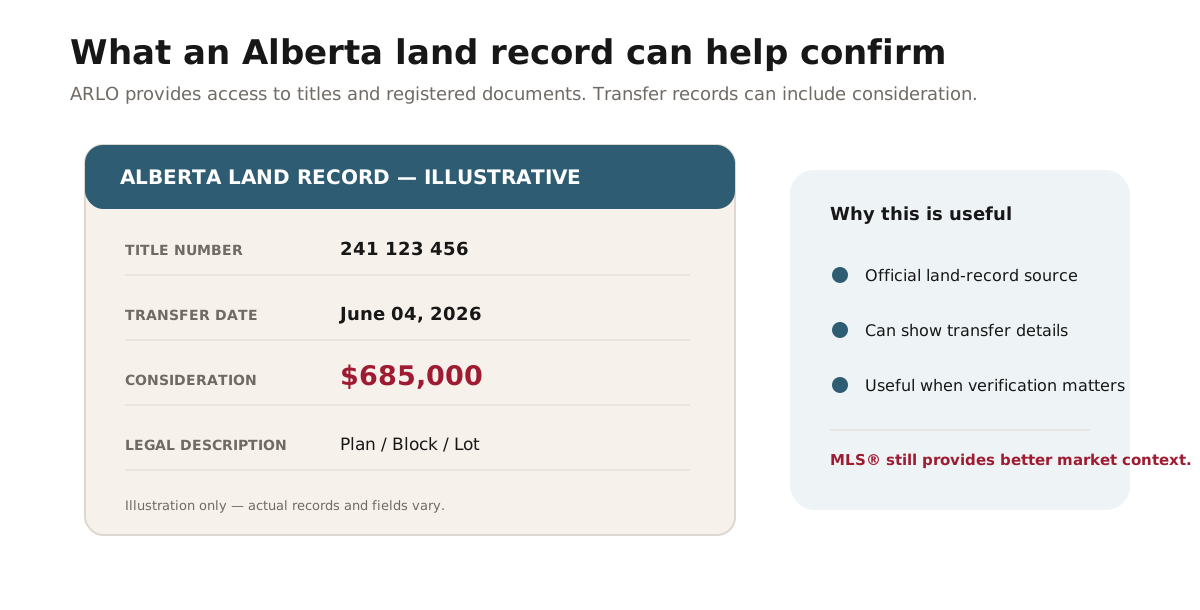
Alberta's land-title system is another source of official property information. The province's current online system, Alberta Registry for Land Online (ARLO), lets users search titles and registered documents.
Land title records can include information such as registered ownership, legal land description, title number, registered interests and encumbrances, transfer information, and consideration associated with a registered transfer.
In land-title terminology, consideration is the amount paid for the property as reported on the transfer document. That makes land-title records valuable when you need an official registered source rather than simply market-research data.
ARLO vs. MLS® Data
The two sources serve different purposes.
MLS® is generally better when you want: listing history, sold price in market context, days on market, photos and property details, and comparable sales analysis.
Land Titles / ARLO is useful when you want: official land-record information, registered ownership, transfer or title information, and registered documents.
For most real estate decisions, the strongest analysis comes from combining accurate transaction data with property context.
3. Online Sold-Listing Tools
Some consumer websites and brokerage platforms provide sold listing information. These tools can be convenient, especially if you are casually researching a neighbourhood. However, coverage and presentation can vary.
The biggest thing to watch for is the difference between an actual sold price and an estimated property value. Those are not the same.
An automated valuation model may estimate that a property is worth $720,000. That does not mean it sold for $720,000.
Whenever the number matters for a purchase, sale, financing decision, or valuation, confirm what type of number you are looking at.
4. CREB® Market Statistics
CREB® market reports are valuable for understanding the broader market, but they are not designed to answer "What did this exact house sell for?"
They are much better for questions such as: Are detached prices rising or falling? How many homes are selling in a community? Is inventory increasing? Is the market favouring buyers or sellers? How is one property type performing compared with another?
That context matters because a comparable sale from six months ago may need to be interpreted differently if market conditions have changed significantly since then. The latest Calgary market update is a good place to check current conditions.
5. Calgary Property Assessment Data
The City of Calgary's property assessment information can provide useful background on a property, including assessed value, property characteristics, assessment history, and the estimated property-tax basis.
But assessed value is not the same as sale price. Assessment is created for property-tax purposes. Market value for a specific sale is determined by what a buyer and seller agree to in the market. Those numbers can be relatively close or quite different — there is more on that distinction in your property assessment vs. market value.
Why One Sold Price Is Usually Not Enough
Suppose the house next door sold for $800,000. Does that mean your house is worth $800,000? Not necessarily.
Even neighbouring properties can differ meaningfully in square footage, lot size, renovation level, garage, basement development, floor plan, view, street position, exposure and condition.
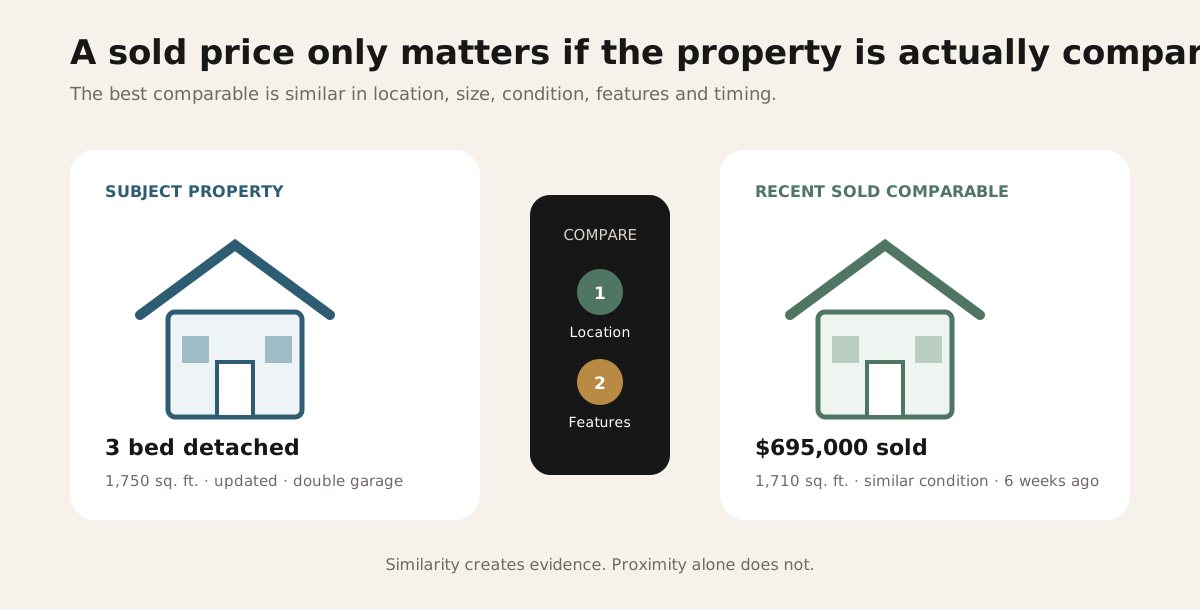
The strongest valuation does not ask "What did one nearby house sell for?" It asks "What did the most comparable homes sell for, and how do they differ from this property?"
How Recent Should Comparable Sales Be?
Generally, more recent sales are more useful because they reflect current market conditions. However, recency is not the only factor.
A sale from two months ago that is completely different from your property may be less useful than a highly comparable sale from four months ago.
A strong comparable usually balances similar location, property type, size, condition and features with a reasonably recent sale date. In a rapidly changing market, timing becomes even more important.
What Buyers Should Look for in Sold Data
Buyers can use sold data to understand whether a listing appears reasonably priced, how much buyers have recently negotiated, whether similar homes are selling above or below list, which properties represent better value, and whether a neighbourhood is moving into a more competitive market.
The goal is not to find the lowest sale and use it to justify every offer. The goal is to understand the range of evidence. If you would like help reading that evidence, start with a buyer consultation.
What Sellers Should Look for in Sold Data
For sellers, recent comparable sales can help answer: What price range is realistically achievable? Which homes are buyers choosing? Which features are commanding a premium? How long are comparable homes taking to sell? Are overpriced homes sitting longer? How does current competition compare with recent sold inventory?
This is much more useful than choosing a price because another seller in the neighbourhood listed at a certain number. That other seller may be wrong. A home evaluation brings the comparable set down to your specific property.
How to Tell Whether a Sold Price Is Actually Useful
A sold price becomes much more valuable when you can answer four questions:
1. How Similar Was the Property?
Property type, size, lot and condition matter.
2. When Did It Sell?
Market conditions can change quickly.
3. What Was Happening Around It?
Was there low inventory? Multiple offers? A large amount of competing supply?
4. Was the Transaction Normal?
Not every transfer represents a typical open-market transaction. Estate transfers, family transactions and other unusual circumstances may need to be interpreted differently.
A Better Way to Research a Property
If you are trying to determine whether a Calgary home is priced correctly, use a simple order:
Step 1: Find the Actual Sold Data
Start with confirmed transaction information rather than an estimate.
Step 2: Find the Closest Comparables
Focus on homes that genuinely resemble the subject property.
Step 3: Check the Market Trend
Understand whether conditions have changed since those comparables sold.
Step 4: Compare Against Current Competition
Buyers choose between what is available today, not just what sold yesterday.
Step 5: Adjust for the Property Itself
Condition, renovations, lot, location and unique features still matter.
This process gives you a much stronger answer than simply looking up one neighbouring sale.
Frequently Asked Questions
Can anyone find out what a house sold for in Calgary?
There are several ways to access sold or transfer information, including real estate professionals, consumer sold-listing tools, and Alberta land-title records. The level of detail and context varies by source.
Does the City of Calgary property assessment show the sold price?
No. Property assessment is used primarily for municipal property-tax purposes and should not be treated as the final sale price of a property.
Is an online home-value estimate the same as a sold price?
No. An estimate is calculated using a model. A sold price is the result of an actual transaction.
What is the best way to know what my Calgary home is worth?
Recent comparable sales are one of the strongest starting points, but they should be adjusted for the home's condition, features, exact location and current market competition.
The Bottom Line
Finding out what a Calgary home sold for is only the first step. The number becomes useful when you understand what type of source it came from, whether it reflects an actual transaction, how recently the property sold, how comparable the property really is, and what the market has done since the sale.
For casual research, online sold tools and public land records can be helpful. For an actual buying or selling decision, the combination of verified sold data, comparable properties and current market context is much more powerful.
If you are trying to understand what homes are actually selling for in a specific Calgary community, the right comparable set can usually tell you far more than a city-wide average or automated estimate.
Sources & Methodology
Alberta land-title information in this guide reflects the current Alberta Registry for Land Online (ARLO) system and Alberta Land Titles guidance on titles, registered documents and consideration. Market-analysis references are based on standard MLS® and CREB® real estate practices.
This article is for general informational purposes only and is not legal, financial or valuation advice.