Your home does not have one permanent value.
It has a value in a particular market, at a particular point in time, relative to the alternatives buyers can purchase instead.
That distinction explains why the same home can be worth more in one year and less in another without the owner changing anything.
It also explains why two houses with the same square footage can sell for very different prices.
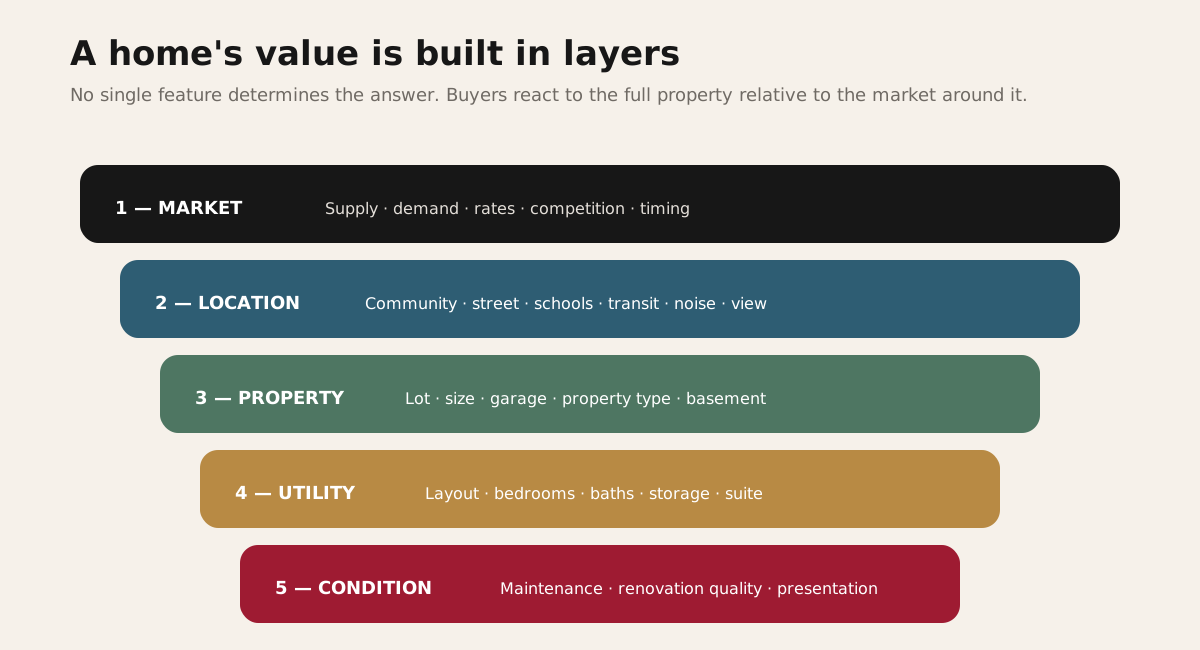
Home value is influenced by several layers working together:
The market.
The location.
The property itself.
Its condition and utility.
And the comparable sales buyers and professionals use to judge it.
CMHC describes property value as a snapshot tied to current market conditions and the prices of similar properties. It can change as the property, neighbourhood and broader market change.
That is the right starting point.
1. The Overall Real Estate Market
Before looking at the house, look at the market around it.
The same property can attract a different price depending on:
- Number of active buyers
- Available inventory
- Interest rates
- Mortgage qualification
- Employment conditions
- Population growth
- Consumer confidence
- New construction
- Seasonality
- Competition from similar homes
When buyers have very few alternatives, they may compete more aggressively for a good property.
When inventory expands and buyers have many similar choices, the same seller may need to compete harder on price, condition or terms.
This is why historical sale price alone does not determine current value.
What you paid five years ago is not the market.
Today's alternatives are.
2. Comparable Sales
Comparable sales are one of the strongest pieces of market evidence.
A useful comparable is not simply the house that sold closest to yours.
It should be reasonably similar in areas such as:
- Community
- Property type
- Size
- Age
- Lot
- Garage
- Basement
- Condition
- Renovation level
- Location within the community
- Sale timing
Appraisers and real estate professionals analyze how the subject property differs from the available sales.
A smaller renovated home may compete differently from a larger original-condition home.
A house backing a green space may compete differently from an otherwise similar home backing a major road.
The closer the comparable is to the way buyers see your property, the more useful it becomes.
3. Community and Micro-Location
"Calgary" is not one market at one price.
Neither is a single quadrant.
Even inside the same community, value can change by street.
Location factors can include:
- School access
- Parks
- Pathways
- Transit
- CTrain
- Shopping
- Employment access
- Major roads
- Traffic
- Noise
- Views
- Green space
- Cul-de-sac location
- Walkability
- Nearby development
- Utility corridors
- Commercial uses
A home across the street from another can still have a different market position if one has a superior lot, view or exposure.
This is why broad price-per-square-foot comparisons can become misleading.
The land and location are part of what the buyer is purchasing.
4. Lot Characteristics
For many detached homes, the lot contributes meaningfully to buyer demand.
Buyers may value:
- Larger frontage
- Deeper yard
- South or west exposure
- Corner positioning
- Cul-de-sac placement
- Green-space backing
- Privacy
- View
- Alley access
- Development potential
They may discount:
- Major-road exposure
- Unusual shape
- Steep grade
- Poor drainage
- Limited usable yard
- Noise
- Utility structures
- Reduced privacy
A larger lot does not automatically mean a better lot.
Utility matters.
A slightly smaller rectangular lot with excellent privacy can appeal more strongly than a larger but awkward site.
5. Above-Grade Size
More living area often adds value, but not in a straight line.
A 2,500-square-foot home is not automatically worth 25% more than a 2,000-square-foot home.
The market also considers:
- Layout
- Room proportions
- Number of bedrooms
- Number of bathrooms
- Ceiling height
- Natural light
- Function
- Finish quality
- Lot
- Location
Additional square footage adds the most value when buyers find it useful.
A poorly designed 400-square-foot addition may contribute less than a well-integrated 200-square-foot one.
6. Floor Plan and Function
Square footage tells you how much space exists.
Layout tells you how usable it is.
Modern buyers may place value on features such as:
- Functional kitchen
- Kitchen-to-living connection
- Main-floor office
- Mudroom
- Laundry location
- Storage
- Bedroom separation
- Ensuite
- Walk-in closet
- Bonus room
- Basement utility
- Natural light
A home can feel larger or smaller than its measured area depending on how the space is organized.
This is one reason buyers sometimes choose a smaller home over a larger competitor.
7. Bedroom and Bathroom Count
Bedrooms and bathrooms affect who can realistically use the property.
A three-bedroom home competes with a different buyer pool than a one-bedroom home.
But room count should not be analyzed without function.
A "bedroom" that is extremely small, awkwardly located or does not meet applicable requirements may not create the same value as a proper bedroom.
Similarly, adding a bathroom can improve utility, but the benefit depends on:
- Existing bathroom count
- Location
- Quality
- Home size
- Buyer expectations
The market cares about the entire floor plan, not a checklist.
8. Property Condition
Condition affects both price and buyer confidence.
Buyers notice visible items such as:
- Paint
- Flooring
- Cabinets
- Countertops
- Fixtures
- Exterior
- Landscaping
But major systems can matter even more:
- Roof
- Furnace
- Hot-water system
- Windows
- Electrical
- Plumbing
- Foundation
- Drainage
- Building envelope
A home with dated finishes but strong mechanical condition can still be attractive.
A beautifully staged home with major deferred maintenance can create much more risk.
Cosmetic Updating vs Capital Condition
These are different.
Cosmetic condition
Includes things like:
- Paint
- Flooring
- Hardware
- Lighting
- Cabinet finish
- Decor
Capital condition
Includes larger components such as:
- Roof
- Windows
- Furnace
- Exterior
- Plumbing
- Electrical
- Foundation
Cosmetic improvements can help the home show better.
Capital condition can affect how much risk the buyer feels they are taking on.
Both matter, but not in the same way.
9. Renovation Quality
Renovation does not automatically equal value.
Buyers respond to:
- Quality
- Design
- Function
- Cohesion
- Permits where required
- Workmanship
- Whether the improvement suits the home and area
A clean, properly executed renovation can strengthen marketability.
A poor renovation can create uncertainty even if the materials were expensive.
Cost Is Not the Same as Value
This is one of the most important rules in real estate.
Spending $100,000 does not guarantee the home becomes worth $100,000 more.
The market determines how much value an improvement contributes.
A buyer may value:
- A functional kitchen renovation
- Added bathroom
- Better floor plan
- Legal suite
- Improved energy performance
more than:
- Highly personalized luxury finishes
- Unusual built-ins
- Overly specific hobby spaces
- Design choices that appeal to a narrow audience
The renovation should improve the property buyers are actually comparing.

10. Kitchen and Bathrooms
Kitchens and bathrooms receive attention because they are expensive and disruptive to renovate.
A buyer may pay more for a home where those areas are:
- Functional
- Clean
- Updated
- Well designed
- Consistent with the rest of the property
But there is a point of diminishing return.
Installing an ultra-luxury kitchen in a modest entry-level home does not guarantee the neighbourhood buyer will pay enough to recover the cost.
Renovation level should fit the home's market segment.
11. Garage and Parking
In Calgary, parking can have meaningful practical value.
Depending on the property and buyer, useful features can include:
- Attached garage
- Double garage
- Oversized garage
- Heated garage
- Parking pad
- Driveway
- Additional stall
- RV access
The contribution varies by market segment.
For one buyer, a garage is optional.
For another, it is the reason they eliminate a property from consideration.
12. Basement Development
A finished basement can increase the home's usable space and appeal.
Value can depend on:
- Ceiling height
- Natural light
- Bedroom utility
- Bathroom
- Recreation space
- Storage
- Quality
- Layout
- Permits
- Separate entrance
- Suite legality
Basement square footage is not generally treated the same as above-grade living area.
But a well-designed basement can still be a major selling feature.
13. Secondary Suites
A legal secondary suite can affect a property's utility and buyer pool.
Potential buyers may value:
- Rental income potential
- Multi-generational use
- Separate living area
- Mortgage-offset potential
But do not value every basement with a kitchen as a legal suite.
In Calgary, verify:
- Secondary Suite Registry status
- Permits
- Safety requirements
- Configuration
- Current use
A compliant suite and an unverified setup do not carry the same risk.
14. View, Exposure and Privacy
Some property features are difficult to reproduce.
Examples:
- Mountain view
- Downtown view
- Ravine
- Golf course
- Park backing
- Pond
- Green space
- Private yard
- Mature trees
These can create a premium when the market values them.
But not every "view" adds value.
A view matters because buyers are willing to pay for it, not because the listing description says it exists.
15. Noise and External Influences
External influences can reduce demand.
Examples can include proximity to:
- Major roads
- Rail lines
- Industrial uses
- Flight paths
- Commercial loading
- Utility infrastructure
- Future construction
The effect depends on severity and buyer expectations.
A downtown buyer may accept urban noise that a suburban buyer would reject.
Value is market-specific.
16. Energy Efficiency and Operating Cost
Energy efficiency can affect buyer perception, especially when it improves comfort or reduces ongoing cost.
Relevant features can include:
- Better insulation
- High-efficiency heating
- Updated windows
- Air sealing
- Efficient hot-water equipment
- Solar
- Heat pumps
- Smart controls
But again, installation cost and contributory value are not automatically equal.
Market acceptance matters.
17. Curb Appeal and First Impression
Curb appeal does not change the land or square footage.
But it can affect marketability.
A property that looks maintained from the street signals that the rest of the home may also have been cared for.
Useful improvements can include:
- Exterior cleaning
- Paint touch-ups
- Lawn care
- Trim
- Lighting
- Front-door condition
- Simple landscaping
This is especially important when selling because buyers compare homes emotionally as well as analytically.
18. Cleanliness and Presentation
Cleanliness does not create the same value as adding a bedroom.
But presentation can influence how buyers interpret the property.
A clean, decluttered home helps buyers:
- Understand the space
- See room proportions
- Notice natural light
- Focus on the property instead of belongings
Poor presentation can make an otherwise good home feel smaller or less maintained.
Presentation affects marketability, which can influence the sale outcome.
19. Permits and Quality of Improvements
Unpermitted work can create uncertainty.
Buyers, lenders, insurers and lawyers may ask questions when renovations include:
- Structural changes
- Additions
- Secondary suites
- Electrical work
- Plumbing
- Major alterations
The existence of a renovation is not the entire story.
Documentation can matter.
20. Zoning and Redevelopment Potential
For some properties, the existing house is only part of the value.
Land-use rules and redevelopment potential may influence buyer demand.
Examples can include:
- Lot size
- Frontage
- Corner site
- Location near redevelopment
- Permitted housing forms
- Assembly potential
This is especially relevant where builders and developers compete with owner-occupiers for the same property.
Do not assume redevelopment potential without verifying current City rules.
21. Property Type
Detached, semi-detached, row, apartment condominium and acreage properties can respond differently to the same market.
Buyer pools differ.
Supply differs.
Maintenance responsibilities differ.
Financing and condo fees can differ.
A strong detached market does not guarantee the apartment market is behaving the same way.
Value should be analyzed within the relevant property segment.
22. Condominium Corporation Health
For a condo, the unit is only part of the value equation.
Buyers may also consider:
- Condo fees
- Reserve fund
- Reserve-fund study
- Special levies
- Insurance
- Building condition
- Amenities
- Bylaws
- Board minutes
Two nearly identical units can have different market appeal if the buildings have different financial positions.
23. Timing and Competition
Value and sale price are related, but they are not identical concepts.
The final price can also be influenced by the selling environment.
For example:
- Multiple offers
- Competing listings
- Days on market
- Offer conditions
- Possession terms
- Buyer urgency
- Seller motivation
A property may have an estimated market value range and still sell toward the top or bottom of that range depending on how the sale is executed.
What Homeowners Can Actually Control
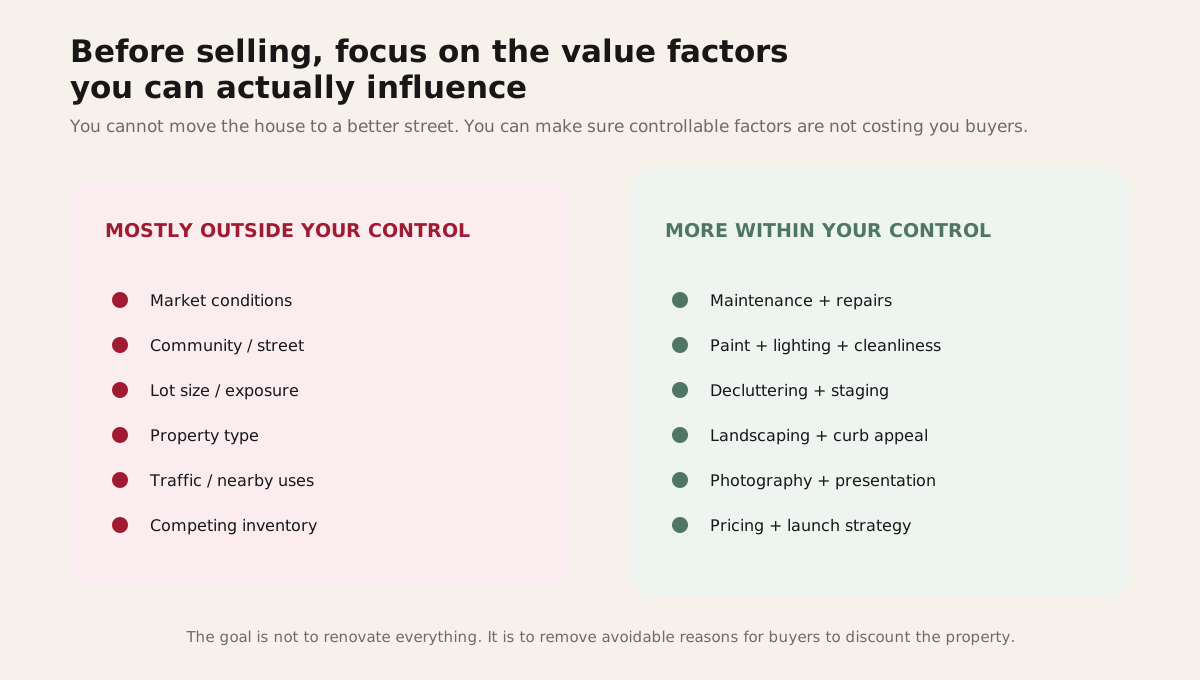
Some value factors are fixed.
You cannot move the house to a different street.
You cannot make the lot larger.
You cannot create a mountain view.
But sellers can control a surprising amount of the marketability around the property.
Mostly outside your control
- Broader market
- Interest rates
- Community
- Lot
- Traffic
- Property type
- Competing inventory
More within your control
- Maintenance
- Repairs
- Cleanliness
- Decluttering
- Paint
- Lighting
- Landscaping
- Staging
- Pricing strategy
- Photography
- Launch timing
- Buyer access
The goal before selling is not to change everything.
It is to make sure the controllable factors are not unnecessarily reducing the property's appeal.
Should You Renovate Before Selling?
Not automatically.
Before renovating, compare:
Cost of improvement
against
Likely change in sale price and marketability
A $15,000 improvement that helps the home sell $20,000 higher and faster may make sense.
A $60,000 renovation that produces little additional buyer demand may not.
Sometimes the better strategy is:
- Repair
- Paint
- Clean
- Stage
- Price accurately
rather than completing a major renovation for the next owner.
Why Online Estimates Can Be Wrong
Automated estimates can be useful as a starting point.
But they may not fully understand:
- Renovation quality
- Interior condition
- View
- Lot utility
- Street position
- Illegal vs legal suite
- Basement quality
- Recent competing listings
- Unique layout
- Current buyer response
A model works from available data.
A property-specific evaluation can add information the model does not have.
Why City Assessment Is Not Your Listing Price
The City assessment is used for property taxation.
It uses a legislated valuation date and mass-appraisal process.
A current sale analysis asks a different question:
What are buyers likely to pay for this property in the current market?
Do not price a listing by simply adding or subtracting a percentage from the municipal assessment.
The Best Way to Estimate Current Market Value
A strong current market evaluation should combine:
- Recent comparable sales
- Current competition
- Property-specific adjustments
- Market conditions
- Buyer demand
- Location within the community
- Property condition
- Listing strategy
The answer is usually a supported range, not a magical single number.
Then the seller chooses a pricing strategy inside the market context.
Frequently Asked Questions
What affects home value the most?
There is no single universal factor. Location, market conditions, comparable sales, property size, condition, layout, lot and buyer demand work together.
Do renovations always increase home value?
No. Renovation cost and market value are different. The market decides how much an improvement contributes based on quality, utility and buyer demand.
Does a finished basement increase value?
It can improve utility and buyer appeal, but basement development is not typically valued the same way as above-grade living area. Quality, layout, light, bedrooms, bathrooms and permits matter.
Does a legal basement suite add value?
A legal suite can increase utility and appeal for some buyers, especially those considering rental income or multi-generational living. The amount depends on the property and market. Verify Calgary suite status rather than assuming any basement kitchen is legal.
Is my City of Calgary assessment the market value of my home?
Not necessarily. Municipal assessment is prepared for taxation using a specific valuation date and methodology. Current market value can differ.
How do I find out what my Calgary home is worth?
A current market evaluation should review recent comparable sales, active competition, the property's condition, location and features, and current buyer demand.
The Bottom Line
Home value is not created by one feature.
It is the market's response to the entire package.
The neighbourhood sets the context.
The lot creates the site.
The house provides the size and utility.
Condition and renovations influence how the home competes.
Comparable sales provide evidence.
And current supply and demand determine how aggressively buyers are willing to act.
For homeowners considering a sale, the most useful question is not:
"What did I spend on the house?"
It is:
"How does my property compare with the homes buyers can choose from right now?"
That is the question a current market evaluation should answer.
Thinking About Selling?
If you want to understand where your property fits in the current Calgary market, use the existing home evaluation form on the website to request a property-specific market analysis.
The evaluation should consider the home's location, condition, renovations, lot, layout and recent comparable sales rather than relying on a generic online estimate.
Sources & Methodology
Valuation concepts were cross-checked against CMHC and Appraisal Institute of Canada resources. CMHC notes that property value is a current-market snapshot tied to what similar properties are selling for, and can change with improvements, neighbourhood changes and broader housing conditions. Appraisal Institute of Canada material likewise emphasizes comparable properties, market evidence and property-specific characteristics in valuation analysis.
This article is for general informational purposes and is not a formal appraisal. Property values are market-specific and change over time. A Realtor market evaluation is not the same as a professional appraisal prepared for lending, legal or other formal purposes.